

























































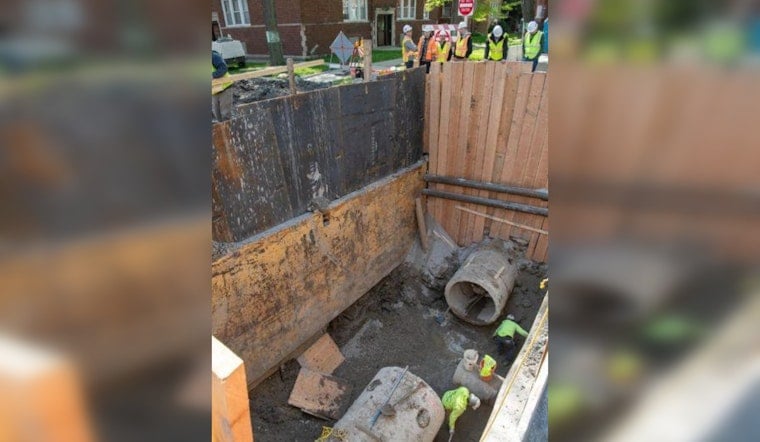
Chicago is quietly tucking massive stormwater tanks under West Side streets, betting that a pair of buried concrete boxes can keep the next big downpour from ending up in residents' basements.
City officials on Tuesday unveiled two underground "wing" stormwater storage units in Austin, a pilot meant to add roughly 1.7 million gallons of temporary capacity to local sewers. The idea is simple enough: hold back the worst of the surge so neighborhood sewers are less likely to back up when heavy rain hits.
Officials showcase LeMoyne site
Staff from the Metropolitan Water Reclamation District and the City of Chicago held a 9:30 a.m. media event at 5500 W. LeMoyne Street, walking reporters through how the new system is supposed to work. The LeMoyne installation, paired with a similar setup on Maypole Avenue, was billed as a pilot to boost local sewer capacity and reduce street and basement flooding in parts of the 28th, 29th and 37th wards. Mayor Brandon Johnson and 37th Ward Ald. Emma Mitts joined MWRD engineers at the site, according to MWRD.
Deep Tunnel strain after holiday deluge
The timing was not subtle. The region's giant Tunnel and Reservoir Plan has been pushed close to its limits by rounds of holiday-weekend storms, a reminder of why neighborhood-scale fixes are now on the table. WTTW reported that the McCook reservoir hit about 98% of its storage after the July 4 rains, and the Chicago Sun-Times described similar strain throughout the system. Those pressures form the backdrop for pilots that aim to grab water before it ever reaches the Deep Tunnel.
How the wing storage works
The new "wing" units are essentially concrete box culverts buried beneath side streets. During intense storms, the structures take on excess runoff and hold it until pumps or gravity can move the water into larger intercepting sewers that feed regional storage. The LeMoyne and Maypole projects are part of an approximately $12 million package shared by the MWRD and the city's Department of Water Management, and officials say the extra capacity is intended to provide added protection for thousands of nearby homes and businesses. Cost and capacity figures are outlined in project documents, including the MWRD budget and a district media advisory.
Residents' concerns and limits
Neighbors have welcomed any added help but have also been blunt that a couple of underground tanks will not erase the memory of flooded basements. Record rains in 2023 left lasting damage across the area, with WBEZ and CBS Chicago documenting families still waiting on repairs and the sheer scale of the storms that helped spur this round of investment. Officials at the event stressed that wing storage is only one piece of a broader puzzle that also includes green infrastructure, sewer upgrades and federal recovery dollars to make older neighborhoods more resilient to heavy rain.
The LeMoyne and Maypole units will remain buried under neighborhood streets as engineers track how they perform through the summer storm season. City and MWRD leaders say results from these pilots will help determine where similar underground storage might roll out next.



