

























































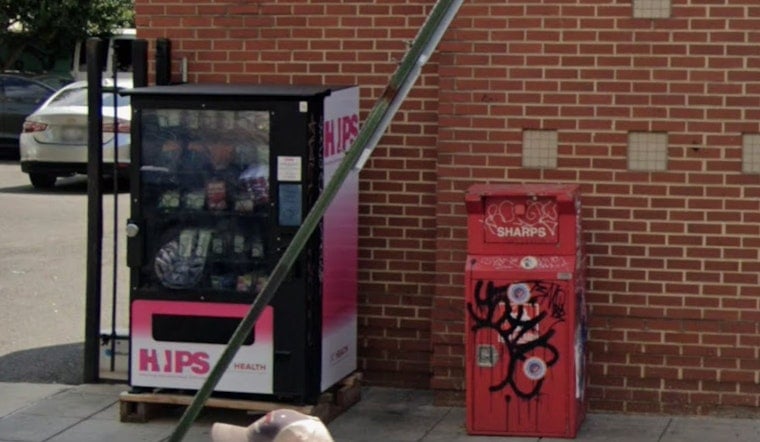
D.C.'s network of harm reduction vending machines, street-side dispensers stocked with naloxone, condoms and basic hygiene supplies, has slammed into a bureaucratic speed bump. A key city committee has paused permit applications, throwing the future of the program into limbo and putting public health officials, neighborhood commissioners and community groups on a collision course over safety, access and who gets to call the shots on the sidewalk.
Public Space Committee Hits Pause After ANC Pushback
At a June 25 Public Space Committee hearing, the committee voted to table DC Health's permit applications and asked the agency to come back with clearer plans spelling out who owns and maintains the machines, according to Street Sense Media. Committee chair Erkin Ozberk made the motion, which passed 4-0, and members also flagged several applications that might not need formal PSC approval at all.
The Public Space Committee schedules and posts its hearings through the District's TOPS calendar, which lists monthly PSC dates and agendas for projects that use public right-of-way.
How the Naloxone Vending Machines Work
DC Health launched the pilot in 2023 with community partners Family & Medical Counseling Services (FMCS) and Honoring Individual Power and Strength (HIPS). The agency placed machines at firehouses, clinics and other service sites to create 24/7 access to naloxone and related supplies, according to an April 2023 announcement from DC Health.
A District review of the pilot found that the machines are getting real use. Public reports from the city's Opioid Fatality Review Board say vending sites have dispensed thousands of naloxone kits as the program has grown. Supporters argue that the low-friction setup makes it easier for people to grab life saving tools, especially those who do not or cannot engage with traditional health or social service programs, while the city figures out how to bring the rollout into long-term regulatory compliance.
Neighbors Say One Shaw Machine Is Bringing Trouble
The flashpoint is the machine at 1525 7th Street NW, next to Bread for the City’s Shaw location. Neighborhood residents and ANC commissioners told the Public Space Committee they have seen discarded needles and more visibly intoxicated people hanging around the unit, Street Sense Media reports.
ANC 2G Commissioner Nicole Shea told the committee that the vending machine has “served as a magnet” that draws people into the block instead of primarily serving nearby residents. Other speakers urged the city to weigh the clear harm reduction benefits against what they describe as day-to-day quality-of-life problems on the surrounding streets.
DC Health and its nonprofit partners have countered that the machines include sharps disposal options and referral information, and that several host sites also offer in-person services during business hours, which they say are part of the strategy to reduce risk and connect people to care.
What Public Health Research Brings To The Fight
Local researchers from the University of Maryland are studying the vending machines' impact and have partnered with HIPS to look at both how often the machines are used and what they mean for the surrounding community, according to the University of Maryland.
Zooming out, broader reviews of harm reduction programs have found that syringe-service programs and naloxone distribution reduce overdose deaths and cut transmission of infectious diseases. Those reviews have not linked such programs to higher crime in neighborhoods where they operate, according to public health researchers. That body of evidence underpins DC Health officials' argument that these vending machines are a cost-effective and life saving way to reach people who face steep barriers to more traditional services.
Drug-Free Zones And Legal Fine Print
The permit fight also touches on the District's drug-free zone rules, which some commissioners raised at the hearing. D.C. law labels areas within 1,000 feet of certain youth-focused spots, including playgrounds and recreation centers, as drug-free zones. The designation brings tougher penalties for distributing controlled substances inside those boundaries.
DC Health's rollout materials make clear that the vending machines do not dispense controlled substances. Even so, the existence of the drug-free zone law around nearby youth facilities shaped several commissioners' objections during the Public Space Committee session. For residents tracking the geography, the Department of Parks and Recreation lists the Kennedy Recreation Center at 1401 7th Street NW, and Bread for the City operates at 1525 7th Street NW.
Next Round: Revised Plans And Another Hearing
The Public Space Committee has told DC Health to revise and resubmit its plans, spelling out responsibilities for ownership, upkeep and steps to address neighborhood concerns. The committee's calendar shows it will continue to hold monthly virtual hearings where DC Health and its nonprofit partners can return for follow-up review.
If the Public Space Committee ultimately denies a permit application, any machine located in the public right-of-way could be ordered to move. For now, though, the committee's move mainly forces the agency and its partners to tighten their written plans and community engagement strategies around how the machines are run.
Residents on both sides of the Shaw fight say they plan to keep pressing the city, either for stronger local control over the placements or for preserving easy access to life saving supplies. That tension is almost certain to spill back into the virtual hearing room when the vending machines land on the Public Space Committee agenda again.





