

























































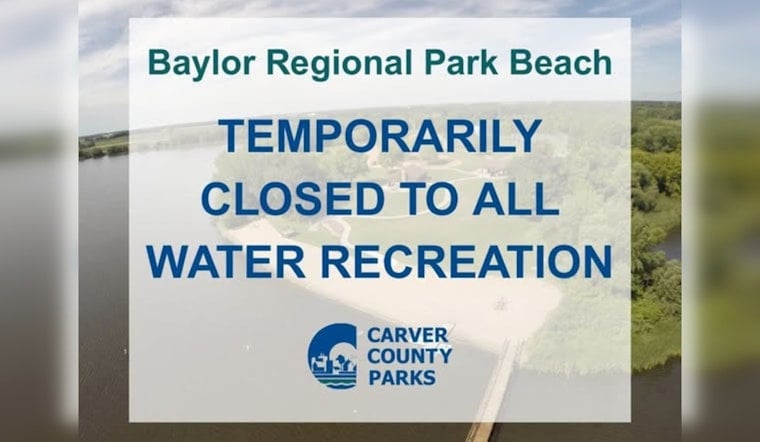
A suspected blue-green algae bloom has put swimming on hold at Baylor Regional Park, with Carver County Parks announcing Tuesday that it temporarily closed the swimming beach on Eagle Lake. The shutdown covers swimming, wading and any other water-contact fun for now, while staff size up the situation. Trails, the shoreline and the fishing pier are still open for visitors who want to stay dry.
County Posts Closure Notice
In a post on Carver County Parks' Facebook page, the department said the beach is “closed to all water recreation” after staff noticed what appeared to be blue-green algae on Eagle Lake. The post linked to state guidance on blue-green algae, emphasized that the fishing pier remains open and reminded visitors to keep pets out of the water. Officials asked people to watch the county's social channels for word on testing and any reopening timeline.
About Baylor Regional Park
Baylor Regional Park covers 201 acres on Eagle Lake north of Norwood Young America and includes a campground, swimming beach and fishing pier, according to Carver County's park page. With the beach closed, visitors planning outings are urged to follow posted signs and check county updates before heading out.
Health Risks and Safety Advice
Blue-green algae, technically cyanobacteria, can sometimes produce toxins that lead to skin rashes, stomach upset, breathing irritation and other symptoms in people, the Minnesota Department of Health warns. MDH boils its guidance down to one simple line: “When in doubt, stay out.” The agency recommends rinsing off with clean water as soon as possible after contact. If a person or pet shows symptoms after being in lake water, MDH advises contacting a health care provider or veterinarian.
Testing and Reopening
Parks staff and public-health partners typically collect water samples and send them to a lab before lifting a closure, the Minnesota Pollution Control Agency notes. According to the MPCA, quick visual checks and do-it-yourself test strips can help flag a potential bloom, but formal laboratory analysis is what shows whether toxin levels are above recreational guidance. Officials usually wait for those results and additional assessments before announcing that a beach is safe to reopen.
What Visitors Should Do Now
Until Carver County gives the all-clear, the advice is straightforward: skip swimming or wading in discolored or scummy water, and do not let pets drink from or swim in affected areas. Carver County Parks has told visitors to watch for testing results and reopening information on Carver County Parks' Facebook. Anyone who suspects illness tied to lake water exposure can contact the Minnesota Department of Health or their medical provider.
Local Context
This is not the first time Carver County has pulled swimmers out of the water over quality concerns, and county social feeds tend to break that news fastest. For a look at a previous incident at the same park, see coverage of a past Baylor beach closure.




