

























































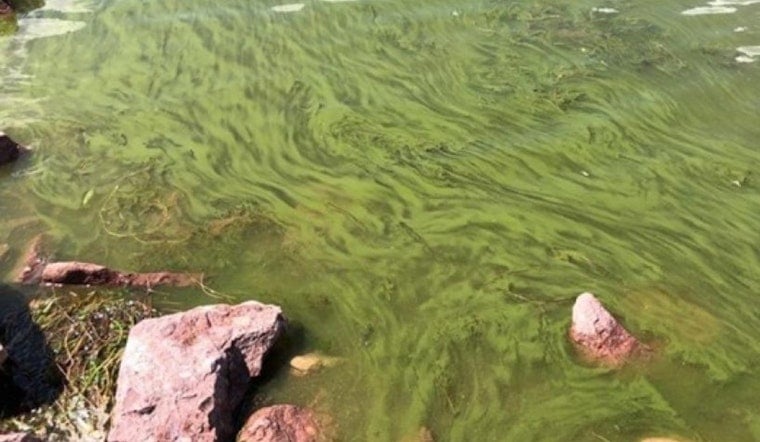
The swim beach at Boulder Reservoir is closed after city staff spotted what they described as a potentially harmful algae bloom, triggering water testing, overnight monitoring, and fresh warning signs for anyone heading to the shore. The rest of the reservoir is still open to watercraft through the main gate, but visitors are being urged to steer clear of any discolored or scummy patches of water.
According to the City of Boulder, staff observed what appears to be harmful cyanobacteria in several parts of the reservoir and collected samples to test for toxins. The city says the swim beach shutdown is a precaution while officials wait for lab results.
What the bloom looks like and the health risk
Harmful cyanobacteria blooms are not subtle. They can resemble thick pea soup, a layer of spilled bluish green paint on the surface, or a dense foam mat lining the shoreline. These blooms may produce toxins that cause skin irritation, vomiting, or more serious health problems in both people and pets.
Only laboratory testing can confirm whether toxins are present, the Colorado Department of Public Health and Environment notes, so officials recommend treating any scummy or oddly colored water as unsafe.
What is open and how to get updates
For now, boats are still allowed on Boulder Reservoir through the main gate. The city is cautioning boaters to avoid any visible blooms and to keep dogs out of the water entirely. City of Boulder staff are monitoring the situation overnight and are asking visitors to sign up for alerts by texting “BPRReservoir” to 888-777 or by checking the city’s news page for updates.
Statewide trend and context
The closure at Boulder Reservoir is part of a broader pattern across Colorado this summer. State health officials have seen an uptick in harmful algae blooms, with multiple reservoirs under blooms or cautions as warm weather and low flows create prime conditions for cyanobacteria.
The Colorado Sun reports that the state health department was tracking several active blooms as of mid-July and is urging outdoor enthusiasts to follow posted warnings and stay out of suspicious-looking water.
Pets, fishing, and basic safety tips
Officials are putting special emphasis on pets, since dogs are particularly vulnerable to cyanobacteria toxins. Exposure can cause seizures or even death. If people or pets come into contact with suspect water, guidance is to rinse off immediately with tap water and contact a doctor or veterinarian if any symptoms appear.
Boulder County also advises anglers to clean any caught fish thoroughly and to dispose of fish waste properly to reduce potential exposure.
Boulder Reservoir is not currently being used as a drinking water source for the city. Officials say they are coordinating with the Northern Colorado Water Conservancy District while they track conditions. Northern Water maintains a cyanobacteria monitoring and response plan for its partner water users, and local officials told KDVR that additional updates on the reservoir will be posted on July 19 as testing continues.





