

























































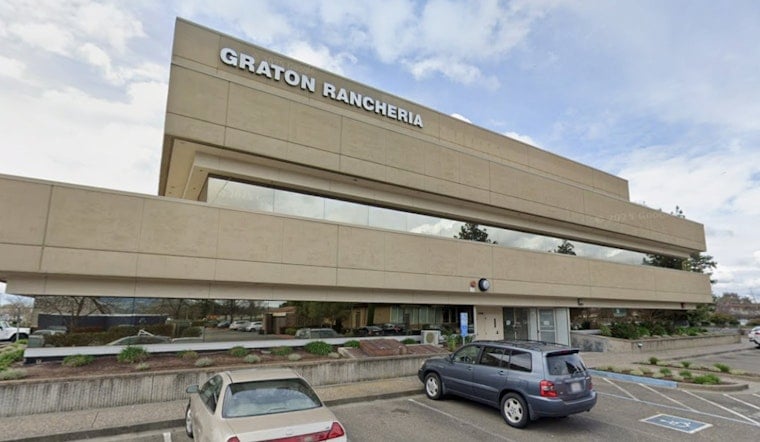
Greg Sarris, the author, scholar and political heavyweight who has led the Federated Indians of Graton Rancheria since 1992, plans to step down as tribal chairman by the end of the year. The move would close a 34-year run that took the tribe from being effectively homeless to becoming a major North Bay employer and philanthropic force. Under Sarris, the tribe opened Graton Resort & Casino and stitched together a web of community investments across Sonoma County, making this retirement the most significant leadership shakeup in the rancheria’s modern era.
The decision was first reported by The Press Democrat, which recounts Sarris telling a recent Santa Rosa audience that he plans to turn more of his attention to his writing as he eases out of day-to-day tribal duties. The Press Democrat article also lays out his age, long tenure and the sizable local presence the tribe has built during his time at the helm.
How a Casino Became the Tribe’s Economic Engine
Since opening in 2013, Graton Resort & Casino has been the main driver of the tribe’s economic rise and growing regional profile. The resort and its owners describe a multi-year buildout, roughly a 1 billion dollar program, that has added a large non-smoking gaming wing and a lineup of new dining concepts. Local coverage has followed the expansion and Graton’s bid to be seen as an entertainment and convention hub rather than just a gambling stop, with details laid out in the resort’s own expansion materials and recent regional reporting.
Per Graton Resort & Casino and local coverage on rooftop hotspot and smoke-free jackpots, the project has rolled out new restaurants and a significantly larger smoke-free slot floor. The idea is to broaden the resort’s appeal, keep more visitors on-site for longer and support hundreds of jobs across the North Bay.
Big Gifts, Local Deals
Sarris’s tenure has been as much about cutting civic deals as building a resort complex. Through mitigation and intergovernmental agreements, the tribe sends regular payments intended to offset public costs tied to the casino. City and county records show those commitments add up to multimillion-dollar obligations. On top of that, the rancheria has steered money into neighborhood projects, including roughly 3.5 million dollars toward the Roseland civic hub, and has written big checks to higher education, such as a 15 million dollar endowment at UCLA School of Law and a 2.5 million dollar scholarship fund for California Native students.
Those commitments are documented in municipal and project records and in university announcements, including City of Rohnert Park and Sonoma County mitigation files, Roseland project writeups and builder briefings, UCLA Law’s announcement, and the tribe’s own scholarship release. Collectively, the donations have become central to how Graton presents itself across Sonoma County, from city halls to campus boardrooms.
Beyond Sonoma: Civic Posts and Political Spending
Sarris’s reach now extends well past county lines. He serves on the University of California Board of Regents and is a member of the American Academy of Arts and Sciences, positions that underscore his dual role as cultural figure and institutional insider. The Regents’ official biography and university announcements spell out those appointments along with his academic credentials.
The tribe has also become a serious political player. The Press Democrat reports that the Federated Indians of Graton Rancheria gave roughly 5.85 million dollars to federal candidates and committees in the 2023 to 2024 cycle, placing the tribe among the largest tribal contributors in recent election cycles.
What Comes Next
Sarris has said he will stay on through the end of the year while the tribe and its council manage the transition. Under the Federated Indians of Graton Rancheria’s governing documents, leadership and economic oversight rest with the tribal council. That body, together with the tribe’s economic board, will steer the next chapter, which includes supervising the casino expansion, maintaining community agreements and continuing the tribe’s philanthropic work.
For now, the announcement effectively closes a long-running chapter in Sonoma County civic life. One leader oversaw the push to restore federal recognition, guided a decades-long development effort and left the tribe firmly woven into the region’s education, infrastructure and political systems.





