

























































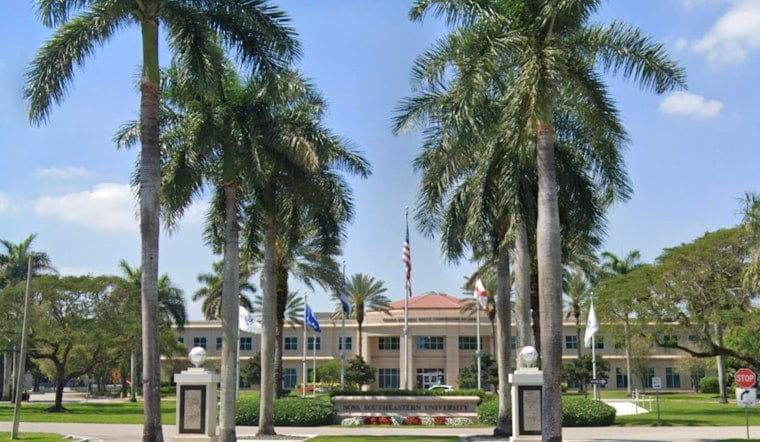
At Nova Southeastern University in Davie, veterans are learning to manage stress by gripping a steering wheel, watching a virtual track and practicing how to slow their breathing when pressure rises. The race-car simulator program has served 25 veterans over the past two years, turning a high-adrenaline environment into a controlled mental-skills lab.
NSU's Center for Research and Treatment calls the program Race Camp, where veterans use simulated racing to practice self-regulation, goal-setting, imagery and arousal control. The idea is not simply to chase a thrill; it is to gradually increase the challenge while participants learn how to recognize and manage their physical stress response, according to NSU's program description.
The South Florida program is offered in one-, two- or three-day formats, with some participants completing the work over a single week and others spreading it across a more flexible schedule. The structure is designed to make the sessions more accessible while veterans build skills in a setting that feels less like a traditional therapy office, as detailed by a Miami Herald report.
Inside NSU's Race-Based Stress Training
One participant, 48-year-old Miami veteran Jose Agurto, brings an unusually broad military history to the experiment. Born in Nicaragua, Agurto served 15 years in the Marine Corps, deployed to Iraq in 2003 and was in Japan during the 2011 tsunami before retiring as a gunnery sergeant in 2015, according to the Miami Herald report.
During Race Camp, participants are taught to notice what happens as the simulator becomes more demanding and then apply techniques such as controlled breathing and heart-rate regulation. NSU says the simulated-race environment functions as a stress-inoculation exercise, moving from easier scenarios to harder ones while participants work on awareness and self-control.
The university's program also uses biofeedback to help veterans connect what they feel internally with measurable changes in their bodies. That can turn an abstract instruction like “calm down” into something more concrete: slow the breathing, watch the heart rate and try again under pressure.
A New Tool, Not A Replacement For Care
The approach fits into a broader push toward technology-assisted tools for veteran health. In June, VA News reported that providers were introducing virtual reality to help veterans manage stress and anxiety, while emphasizing that immersive technology should complement rather than replace medication or therapy.
That distinction matters in Davie, where the simulator is being used as a structured practice environment rather than a magic reset button. For now, the South Florida experiment is less about pretending a screen can erase trauma than about giving veterans a familiar way to practice control when their nervous systems are revved up — and carry those skills beyond the virtual track.





