

























































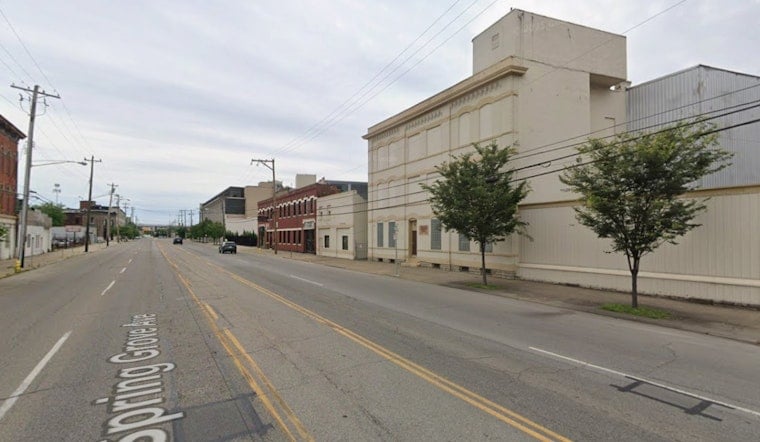
In a move that blends the space age with one of Cincinnati's oldest industrial corridors, 1872.ai has fired up a robotic welding factory in the Camp Washington neighborhood. The startup, launched by engineers who cut their teeth at SpaceX, says its automated welding cells can take CAD files all the way to finished structural steel assemblies, slotting advanced robotics into a stretch of the city long defined by heavy manufacturing.
As reported by the Cincinnati Business Courier, 1872.ai Inc. has opened its Camp Washington plant and raised a $15 million seed round. The company bills itself as an "AI-native" steel-fabrication partner that ingests CAD data, plans production and executes precision welds, according to 1872.ai. That site also lists Dan Summers as CEO and Michael Grant as CTO, both with previous SpaceX production and flight-software experience.
What They're Building
On its early project list, the company is not exactly starting small. As posted on LinkedIn, the team has already taken possession of "Factory 1" and completed an initial 40-foot by 8-foot structural skid as a first production run. Head of Operations Brian Mongilio described the milestone as producing "7,300 lbs of welded steel," and the company said the job helped stress-test its software, fixtures and robotic cells.
Company posts also highlight collaboration with Path Robotics as 1872.ai installs and qualifies welding hardware for large, high-mix assemblies, signaling that the early work in Camp Washington is as much about dialing in the system as it is about shipping parts.
Backers, Jobs and Local Angle
The O.H.I.O. Fund lists 1872.ai in its portfolio, signaling local venture backing for the Cincinnati operation. Per the Cincinnati Business Courier, the startup's seed round totaled $15 million, giving the new plant some financial runway as it ramps up.
On the hiring front, 1872.ai shows open roles for robotic fabrication technicians and manufacturing engineers as the company staffs Factory 1 and scales production, hinting at a mix of traditional shop-floor work and software-heavy manufacturing jobs in the neighborhood.
Why This Matters for Cincinnati
Industry observers say automation and reshoring are reshaping metal fabrication, and AI-driven plants can shorten lead times that have throttled infrastructure projects, according to A3/Automate. That combination of software, robotics and local investment could expand contract opportunities for regional suppliers while shifting the skills Cincinnati-area factories need.
For Cincinnati, 1872.ai's early factory doubles as a testbed and a signal: founders and backers are betting that software-native manufacturing can revive heavy fabrication at scale. If the model works, the company says Factory 1 will be a proving ground for additional sites that move large welded structures faster and with fewer delays.





