

























































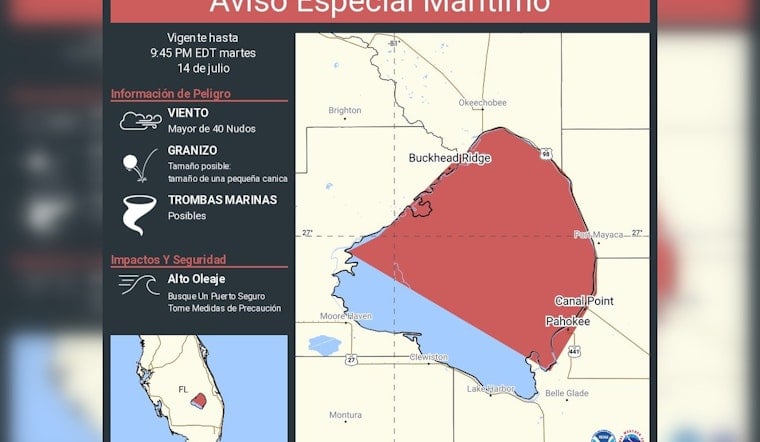
Boaters and lakeside residents around Lake Okeechobee were told to drop what they were doing and head for shelter Wednesday night after the National Weather Service in Miami issued an urgent Spanish-language aviso especial marítimo that covered the lake through 9:45 p.m. EDT. The fast-moving alert called out rapidly developing thunderstorms capable of kicking up sudden high winds, waterspouts and small hail strong enough to overturn or damage small craft.
Aviso Especial Marítimo incluye Lago Okeechobee hasta las 9:45 PM EDT
— NWS Miami (@NWSMiami) July 15, 2026
What the Alert Said
According to NWS Miami, the Spanish-language advisory specifically named Brighton, Okeechobee, Buckhead Ridge, Port Mayaca and Canal Point and urged mariners to “seek safe harbor” immediately as storms swept across the lake. Forecasters warned that conditions could go from calm to hazardous quickly and advised anyone already on the water to get off the lake until the threat passed.
Hazards and Why Boaters Should Be Careful
As outlined by the National Weather Service, Special Marine Warnings are issued for short-lived but dangerous threats such as waterspouts, hail and radar-indicated wind gusts of 34 knots or higher. NWS guidance for Lake Okeechobee notes that even brief bursts of stronger wind and higher waves can damage small craft, which is why the agency consistently tells mariners to move to safe harbor until hazardous weather clears the area.
A Summer Pattern
This latest alert continues a run of short-fuse marine warnings on the lake in recent weeks as strong afternoon thunderstorms flare over South Florida. Local reporting has pointed out the trend, with Hoodline having chronicled similar Spanish-language alerts aimed at reaching lakeside communities when storms pop up in a hurry.
What Boaters Should Do
If you are on Lake Okeechobee when one of these warnings is issued, move to safe harbor and stay put until the storm passes, then report any severe weather you encounter to the Coast Guard or the National Weather Service. If you are caught on open water, stay below deck if possible and avoid ungrounded metal until the all clear is given. Plan for conditions to change quickly and treat sheltering as the priority until officials say it is safe to head back out.





