

























































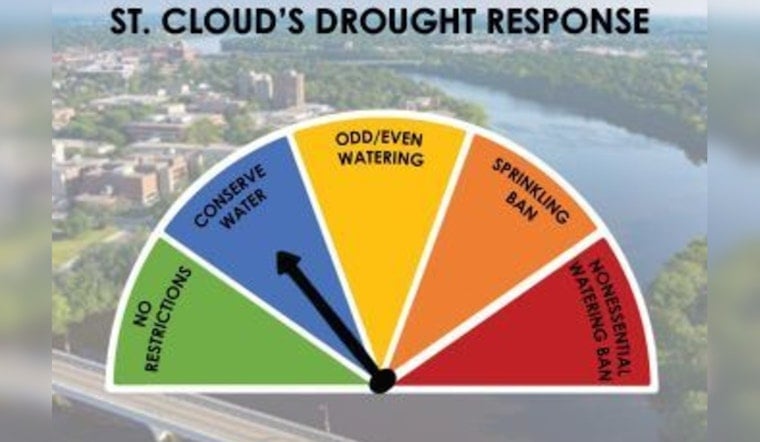
St. Cloud is on official drought watch, and residents are being asked to turn down the taps after state officials moved the Mississippi Headwaters watershed into a drought warning phase this week. The situation is what experts call a “storage drought,” a serious drop in lake levels, soil moisture, and groundwater that can stress wells and streams. The Mississippi River is still the city’s primary drinking water source, but local leaders say cutting back now could ease that pressure and help the city avoid tougher rules later.
The warning level showed up on the weekly U.S. Drought Monitor map. According to the Minnesota Department of Natural Resources, about 46% of Minnesota is now abnormally dry, roughly 18% is in moderate drought, and about 11% is in severe drought. The agency lists the Mississippi Headwaters among the watersheds placed in the Drought Warning Response Phase.
St. Cloud Issues Local Guidance
The City of St. Cloud says it is coordinating with the DNR and has urged residents to trim water use both indoors and outdoors as part of the city’s drought response. City suggestions focus on simple, immediate fixes that add up across neighborhoods: repairing leaking toilets, shutting off the tap while brushing teeth, and running dishwashers and laundry only with full loads.
What The State Plan Means
Under the Minnesota Statewide Drought Plan, public water suppliers in a watershed that reaches the Warning phase are expected to roll out conservation measures and aim to keep water use to no more than 150% of January levels. The DNR also recommends outdoor steps such as cutting lawn watering back to about one inch per week, turning off automatic irrigation controls, watering only when the soil is dry and checking hoses and sprinklers for leaks. The agency can also temporarily suspend surface water permits if streamflows fall below protected thresholds, according to the Minnesota Department of Natural Resources.
How Residents Can Cut Use
Both outdoor and indoor conservation are on the table, and small changes can significantly lower neighborhood demand during hot, dry weeks. As reported by KNSI, the city is also encouraging familiar fixes like repairing running toilets, batching laundry and dishes to reduce the number of cycles and skipping unnecessary rinsing.
Residents who want to track or cut their household use can sign up for the city’s Consumer Water Portal and find resources on the municipal drought notice. The City of St. Cloud directs questions to [email protected] or 320-255-7225 for more information. Local officials say that acting early can lessen the odds of stricter restrictions later and helps protect in-stream flows and groundwater that support both communities and wildlife.





