

























































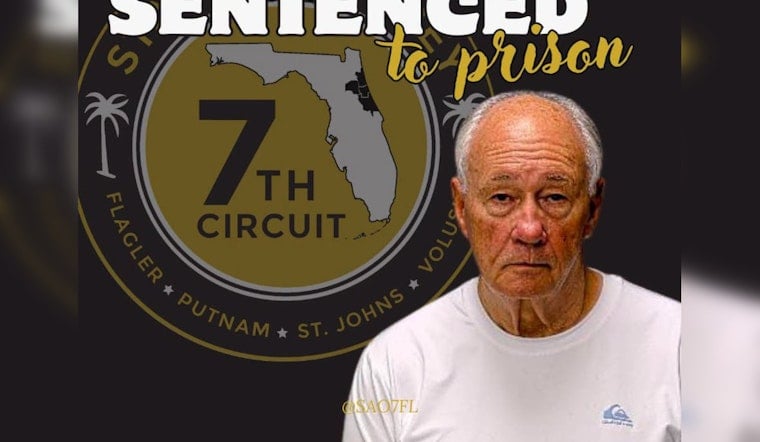
A St. Johns County man has been ordered to serve 36.9 years in state prison after pleading guilty in a child-sexual-material case, local prosecutors announced. Robert Goosey admitted to possessing a sexual performance by a child and to multiple counts tied to the unlawful use of a two-way communications device, bringing to a close an investigation that drew law enforcement attention earlier this summer.
According to a post from the State Attorney, Florida's Seventh Judicial Circuit, Judge Christopher Ferebee handed down the 36.9-year sentence after Assistant State Attorney Jennifer Lieb prosecuted the case. The office reports that Goosey entered guilty pleas to one count of possession of a sexual performance by a child and 21 counts of unlawful use of a two-way communications device, and that the St. Johns County Sheriff’s Office conducted the investigation. The State Attorney’s post was published on July 14, 2026.
Charges and penalties explained
Under Florida law, sexual performances involving minors are specifically criminalized, and each image, file or transmission can be treated as its own offense. That structure is laid out in Florida Statute 827.071. The unlawful-use counts are based on the state statute that makes it a felony to use a two-way communications device to commit or facilitate another felony, detailed in Florida Statute 934.215. Because each qualifying act can be charged and sentenced separately, multiple second and third degree felonies can stack into a multi-decade total at sentencing.
Wider legal context
The lengthy term arrives as Florida has recently moved to stiffen penalties for crimes involving child sexual-abuse material. A legislative analysis of CS/HB 1159, which took effect on July 1, 2026, outlines increased reclassifications and mandatory minimum prison terms for certain possession, promotion and transmission offenses. The analysis notes mandatory minimums of five and 15 years for designated reclassified crimes, depending on the specifics of a case, benchmarks that now factor into how prosecutors and judges approach charging and sentencing.
Legal implications and what’s next
Offenses like those Goosey admitted to typically trigger sex-offender registration and long-term post-release requirements. The Florida Department of Law Enforcement is responsible for maintaining the registration rules and the public database of registered offenders. The State Attorney’s post does not identify any victims or describe the underlying evidence in detail, and those seeking the official public record of the case must look to the St. Johns County Clerk of Court, which maintains the docket and sentencing documents.





