

























































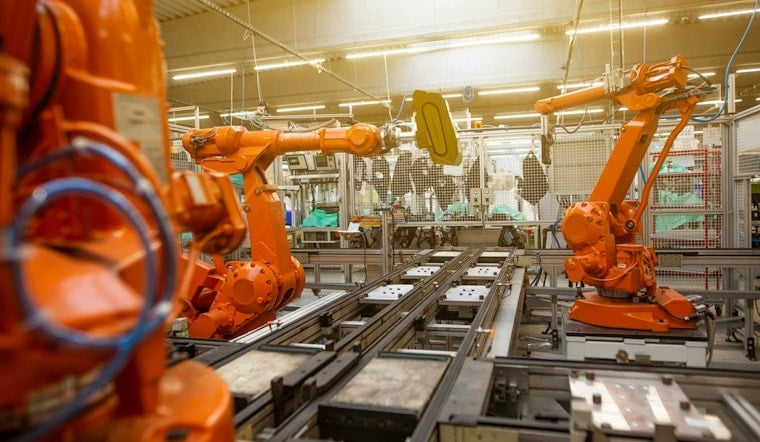
St. Louis manufacturers are staring at a very modern factory-floor dilemma: how to make more products with fewer available workers, without treating every human job like an outdated machine part. That tension took center stage Wednesday as industry leaders gathered to talk automation, robotics and the skills needed to keep the region's manufacturing base moving.
The gathering at Saint Louis University's Cook Hall was organized by AMICSTL and Greater St. Louis Inc. to help manufacturers navigate fast-moving automation advances. The St. Louis Business Journal reported that a panel included Karthik Raghavan of Sentio Biosciences, Brandon Wegge of AMICSTL and Jason Stoecker of Align Production Systems.
The event's pitch was practical rather than sci-fi: hear from manufacturers that have adopted automation, meet system integrators, identify funding sources and get hands-on exposure to robotics. Greater St. Louis Inc. framed the day around workforce shortages, rising costs and competition, with the goal of giving companies a roadmap for deciding where technology can actually help.
AMICSTL Wants The Robot Conversation To Include Workers
That roadmap is tied to a larger St. Louis bet on advanced manufacturing. AMICSTL says it is building connections among manufacturers, universities, trade colleges and community groups so residents can gain the training and hands-on experience needed for advanced manufacturing careers.
Construction is continuing on AMICSTL's planned 52,000-square-foot facility in North St. Louis, which is scheduled to open in spring 2027, according to the Business Journal's earlier report. The center is intended to combine workforce development with research, prototyping and production support—an effort to make automation less about dropping a robot into a plant and more about helping companies and employees adapt together.
Early Data Suggests A Skills Shift, Not Just Job Cuts
Recent St. Louis Fed survey findings offer a more mixed picture than the usual robots-versus-workers headline. Across firms in the Eighth District, 49% expected no noticeable staffing effect from AI over the next year, while about 18% expected skills to shift rather than headcount; nearly 20% anticipated slight reductions, according to the St. Louis Fed. The survey covered businesses broadly, not just manufacturers, but it underscores why employers are talking about training alongside equipment.
For scale, Bureau of Labor Statistics data compiled by FRED show the St. Louis metro area had about 117,400 manufacturing jobs in May, seasonally adjusted. That number measures employment, not open positions, but it makes clear that the automation debate touches a substantial local workforce rather than a niche industrial corner.
The emerging local playbook is therefore a two-part wager: automate enough to keep production competitive, then build enough technical talent to operate, maintain and improve the new systems. That is the logic behind AMICSTL's workforce model and the Federal Reserve's finding that many firms expect changing skill needs before major staffing cuts.





