

























































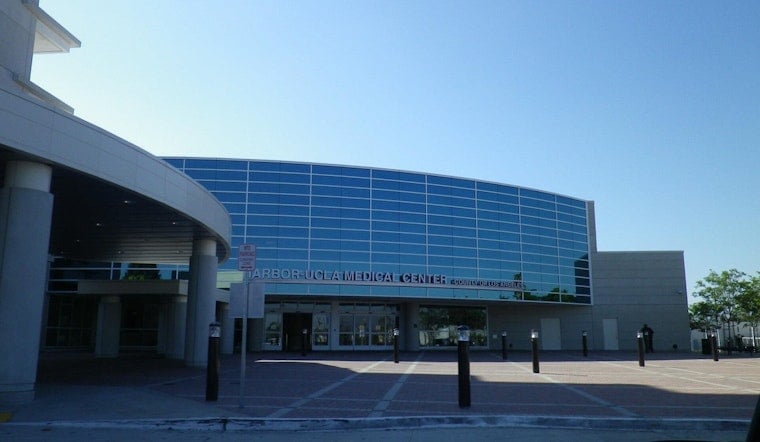
Harbor‑UCLA Medical Center's West Carson campus is trading its midcentury profile for a wall of steel and glass as crews push ahead on a multi‑billion‑dollar replacement program. A nine‑story inpatient tower now stands beside a six‑story clinic building, while contractors thread new construction around an active Level I trauma center. County officials say the program remains on schedule, with patient services expected to begin in early 2028.
Project by the numbers
The centerpiece of the overhaul is a nine‑story hospital tower of roughly 555,000 square feet that will house 347 patient beds. Those beds are slated to include 44 intensive‑care beds, more than 200 medical‑surgical beds, 20 neonatal intensive‑care beds and 36 mental‑health beds. The campus plan also calls for a six‑story, approximately 374,000‑square‑foot clinic building that will consolidate outpatient services, a 1,500‑space parking structure, a 34,000‑square‑foot regional laboratory and a new central utility plant.
Those specifications, along with a phased timeline that tracks occupancy milestones into early 2028, are detailed in the county's replacement‑program fact sheet, according to Los Angeles County Public Works.
Who's building it
The rebuild is being delivered under a single design‑build contract led by Hensel Phelps, with HMC Architects and CO Architects handling design. County leaders and the contractor team say that approach is intended to keep tight control over sequencing on the crowded 72‑acre site, where construction and daily hospital operations have to coexist.
HMC marked a key milestone when crews topped out the inpatient tower last year, and the firm has highlighted the use of BIM, prefabrication and coordinated safety teams to keep the existing hospital fully functional while new facilities rise around it, according to HMC Architects. Recent aerial views that show how the new buildings are reshaping the campus were published by Urbanize LA.
Why the rebuild is happening
County officials point to California's SB 1953 seismic‑safety law as a central driver of the project. The mandate requires hospitals to meet modern structural standards by 2030, which has put a hard deadline on replacing Harbor‑UCLA's older midcentury facilities, according to the Los Angeles County Department of Health Services.
The $1.8‑billion program has also drawn industry attention as one of the largest health‑care capital improvements in Los Angeles County history, as noted by ENR. The same seismic deadline has pushed other systems across the region to pursue similar hospital upgrades.
What's next for patients and neighbors
Construction has been staged so the campus can keep seeing patients while new buildings come online. The county's plan calls for the clinic building to be completed in mid‑2026, with patient services expected to start there in early 2027, and for the hospital tower to be ready for occupancy in early 2028.
To smooth that transition, the site has already added parking and support facilities, including a 1,500‑stall garage with EV infrastructure that is intended to cut down on disruption for visitors and staff, according to Los Angeles County Public Works. Hoodline first reported the project's 2024 groundbreaking and local framing in its earlier coverage of the $1.7 billion overhaul.
When the dust finally settles, Harbor‑UCLA's rebuilt campus is expected to remain a major regional employer and training hospital, serving roughly 3 million residents and handling hundreds of thousands of outpatient and emergency visits each year. County officials and industry reports have repeatedly underscored that role. The rebuild is framed not just as a construction project but as a long‑term investment in the county's public safety‑net and trauma‑care capacity, as the campus prepares to welcome patients into its new facilities in 2028, according to ENR.





