

























































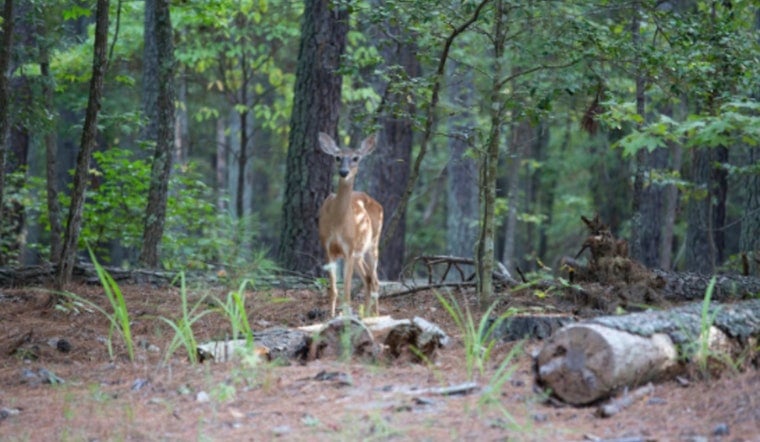
North Carolina’s deer hunters are being asked to shoulder a bigger role in the fight against chronic wasting disease this year, as state wildlife officials tweak season dates and tighten carcass rules in an effort to keep the fatal illness from getting a stronger foothold.
The N.C. Wildlife Resources Commission has signed off on a Special Early Season for antlered deer on August 22 and 23, 2026, along with moving blackpowder season and, in some areas, gun season up by one week to cut down on deer movement during the peak rut, according to NC Wildlife. The changes apply within CWD Management Areas that currently include Cumberland, Forsyth, Sampson, Stokes, Surry, Wilkes and Yadkin counties, and are slated to appear in the 2026-27 regulations digest.
Wildlife Health Biologist Miranda Turner told WFAE that managers are trying to remove infected animals before the fall breeding season, when deer travel more and young animals disperse to new areas. She noted that chronic wasting disease was first detected in North Carolina in 2022 and that current estimates in affected counties remain under 5 percent of the deer herd, a relatively low level that officials say is exactly when containment efforts are most effective.
New carcass rules aim to limit spread
Alongside the calendar changes, the commission has scrapped its patchwork of county-level transport bans and replaced them with statewide rules for how hunters must dispose of non-edible carcass parts. Final disposal must now be in a lined landfill, buried at least three feet deep and at least 300 feet from any waterbody, or left on the landscape within the county where the deer was harvested, in line with guidance from NC Wildlife. Officials say the goal is to keep potentially infectious tissues, and the disease agents inside them, from being hauled around the state.
Those agents are prions, microscopic proteins that have folded the wrong way and that do not break down easily in soil or water. Once they are on the landscape, they can linger for years, which is why the state is now more focused on how and where deer remains are discarded.
Where CWD has been found
Since the first North Carolina case was identified, chronic wasting disease has been confirmed in multiple counties, and both state and federal agencies use county-level maps to track its spread and plan surveillance. The CDC maintains a national county map that shows where cases have been reported and notes that the disease is now present in many states. Wildlife and public health officials use those maps to target outreach to hunters and landowners.
How hunters can help
State officials are urging hunters who take deer in surveillance or management areas to have those animals tested for chronic wasting disease and, when possible, to use participating processors and taxidermists who are set up to support the testing program. They are also asking hunters to follow the new disposal rules instead of transporting whole carcasses long distances.
Landowners can enroll in property-specific programs that expand hunting and sampling opportunities, which in turn help wildlife biologists keep closer tabs on the disease. Hunters are encouraged to look up testing drop-box locations and confirm which processors and taxidermists are participating well before the season opens, so they are not scrambling with a deer in the back of the truck.
Public-health and environmental concerns
Chronic wasting disease is caused by prions, misfolded proteins that resist normal disinfection and can persist in the environment for years. There are no confirmed cases in humans, but federal health officials still recommend avoiding meat from animals that test positive. Current guidance advises hunters not to eat venison from a CWD-positive deer, according to the CDC.
Wildlife biologists warn that once infection rates climb, herds tend to decline and management options narrow, which makes it far harder to protect both deer populations and hunting traditions. That is why the commission is pressing the issue now, while known prevalence is still relatively low and hunters can make the biggest difference.
State leaders say hunters remain their most important tool for slowing chronic wasting disease and that the new rules are designed to protect long-term hunting opportunities by boxing the illness in. Updated regulations, testing details and FAQs are expected online later this summer, and officials are asking hunters to review them and plan ahead before stepping into the woods this fall.





