

























































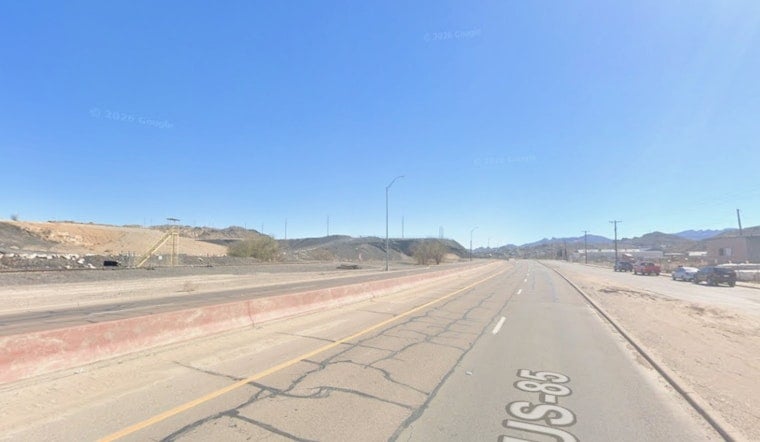
For generations, the hulking Asarco smelter across from UTEP defined the West El Paso skyline. More than a decade after crews knocked down its towering stacks, what is left behind is mostly empty land. The cleanup removed tens of thousands of cubic yards of contaminated material and capped parts of the former plant, yet large sections of the property still carry industrial use restrictions. Even where it now looks like bare, buildable dirt from the freeway, homes, schools, and hospitals are off limits. The emptiness is not just physical; it is also legal and regulatory, with the property held in a custodial trust while state and federal agencies oversee long-term controls.
How the stacks came down
In the early morning hours of April 13, 2013, demolition crews used explosives to bring down the two concrete smokestacks that had dominated the city’s skyline for decades. As reported by KPBS, hundreds of residents gathered on nearby hillsides and around UTEP to watch the 800-foot-plus tower and its smaller neighbor collapse into clouds of dust. Local radio outlet KLAQ still revisits that moment in retrospectives that focus on both the stacks and the crowds that turned out to see a landmark disappear in seconds.
A legacy of heavy metals in soil
Decades of smelting left both the plant site and surrounding neighborhoods with elevated levels of lead, arsenic, and other metals in the soil, a pattern documented in academic and local analyses. A review in Local Environment tracks how years of emissions and slag deposits contributed to the region’s legacy lead and arsenic in residential yards. UTEP student researchers have also measured high post-demolition lead concentrations in nearby soils, underscoring why this land cannot be treated like ordinary property. Their work is cataloged in the university’s listings at UTEP ScholarWorks.
Cleanup, caps, and what was left behind
The state’s remediation plan pulled the worst material into lined repository cells, paved or covered much of the slag, and left a network of engineered caps and groundwater controls in place, according to the Texas regulator that oversees the project. The Texas Commission on Environmental Quality Corrective Action page describes excavation of Category I material, installation of geomembrane liners, and the design of surface covers and groundwater remedies that require ongoing maintenance. These engineering fixes are intended to cut exposure risk, yet they also create long-term responsibilities for whoever owns the property.
Why buyers have shied away
The roughly 430 to 460 acres have stayed mostly empty for practical reasons and financial ones. The custodial trust and regulators have concluded that some parcels will never be cleared for more sensitive uses such as housing or schools, which shrinks the pool of potential buyers. Local reporting shows the University of Texas system spent years in talks over a possible full purchase, then ultimately backed away after deciding that long-term monitoring and maintenance costs would be too high for the university to absorb, as detailed by the El Paso Times. Background on the project and trustee-level documents are summarized on the custodial trustee’s site at Recasting the Smelter.
Legal and regulatory limits
The site’s cleanup and potential sale are guided by court orders and agency documents that stretch back decades. Enforcement records and the Asarco bankruptcy settlement created the custodial trust and the cleanup fund that pays for long-term controls. The original agreed order and later filings spell out the authorized corrective actions and the presence of elevated metals on site. Those details are available in documents from the Texas Commission on Environmental Quality and on the state’s Texas Commission on Environmental Quality ASARCO site page. Together, they explain why some parcels are restricted to commercial or industrial reuse unless new and costly remediation is carried out.
For now, the former smelter is mostly flat ground and capped piles where a defining city landmark once stood. The land is cleaned up enough to cut off the worst exposures, yet still bound tightly enough by engineering controls and legal conditions that any new development will be carefully choreographed among regulators, trustees, and future buyers. That mix of remediation design, perpetual monitoring expenses, and land use limits goes a long way toward explaining why, more than a decade after the stacks came down, the Asarco site remains an empty stretch of West El Paso.





