

























































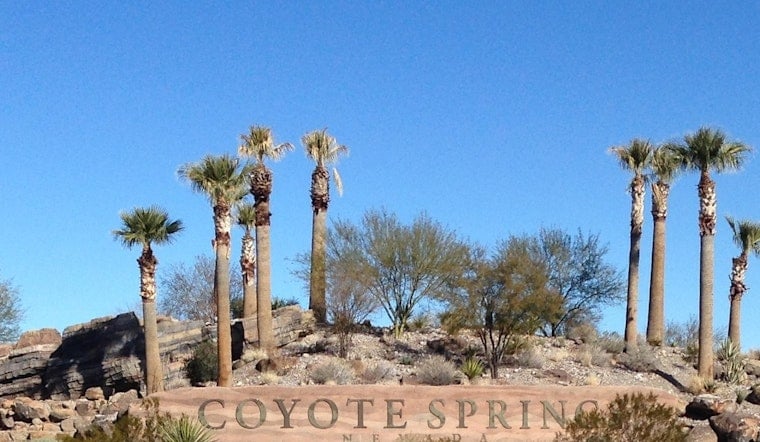
The future of a long‑promised desert community is now in the hands of a Las Vegas courtroom, where a high‑stakes trial over water rights at the long‑stalled Coyote Springs development opened this week. Coyote Springs Investment LLC and the Seeno family are seeking roughly $1.5 billion after the state engineer curtailed permits the developers say were necessary to build thousands of homes. The case could reshape how Nevada balances private water claims, endangered species protections and the public interest in a state where every acre‑foot matters.
Opening statements began Wednesday before District Judge Mark Denton, with developers arguing they acquired permits, hired consultants and advanced development plans between 2004 and 2018, and that a May 16, 2018 state letter and a later map rejection effectively stalled construction, as reported by KTNV. Attorney Mark Hutchison told the court that Coyote Springs Investment relied on a settlement signed on Aug. 29, 2018 that required the state to process the company’s map in “good faith,” and that the state rejected the large‑lot map in June 2020, the station reported. State counsel countered that the state engineer has discretion to regulate groundwater to preserve supply for Nevada citizens and that earlier permits came with conditions and a clear risk of curtailment.
Court precedent and the LWRFS
At the center of the dispute is whether multiple hydrographic basins feed a single carbonate system that supplies springs and the Muddy River. In 2024 the Nevada Supreme Court affirmed the state engineer’s authority to treat those basins as the Lower White River Flow System after pump tests showed that groundwater withdrawals reduced Muddy River springflow, and the court noted a working cap of roughly 8,000 acre‑feet a year as a benchmark for management in its Supreme Court of Nevada opinion in Sullivan v. Lincoln County Water District.
Local stakes
Reporters and water experts say a developer win could force the state to pay large sums and make future curtailments politically fraught. That concern, along with potential ripple effects across Nevada’s prior‑appropriation system, surfaced in recent coverage that noted the trial could chill tough enforcement decisions that protect senior water users and endangered springs, according to KNPR.
What the trial will decide
Phase one, the liability phase, began this week and could take several months. If Judge Denton finds for the developers, a penalty phase, in which jurors would determine damages, would begin roughly 45 days after his ruling, according to KTNV. Both sides also planned a site visit to Coyote Springs, and the next court date is scheduled for July 27.
What happens next
The court is expected to weigh competing hydrogeologic models, historical studies and testimony about what the carbonate aquifer can sustainably yield before issuing factual findings that could be appealed. Whatever the outcome, legal observers expect the decision to reverberate across Nevada as regulators, developers and conservationists watch how courts choose to value and protect scarce groundwater.



