

























































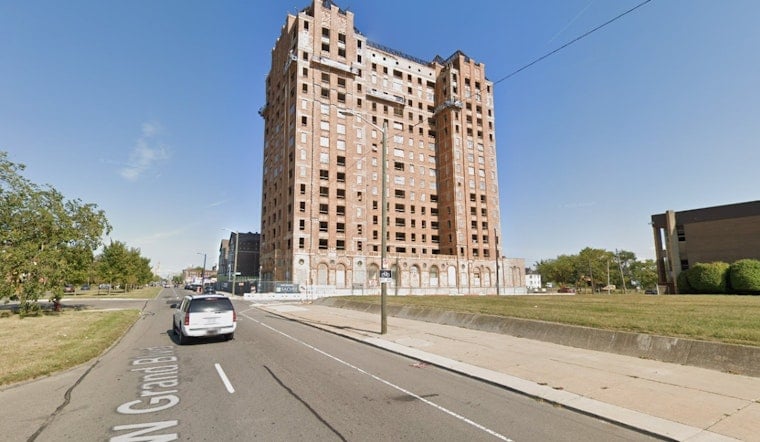
What was supposed to be a careful historic restoration of Detroit’s long-vacant Lee Plaza has turned into something much closer to a rebuild, according to crews on site. Inside the 16-story Art Deco tower on West Grand Boulevard, water damage was so widespread that contractors say they have had to peel the building back to its bones in places. The high-rise, which opened in the late 1920s and has sat largely empty since the mid-1990s, is still on track to reopen portions as senior housing in the coming months, even as the first phase of work looks more like reconstruction than rehab.
As reported by the Detroit Free Press, members of the construction team described the building’s water damage as among the worst they have seen on a historic project, a mess that has forced costly cleanup and shuffled timetables. The Free Press account walks through the hidden rot, failed systems, and surprise deterioration uncovered after crews began stripping away decades of decay and evidence of looting.
Contractors Say The Fix Looked Like A Near Rebuild
Sachse Construction, the contractor documenting the overhaul, has shared project photos that show collapsed plaster ceilings, standing water, and entire window bays missing. The company says conditions like that meant crews had to remove interior finishes back to sound masonry and steel in several areas just to get to a safe starting point. Sachse lists the Lee Plaza project at roughly 201,681 square feet, with Phase 1 still targeted for completion in late 2026, though workers say the surprise remediation has tightened an already ambitious schedule.
Financing Remains Intact Even As Scope Grows
Despite the scope creep, city and state officials say the complicated financing package for Lee Plaza is holding together. The capital stack combines Low-Income Housing Tax Credit equity, a HUD-backed mortgage, federal historic tax credits and $7 million in American Rescue Plan Act funds. According to a City of Detroit announcement and Michigan State Housing Development Authority board materials, the pieces add up to roughly $59 million in support for the deal. Developers acknowledge that the unexpected remediation has put extra pressure on both the budget and the construction calendar, but say the funding structure itself remains in place.
Why The Damage Was So Severe
Historic records and old photos show that Lee Plaza, built in the late 1920s, went through cycles of repair, repurposing, and stripping after it was closed in the 1990s. Years of exposure help explain why crews found such extensive interior rot. HistoricDetroit.org and preservation archives describe missing terra-cotta pieces, open and broken windows, and long-running water infiltration, all of which left original finishes in ruins and made the restoration plan far more complicated than early renderings might suggest.
Nonprofit partners and neighborhood advocates argue that rescuing the Lee will do more than save a landmark. They say the project will eliminate a hulking neighborhood eyesore, bring roughly 117 affordable senior apartments online, and generate construction jobs, even if the repair tab is higher than anyone wanted. Lighthouse Michigan and other stakeholders also highlight the building’s symbolic weight for Northwest Goldberg, while developers say crews are pushing to complete Phase 1 in time for a late-2026 opening. As the Detroit Free Press pointed out, the scale of the water damage is a blunt reminder of what long-term vacancy costs a city, and of how historic preservation can end up looking a lot like starting over.





