

























































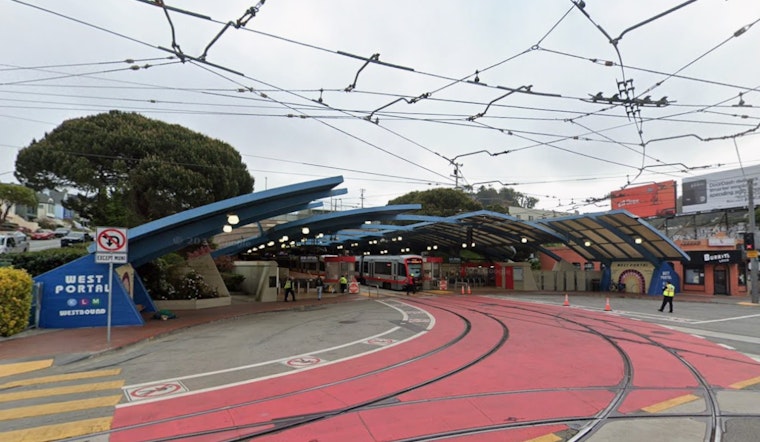
SFMTA’s early report card on its West Portal Station quick-build experiment says the numbers are breaking the agency’s way: fewer people are getting hurt, and the neighborhood’s commercial strip is still hopping. The evaluation, which combines traffic counts, police crash records and on-the-street surveys, points to big drops in injury collisions and high rates of driver compliance with the new rules. The big question now is whether those temporary fixes become part of the permanent landscape.
Safer Streets, Fewer People Getting Hurt
According to the agency’s interim evaluation, injury crashes in the project area dropped by roughly 60%, falling from an average of about 6.7 per year to around 2.7 per year. Crashes involving Muni vehicles fell by about one-third, and staff reported that by fall 2025, there were no recorded collisions between a Muni vehicle and another vehicle in the study zone.
Video turning counts and speed surveys show drivers mostly playing by the new rules and easing off the gas. More than 97% of vehicle movements at West Portal Avenue and Ulloa complied with restrictions, and left turns near key intersections were clocking compliance rates of about 99%. The kind of hair-raising illegal U-turns near the station approach dropped by roughly 75%.
Speeding on Wawona Street between Taraval and Ulloa also cooled off, with the share of drivers speeding shrinking from about 19% to roughly 7%. On foot, behavior changed too: pedestrian crossings across the tracks mid-block, outside the station, decreased by about 75%.
Despite all that, most shoppers do not seem to be staying away. Intercept surveys found that 95% of respondents reported visiting West Portal businesses as often or more often than before the quick-build changes, according to SFMTA.
Merchants and Critics Weigh In
On the ground, reaction is far from unanimous. Some merchants and nearby residents say slower speeds, fewer chaotic turns and the reworked station “horseshoe” have made the area feel saner and safer.
Street-safety advocates, however, argue the final quick-build layout was a compromise version of the original safety plan, softened after neighborhood and political pushback and missing some of the sturdier physical protections first floated.
The whole fight traces back to the March 16, 2024 collision that killed members of a family and spurred SFMTA’s initial proposals for the area, as reported by the San Francisco Chronicle.
What Comes Next for the Quick-Build Fixes
SFMTA says it is not calling the project finished. The agency plans to keep tracking traffic patterns, crashes and business-visit surveys along the corridor while it looks for grant funding to replace temporary materials in the West Portal horseshoe with more permanent ones. The current setup was designed to last about three to five years so staff could monitor outcomes and tweak the layout.
The agency says it will use the data it is gathering to decide whether and how to beef up the quick-build elements, according to SFMTA.
Moving SF - We recently completed an evaluation of the West Portal Station Safety & Community Space Improvements project. Results show safer neighborhood streets & that the corridor remains a vibrant place for businesses, neighbors & visitors. Read more ⬇️https://t.co/PiQsA7gqUq
— SFMTA (@SFMTA_Muni) July 20, 2026
Takeaway for Neighbors
For now, the statistics offer some cautious good news: the quick-build changes appear to have cut down on the most dangerous crashes without scaring off regulars from West Portal’s shops and restaurants.
Advocates quoted by Streetsblog and others say the real test is still ahead. They want the promising early safety gains locked in with tougher, longer-lasting protections for people on foot and on transit. City officials will have to decide how far to go in that direction as they chase funding and choose a final design for one of the city’s most closely watched street makeovers.




