

























































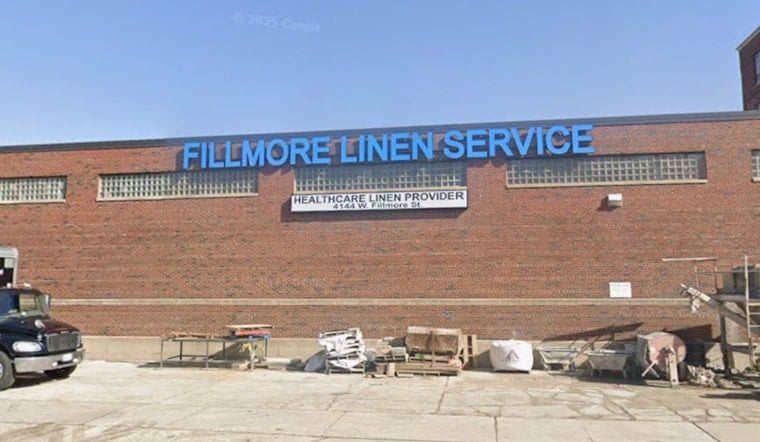
Inside the cavernous Fillmore Center on Chicago's West Side, an industrial-scale laundry has quietly turned into something bigger than a place to wash hospital sheets. Fillmore Linen Service has grown from a few dozen workers to more than 160, and it is gearing up to spill over into a neighboring building as demand climbs. The company makes a point of hiring North Lawndale residents, people in recovery and folks coming home from prison, and many workers say the steady paycheck and clear path to promotion have been nothing short of life changing. Supervisors and new hires alike point to benefits, predictable schedules and room to advance as reasons they are sticking around, while hospital contracts and philanthropic backing help transform a long-empty factory into a neighborhood jobs hub.
The laundry operates inside the 168,000-square-foot Fillmore Center at 4100 W. Fillmore St., an old industrial site that now hosts several local businesses, according to Fillmore Center. Fillmore Linen is the anchor tenant, and the full redevelopment is pitched as a long-term neighborhood investment designed to create jobs and build local economic power rather than ship work out of state.
As reported by the Chicago Sun-Times, the laundry's staff has jumped to more than 160 workers, with roughly half living in North Lawndale and about 80 percent drawn from the broader West Side. An expanded contract to clean curtains for Endeavor Health System is expected to push that number even higher, since it will require Fillmore Linen to move into an adjacent building. One of the early hires, Ron Vann, rose to supervise more than 100 workers and told the Sun-Times, "this is truly one of the best things that ever happened to me," while another employee, D'Andre Thomas, was promoted to handle soiled materials. The operation is framed as both a major employer and a second-chance workplace where people who were long shut out of the job market can rebuild their careers.
Hospital contracts push expansion
Hospitals have been central to making the numbers work. Rush University Medical Center signed on early as a foundational partner, and Lurie Children's later added Fillmore Linen to its vendor roster, giving the laundry enough volume to compete with out-of-state contractors, according to Lurie Children's and Rush University Medical Center. Company leaders say keeping the laundry work in Chicago cuts costs, shortens supply chains and helps hospitals hit sustainability targets, all while turning a basic back-of-house service into steady employment for West Side residents.
Training pipelines and second chances
Much of Fillmore's hiring flows through neighborhood organizations rather than traditional HR pipelines. The North Lawndale Employment Network runs programs such as U-Turn Permitted and Sweet Beginnings that offer job training, transitional work and wraparound supports, then connect graduates to employers like Fillmore Linen, according to North Lawndale Employment Network. NLEN materials say the group has placed hundreds of returning citizens and thousands of residents in paid jobs and provides ongoing coaching, housing support and financial counseling to help people stay employed. Partners say that setup is crucial because it lowers both the stigma and the practical barriers that kept many qualified local workers on the sidelines.
Backers describe the whole project as deliberately place based, built around North Lawndale rather than simply located there. Philanthropic and financing support helped rehab the once-empty factory, and Fillmore Linen's leadership told the Chicago Sun-Times that the business aims to reach profitability by 2029 and eventually transfer ownership to employees and management. The Steans Family Foundation, which bought the building and led the renovation, frames the Fillmore Center as a long-term job engine for North Lawndale, according to Steans Family Foundation.
Supporters say the real verdict will come not from ribbon cuttings but from paychecks and promotions, and whether wages, benefits and advancement actually move household incomes in the neighborhood instead of creating a brief spike in hiring. For residents looking to get in the door, job openings and training details are listed on NLEN's program pages and on the Fillmore Center hiring portal at Fillmore Center, which lay out current positions, support services and help with applications.





