

























































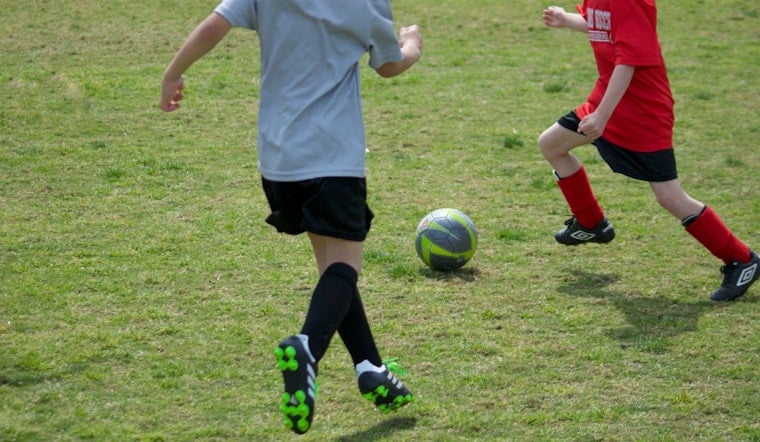
In Los Angeles, you can spot kids dribbling a soccer ball on just about every block. Finding an actual field to play on is the hard part. In Culver City, more than 1,800 children are squeezed onto just three soccer fields, and in one Boyle Heights ZIP code, a single pitch is shared by more than 7,300 kids.
Fields Have Multiplied, but Not For Everyone
An analysis that overlaid OpenStreetMap field locations with American Community Survey data shows the Greater Los Angeles area has added more than 1,000 soccer fields since 2014. The boom sounds great until you see where the new fields are. Most of that fresh turf is clustered in whiter neighborhoods. As reported by NBC Los Angeles, elementary-aged children in mostly white ZIP codes share roughly 1,345 kids per field on average, while children in majority-nonwhite areas are stuck with far higher player-to-field ratios.
Costs Are Pricing Families Out
Even when a field exists, getting on it is increasingly a pay-to-play proposition. The Aspen Institute’s Project Play parent survey found that the average U.S. family shelled out about $1,016 on a child’s primary sport. At the same time, the Sports & Fitness Industry Association reports outdoor soccer participation hit record levels in 2025, with roughly 16.8 million players nationwide and about 5.5 million of them ages 6 through 12. Put together, the rising price tag and growing demand help explain why many families eventually walk away from organized leagues when the travel, tournament fees, and gear costs start to pile up.
Who Gets Left Behind?
Race and income often predict who can stay in the game. Research from McKinsey’s Institute for Economic Mobility, done in collaboration with U.S. Soccer, found that Latino and Black children are far more likely than white children to quit playing because they feel unwelcome. Park-data studies also show that neighborhoods of color tend to get far less park acreage per person than predominantly white areas. Local advocates quoted in reporting say U.S. Soccer estimates roughly 70% of children stop playing by their early teens, and that millions of kids still do not have a safe, walkable place to play at all. For many families, that lack of space is the line between sticking with the sport and dropping it entirely.
What’s Being Done
National and local groups are trying to turn World Cup buzz into permanent places to play. The U.S. Soccer Foundation’s Safe Places to Play program and related mini‑pitch projects have installed small, fenced hard‑court fields around the country to give kids neighborhood options when a full grass field is not realistic. U.S. Soccer’s Soccer Forward initiative has also launched a Soccer at Schools strategy that gets equipment, curricula and starter kits into classrooms. The idea is to create quick, relatively low-cost ways to add usable space and programming in the very places that lack big traditional fields.
Those efforts help, but they are not a substitute for the basics: regular field maintenance, more open schoolyards, and public policies that put parks and youth programs into the communities that need them most. Community groups and clubs are already stepping up with cleanup days, free clinics, and donation drives. Advocates say the next step is for city and county leaders to turn these one-off wins into a long-term plan so kids can keep playing well past their early teen years instead of aging out because the system runs out of room for them.




