

























































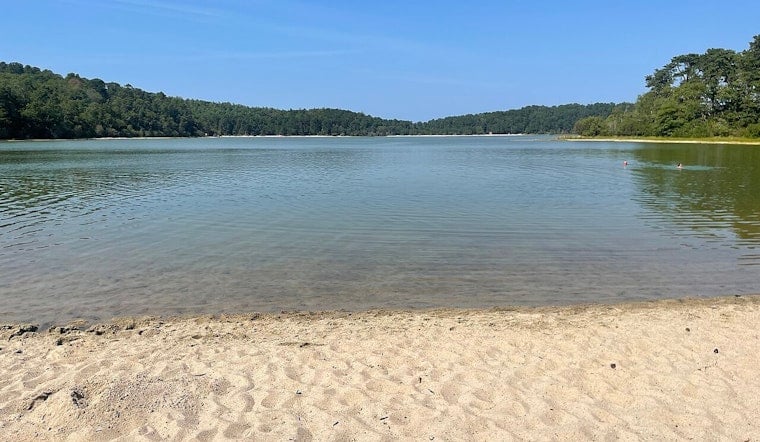
Beachgoers hoping to cool off this weekend will find dozens of Massachusetts swimming spots off-limits, with 35 beaches posted closed as of Friday due to unsafe bacteria levels, harmful algae, and other hazards. The closures stretch from Puffers Pond in Amherst to Cliff Pond in Brewster, hitting coastal shores and inland ponds alike just as forecasters predict plenty of sunshine and temperatures in the 80s for Saturday in Boston.
The tally, current as of Friday, August 14, includes 24 beaches posted for bacterial exceedances, seven for harmful cyanobacteria blooms, and four closed for other reasons, according to Boston.com. Bacteria can reach swimming areas through stormwater runoff, leaking sewer pipes, combined sewer overflows, failing septic systems, and animal waste, the outlet reports. More than 1,100 public and semi-public beaches across the state are required to be monitored for bacteria under state and federal regulations, with testing frequency depending on each beach's history and likelihood of water quality problems.
Because water samples require a 24-hour laboratory incubation period before results come back, closure lists like Friday's necessarily reflect conditions from at least the previous day, according to the Barnstable County Department of Health. That lag is built into the system: state sanitary regulations set maximum single-sample limits of 104 colony-forming units per 100 mL of Enterococci in marine waters and 235 CFU per 100 mL of E. coli in fresh waters, thresholds meant to flag the potential presence of disease-causing fecal pathogens.
Rain Remains the Biggest Trigger
Massachusetts beaches are generally posted closed after two consecutive failed samples, but beaches with a history of repeated failures over the prior four seasons are placed on a stricter single-exceedance rule, per the same Barnstable County guidance. In its 2025 Annual Beach Testing Results report, the state Department of Public Health identified recent rainfall as the single biggest driver of elevated bacteria, with exceedance rates spiking highest within 24 hours of a storm.
Statewide water quality has actually been trending in the right direction. DPH data cited in that same 2025 report showed 4.0% of marine samples and 3.9% of freshwater samples exceeded bacterial standards last year, down from 7.3% of marine and 4.9% of freshwater samples in 2024. Health officials have warned that swimmers should stay out of posted beach water to avoid illness, and DPH advises beachgoers to check conditions before entering the water, since the agency updates its beach water quality dashboard hourly throughout the season, Boston.com notes.
Where the Closures Are Concentrated
Lynn's King's Beach system accounts for several of the closures this weekend, with postings at Eastern Ave., Kimball Rd., and Pierce Rd., alongside a separate King's closure across the town line in Swampscott and at Lynn Shore Beach. That stretch has a documented history of chronic contamination; a CommonWealth Beacon report found bacteria levels at King's Beach have historically exceeded safe limits by up to 800 times, prompting local officials to test a summer ultraviolet light disinfection pilot aimed at treating discharges from Stacey's Brook before they reach the shore.
Salem also has multiple postings, with closures at Children's Island's Back and Wally beaches and at Juniper Point. Worcester has four separate closures — Shore Park, Indian Lake Public Beach, Coes Pond Beach, and Lake Quinsigamond's Regatta Point Beach — while Amherst's Puffers Pond is closed at both its State St. and Mill St. access points. Brewster's Cliff Pond is closed at both its Main and DYS locations. Other closed spots span Winthrop's Pico, Winchester's Shannon Beach at Upper Mystic, Arlington Reservoir, Ashland's Hopkinton Reservoir-Main Beach and its own Ashland Reservoir-Main Beach, Newton's Crystal Lake, Framingham's Waushakum Beach, Saugus's Peckham Pond at Camp Nihan, Holden's Eagle Lake, Ashby's Damon Pond Beach, Dudley's Merino Pond, Taunton's Watsons Pond, Dartmouth's Moses Smith Creek, Upton Town Beach, Pembroke's Furnace Colony, Chicopee Beach, and Tisbury's Tashmoo Beach and Tashmoo Cut. Crystal Lake in Newton is typically a popular local swimming spot, making its closure notable for area residents, per Boston.com's report.
Health Risks of Ignoring Postings
Bacteria-affected beaches remain posted until testing shows water levels have returned to an acceptable range, and Massachusetts beaches can also be posted closed for chemical or safety hazards separate from bacteria and algae. Swimming in bacteria-affected water primarily causes gastroenteritis, with symptoms including nausea, vomiting, diarrhea, and abdominal pain, along with eye, ear, and upper respiratory infections, according to Mass.gov public health guidance.
The cyanobacteria closures carry their own risks. DPH guidelines trigger a cyanobacteria advisory when algal cell counts exceed 70,000 cells per milliliter or visible surface scum forms, warning that the resulting cyanotoxins can cause gastrointestinal illness, skin rashes, and potential liver or neurological damage. DPH officials have said people should avoid contact with water where an algal bloom may be present.
Despite the weekend's closure list, the broader regional picture has been improving. Nonprofit advocacy group Save the Harbor/Save the Bay reported in June that all 15 metropolitan Boston public beaches earned seasonal water quality scores above 80% for the first time in its testing history. That regional trend doesn't erase persistent trouble spots like King's Beach, but it suggests this weekend's 35 closures are an exception within an otherwise improving system rather than a sign of statewide decline.





