

























































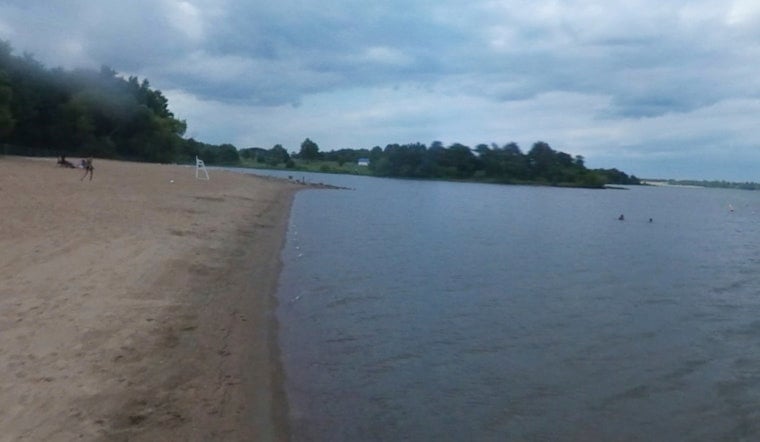
Missouri swimmers hoping to cool off this summer may want to think twice before wading in. A new water safety report has found that 85% of tested swim sites across the state showed potentially unsafe bacteria levels on at least one day of testing, raising fresh concerns about the condition of the state's rivers and lakes.
The findings come from an Environment America study that tested 202 sites in Missouri for fecal indicator bacteria, according to First Alert 4. Missouri was one of 17 states included in the broader study, which did not include neighboring Illinois. Beyond the 85% figure, the outlet reports that Missouri's tested sites had possibly unsafe bacteria levels on at least a quarter of all days tested roughly 70% of the time — a pattern that suggests contamination isn't just a one-off problem after a single storm, but a recurring issue at many locations.
Statewide, the numbers track with a national trend. Environment America reported that nearly 70% of tested swim sites across all 17 states had unsafe bacteria levels at least once within the past two years, per the same study. That national context lines up with a separate Environment America finding that nearly two-thirds of evaluated U.S. beaches experienced at least one day of potentially unsafe fecal contamination in 2024.
What's Driving the Contamination
Experts cited in the report point to sewage overflows and stormwater runoff as two of the biggest sources of water contamination, according to the same account. Missouri's rivers and lakes are polluted in part by aging sewage systems that leak when it rains, the report notes, a problem that becomes especially visible during heavy summer storms when overwhelmed pipes and treatment systems can't keep pace.
The science behind why this matters comes down to risk. Environmental Protection Agency risk models indicate that swimming in natural waters with fecal indicator bacteria concentrations exceeding federal safety benchmarks causes an estimated 32 out of every 1,000 swimmers to contract stomach, respiratory, skin, or eye illnesses, according to research highlighted by the Environment America Research & Policy Center. E. coli itself isn't necessarily the direct threat — it functions as an indicator species, signaling the likely presence of other pathogens that come from human or animal waste.
How Missouri Tracks the Risk
Missouri already has rules in place meant to catch these spikes before they become a public health crisis. Under state law, the Missouri Department of Natural Resources tests water weekly at state park swim beaches from Memorial Day through Labor Day and posts “swimming not recommended” signs when weekly E. coli geometric mean levels exceed 190 colonies per 100 milliliters. That threshold is notably higher than the state's broader whole-body-contact standard of 126 colonies per 100 milliliters, which applies to all natural water bodies during the April 1 through October 31 recreation season and matches EPA freshwater guidelines.
Those state park protocols have triggered real closures before. In July 2025, state officials issued “swimming not recommended” advisories for major beaches including Lake of the Ozarks State Park Public Beach #1, Harry S Truman State Park, Trail of Tears State Park, and Wakonda State Park, according to KSDK. But much of Missouri's vast network of rivers and streams falls outside those designated state park beaches, leaving monitoring to a patchwork of local health departments and nonprofit groups. The Stone County Health Department, for example, conducts its own bi-weekly water sampling along the James River from May through October and issues local advisories when E. coli levels exceed health standards.
Where the Bacteria Comes From
Pinpointing the exact source of contamination isn't simple. A multi-year study by the U.S. Geological Survey and Missouri S&T examining beach closures at Lake of the Ozarks found that elevated E. coli levels in beach water and sediment were driven by a combination of stormwater runoff, wildlife and waterfowl waste, and localized sewage infrastructure issues. Bacteria can settle into lakebed sediment and get stirred back up during wave action or swimming, complicating efforts to trace any single culprit.
Officials say investing in modern water infrastructure can help protect water quality by preventing spills and leaks, and one of the region's largest efforts to do exactly that is already underway in the St. Louis area. The Metropolitan St. Louis Sewer District is executing “MSD Project Clear,” a $7.2 billion, 28-year infrastructure initiative aimed at reducing wet-weather sewage overflows that had eliminated 85% of known regional sewer overflow points as of late 2023. That work echoes concerns Hoodline previously reported when Cahokia Heights residents found E. coli in tap water earlier this year, underscoring how sewer overflow problems in the Metro-East area near St. Louis have drawn scrutiny well before this new statewide report.
For municipalities looking to fund similar upgrades, the EPA's Clean Water State Revolving Fund serves as the main financing mechanism for Missouri towns seeking low-interest loans to modernize wastewater treatment plants and control stormwater runoff. The problem is far from unique to Missouri. A 2022 Environmental Integrity Project analysis of EPA Clean Water Act data found that 73% of assessed river and stream miles in neighboring Indiana were impaired for recreational contact due to fecal bacteria, illustrating just how widespread the challenge is across Midwestern waterways.





