

























































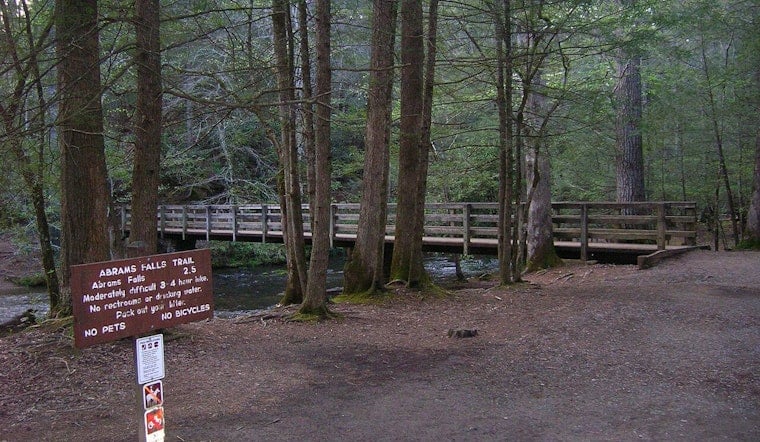
Great Smoky Mountains National Park's Abrams Falls Trail, one of the most popular hikes in the country's busiest national park, will shut down every Monday through Thursday from Aug. 24 through Oct. 1 while crews rebuild aging infrastructure near the falls. The five-mile round-trip hike will stay open Friday through Sunday, including Labor Day on Sept. 7, giving weekend visitors a window to still reach the 25-foot waterfall.
The closure, first reported by the Knoxville News Sentinel, is meant to protect both hikers and trail workers during construction, according to the park. Crews plan to replace four aging footlog bridges and handrails along the route and build new stairs at a steep, slick rock section near the falls, all aimed at improving visitor safety. The work is funded through Friends of the Smokies, the nonprofit partner that bankrolls major trail rehabilitation across the park.
Abrams Falls has long carried an outsized safety reputation. It generates the highest volume of water of any waterfall in Great Smoky Mountains National Park, according to the National Park Service, which creates powerful hydraulic currents and dangerous undertows beneath its drop into a deep pool. The water flows over a sandstone ledge before pooling below, a combination that has made the site a magnet for swimmers despite repeated warnings. Backpacker Magazine once ranked the trail the ninth most dangerous hike in the country, citing drowning and hypothermia risks and noting that 29 water-related deaths had occurred along the trail since 1971, per Hiking In The Smokys.
A Trail Already Familiar With Interruptions
This is not the first time hikers have been locked out of Abrams Falls this year. Hoodline reported in April that aggressive bears forced a temporary shutdown of the same trail on April 12, underscoring how frequently the popular route faces operational disruptions, whether from wildlife or infrastructure needs. The trail passes through rhododendron, hemlock, and pine-oak forest on its way to the falls, terrain that draws heavy foot traffic year-round.
The current rehabilitation is not an isolated project. Friends of the Smokies is also supporting work on the Bullhead and Deep Creek trails this year, the park notes, and the Trails Forever crew is separately managing weekday closures on the Bullhead Trail to Mount Le Conte through November for extensive structural repairs. Abrams Falls itself underwent a full-scale, seven-month restoration in 2021 that addressed severe erosion, tread degradation, and drainage problems, according to Friends of the Smokies, making this year's project the latest in a long line of maintenance efforts on the same corridor.
Why the Trail Wears Down So Fast
The pressure on Abrams Falls Trail traces back to sheer volume. Great Smoky Mountains National Park remained the most visited national park in the country in 2025, recording 11.5 million recreation visits after 12.2 million the year before, per the National Park Service. That traffic isn't just wear and tear on trails — visitors generated more than $2 billion in direct spending in gateway communities in 2024, contributing an estimated $2.8 billion in total economic output and supporting more than 33,000 local jobs, the agency reported, with non-local visitors accounting for over 95 percent of that spending.
The Trails Forever program that funds this kind of heavy-duty repair work was established in 2012 by Friends of the Smokies and has since grown into an endowment worth more than $6 million, boosted by a founding matching grant from the Knoxville-based Aslan Foundation. That funding keeps a dedicated, highly skilled trail crew on hand for exactly this kind of complex rehabilitation, allowing the park to fix infrastructure without closing popular trails entirely.
Planning a Visit
Anyone hoping to catch the falls on an open weekend should plan for crowds well before reaching the trailhead. Abrams Falls sits off the 11-mile, one-way Cades Cove Loop Road, where vehicular “bear jams” and heavy visitor traffic routinely cause two- to four-hour driving delays, according to the National Park Service. For hikers who can't get a weekday off but want to avoid that bottleneck, the park has suggested the Lynn Camp Prong loop, the Deep Creek waterfall loop, and West Prong as alternate hikes during the closure window.
The falls and the creek that feeds them carry their own layer of history. Both were named after Cherokee Chief Abram, also known as Oskuah or Old Abraham, a leader of the Cherokee village of Chilhowee whose settlement stood downstream before the Cherokee Nation was forcibly removed under the 1830 Indian Removal Act, the National Park Service notes. That history predates the trail's modern identity as one of the park's signature — and most hazardous — day hikes, a status this fall's construction is meant to help address.





