

























































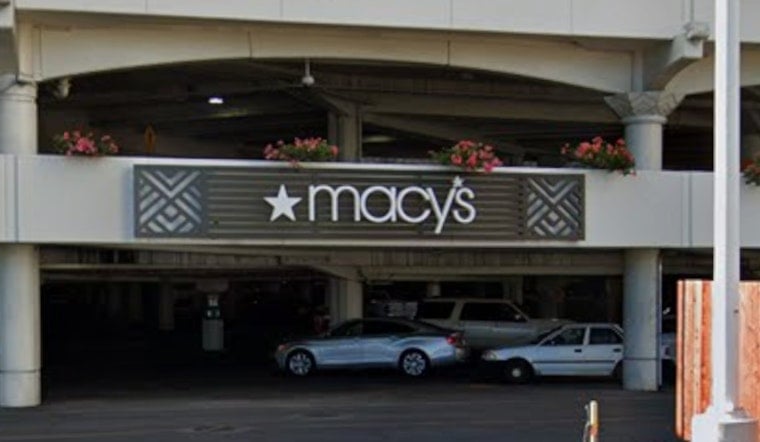
A developer wants to build two towers — one soaring 400 feet — on top of Macy's parking lot at Ala Moana Center, and it's offering the city millions of dollars in street trees, sidewalk upgrades, and affordable units to get there. The project, known as 1588 Ala Moana, would exceed Honolulu's maximum permitted density by more than two times on land currently zoned for a maximum height of just 100 feet.
The proposal comes from BSC Acquisitions II, LLC, an affiliate of Blacksand Capital and the Kobayashi Group, according to Honolulu Civil Beat. Under City Council Resolution 26-171, the developer's Interim Planned Development-Transit application seeks to redevelop the 187,174-square-foot site at 1450 Ala Moana Boulevard into two towers — one 200 feet tall and one reaching 400 feet — with 145 luxury market-rate residences, 291 hotel rooms, 69 affordable rentals, and roughly 19,700 square feet of commercial space, per Sachi Hawaii. The Department of Planning and Permitting officially accepted the permit application on April 8, 2026, moving the project into agency review before draft Resolution 26-171 reached the City Council, according to the City and County of Honolulu.
The project would need to clear a City Council hearing before proceeding, and Council member Esther Kiaʻāina has said that hearing could happen in September, the station's report notes. IPD-T permits function as temporary floating mechanisms under the city's Land Use Ordinance, letting developers request custom height and floor-area-ratio exemptions ahead of formal station-area TOD Special Districts being codified — a tool created to encourage dense development near planned Skyline rail stops, per the same city agency account. Notably, Skyline's Ala Moana station itself was cut from the rail plan in 2022 to save money, even as density incentives tied to the rail corridor remain on the books.
What's on the Table for Community Benefits
BSC Acquisitions has proposed millions of dollars in streetscape community benefits, including $1.5 million for street trees and $5 million for complete streets improvements — reconfiguring roads to accommodate people beyond car and truck drivers, the Civil Beat report explains. The Department of Planning and Permitting had recommended the $1.5 million figure for street trees rather than an initial $50,000 offer. The developer also raised its proposed affordable units from 52 to 69 and pledged to preserve that affordability for 60 years instead of the standard 30, with the units targeting people earning between $86,000 and $129,000 annually.
Even with those increases, DPP said in a July report that the proposed community benefits are not commensurate with the requested flexibilities, though the department still recommended City Council approval of the development overall. Under Honolulu law, at least 10% of units in such projects must be affordable, a baseline the project's 69-unit offer is meant to exceed.
Unite Here Local 5, which represents more than 10,000 food service, hospitality and healthcare workers, protested the proposed project and asked the developer to provide more affordable housing. The union points to an internal 2024 survey showing its members spend more than half their income on housing. That gap tracks with broader wage data: Honolulu's 4,220 elementary school teachers earned a median annual wage of $70,090 and its 54,350 food preparation and serving workers earned $46,170 in 2026, both well below the county's 100% Area Median Income benchmark of $107,800 for a single person, according to News From The States.
A View Blocked, a Bike Lane Still Missing
Critics have also flagged that 1588 Ala Moana would block a protected mountain view from Magic Island, a concern raised alongside the density and height objections. Kathleen Lee, chair of the Ala Moana Neighborhood Board, has said community benefits should address how people actually live around a development, not just check a box. Dale Vanderbrink, another voice in the debate, said the community benefits process can appear arbitrary from project to project.
The pattern isn't new to Ala Moana. Sky Ala Moana, approved by the City Council in 2018, agreed to pay $103,000 to the city for transportation improvements and roughly $1 million to modify the Keʻeaumoku Street and Kapiʻolani Boulevard traffic signal for bicyclists. Eight years later, that project has not produced a bike lane on Kapiʻolani Boulevard, and Kapiʻolani Boulevard and Keʻeaumoku Street remain without protected bike lanes today. Renee Espiau has said community-benefit funds in cases like this are being stored for a future roadway rehabilitation project, and that such benefits generally fall into three categories: affordable housing, public space, or complete streets.
How Park on Keʻeaumoku Set the Bar
Honolulu has increasingly turned to community benefits agreements to sweeten large development approvals, and the City Council has approved eight such projects in Ala Moana and one in Chinatown. The Park on Keʻeaumoku, a dual-tower project with two towers each 400 feet tall and almost 1,000 apartment units, offers a fuller picture of what those agreements can look like once built. It provided affordable units, street safety funding, green space, and at least six annual public events in exchange for zoning allowances for greater height and density, and it lists studio units starting around $350,000.
The development includes a grassy park along Keʻeaumoku Street and a playground and green space used by neighborhood families, plus mostly local restaurants in an indoor food court. That food hall, an 11,200-square-foot space called Midtown Eats featuring 12 local food vendors, opened in January anchoring the street level of the Liona Tower near Sam's Club and Walmart. It stands as a concrete example of what community-benefit promises can eventually deliver — though not every neighborhood group considers such perks a fair trade for lost views, added traffic, or blocked mountain sightlines.
The Bigger Policy Push Behind the Density
Honolulu is allowing developers to apply for denser permits while broader rezoning changes near the planned Skyline rail line are still pending, part of a citywide push for increased housing near transit. University of Hawaiʻi economist Justin Tyndall has said the broad policy goal behind these flexibilities is simply to increase housing supply. That goal has also driven the city's Chapter 32 affordable rental housing program, originally a temporary measure to relax zoning standards for rental construction, which the City Council extended through June 1, 2030, offering fee waivers and tax exemptions to speed up workforce rental projects, as Hoodline reported in coverage of a separate Makiki project.
State lawmakers have layered their own fast-track effort on top of the city's tools. In July, Governor Josh Green signed Senate Bill 2544, known as Hawaii Builds, launching a five-year, $100 million pilot program that puts county planning directors on a 45-day deadline to decide on regulatory exemptions, with participating developments required to allocate more than half their units to households earning up to 140% AMI, as Hoodline previously reported. Separately, the City Council passed Bill 6 this year to standardize minimum lot sizes for apartment districts at 5,000 square feet, a move aimed at unlocking an estimated 3,200 underutilized parcels across Oʻahu for smaller multi-family projects. Similar density-for-benefit trades are also playing out in East Kapolei, where planners advanced a state land-use boundary amendment in May to convert 14.8 acres of leftover agricultural land into urban transit-oriented development overlay zones along the Skyline corridor's western terminus.
For now, 1588 Ala Moana's fate rests with the City Council, which could take up the project's hearing as soon as next month. Whether $6.5 million in combined street tree and complete streets funding, plus 69 income-restricted units held affordable for six decades, proves enough to satisfy neighborhood board members and labor advocates remains an open question the council will have to weigh alongside DPP's own reservations about the deal.



