

























































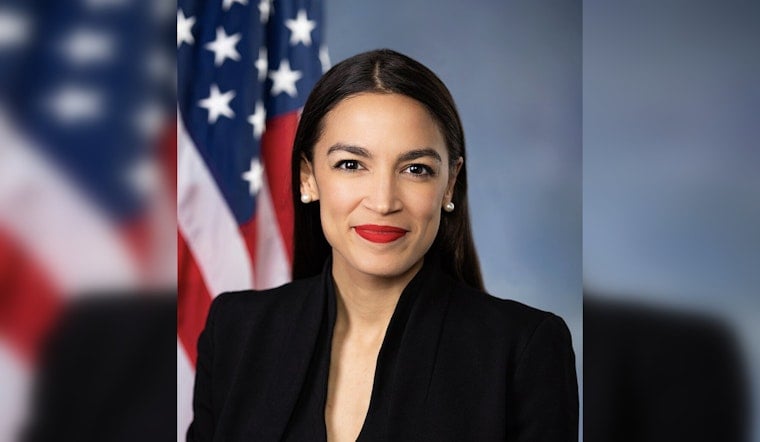
Rep. Alexandria Ocasio-Cortez has started the process of freezing her eggs, and she is not keeping it quiet. The 36-year-old New York Democrat has been taking hormonal injections and using an Instagram vlog to share updates, telling followers she wants to normalize conversations that women often have in private.
Ocasio-Cortez said she planned to take hormonal shots in the green room before a scheduled Sunday interview on ABC News' This Week, according to the New York Post. She described herself as a badass for undertaking the procedure and said egg freezing is a choice that gives her more control over her life. She also noted that egg freezing is something men do not deal with, and that she wanted to inform other women about their fertility options.
The congresswoman said she had saved money for and contemplated the procedure for some time before beginning it, and that she felt empowered to start while Congress was on its August recess. She addressed speculation about a potential 2028 presidential run and criticized the media for reducing political decisions to ambition for power, per the same report. Ocasio-Cortez also said people may make assumptions about her decision, and pushed back on that framing.
How Egg Freezing Works, and Why Timing Matters
Egg freezing, medically known as oocyte cryopreservation, typically requires about two weeks of hormone treatment before egg harvesting, which allows women to have unfertilized eggs removed from their ovaries while they are younger and store them at subzero temperatures. Those stored eggs can later be implanted in the woman who provided them or in a surrogate. The procedure increases the chances of a successful pregnancy later in life, since women's egg quality often declines rapidly in their mid-30s.
Clinical data cited by New Hope Fertility Center shows the overall live-birth rate from a frozen egg runs around 39%, but that rate climbs above 50% for women who freeze their eggs at or before age 38 — putting Ocasio-Cortez's decision at 36 within the window fertility specialists consider most favorable for future outcomes.
A National Surge in Elective Fertility Preservation
Ocasio-Cortez's disclosure lands amid a broader nationwide shift. U.S. fertility clinics performed 29,803 egg-freezing cycles in 2022, a 21% jump from the year before, according to Contemporary OB/GYN. That growth continued: annual egg-freezing cycles reached nearly 40,000 by 2023, part of more than 184,000 total assisted reproductive technology cycles tracked by CDC surveillance data, as reported by Cofertility.
The financial commitment remains steep. In major metropolitan areas like New York City, a single egg-freezing cycle typically costs between $10,000 and $20,000 all-inclusive, plus $500 to $1,000 a year in ongoing cryo-storage fees, Cofertility notes. Those costs help explain why coverage debates have intensified even as the procedure grows more common — as of 2026, roughly 20% of large U.S. employers offer egg-freezing coverage as a benefit, up from under 5% a decade ago, according to New Hope Fertility Center.
Policy Shifts Around Fertility Coverage
Federal and state policy have both moved to expand access in recent years. Starting in 2024 and expanding for the 2025 plan year, the U.S. Office of Personnel Management required Federal Employees Health Benefits plans to offer broader coverage for fertility treatments, with top carriers now providing up to $25,000 annually for IVF, per Government Executive. In Ocasio-Cortez's home state, a New York insurance mandate in effect since January 2020 requires large-group commercial health plans to cover up to three IVF cycles, and all commercial plans in the state must cover medically necessary fertility preservation — though elective egg freezing without a medical diagnosis is often excluded from those mandates, per the state Department of Financial Services.
At the federal level, lawmakers introduced the bipartisan Access to Family Building Act and the IVF for Military Families Act in late 2025, aiming to create statutory protections and coverage guarantees for assisted reproductive technology nationwide. The pushes have drawn support from reproductive rights advocates following court challenges to IVF and fertility care in recent years.
A Political Backdrop Shaped by Public Scrutiny
Ocasio-Cortez, who is engaged to Riley Roberts — who has worked in marketing and web development — has spent nearly her entire adult political career under intense public attention. She was sworn into the U.S. House at age 29 in January 2019, becoming the youngest woman ever elected to the chamber, and has said she grew up in the public eye while serving in Congress.
Her fertility disclosure comes as speculation about a possible 2028 presidential bid continues to swirl, a storyline Hoodline has tracked in coverage of her cross-country pulpit tour and in reporting on centrist strategists maneuvering against her ahead of that election cycle. Ocasio-Cortez met the Constitution's minimum age requirement of 35 in October 2024, making her eligible to run for president in 2028.
The debate over who pays for fertility preservation has also played out closer to home. Hoodline previously reported on UCSF doctors objecting as the University of California moved to scale back fertility benefits for medical residents, underscoring how contested employer-provided egg freezing and IVF coverage remain even as demand climbs. Ocasio-Cortez, for her part, said she simply wanted other women to feel informed about their options — regardless of what conclusions anyone draws about her political future.





