

























































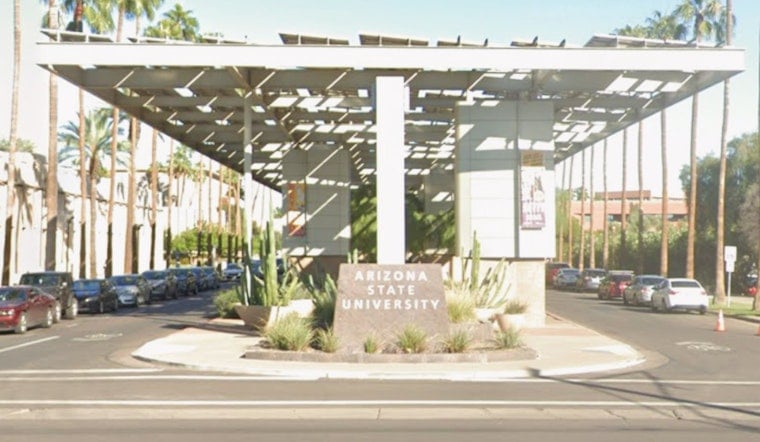
Arizona State University has launched the nation's first three-year bachelor's degree for teachers offered by a public university, cutting the traditional path to a classroom credential by an entire year. The new elementary and special education degrees require just 90 credits instead of the usual 120, and both meet all state teaching certification requirements.
The programs, available online and in person, were announced this week through ASU's Mary Lou Fulton College for Teaching and Learning Innovation, which holds the distinction of offering the nation's first three-year education bachelor's degrees from a public university, according to AZ Family. Carole Basile, who leads the college, said future educators should have easy access to high-quality programs that fit their needs. The station reported that Arizona State University plans to offer more three-year degree programs in the future.
The timing lines up with a staffing crunch that has hit Arizona classrooms hard. The station's report noted that Arizona had about 1,400 open teaching positions in fall 2025, and the state filled more than 4,000 teaching positions through alternative measures that same fall. Jennifer Cruz, superintendent of the Pendergast Elementary School District in Phoenix, told the outlet that innovative solutions can make it easier for talented community members to become teachers.
A Regulatory Shift Years in the Making
The accelerated degree only became possible after the Higher Learning Commission, ASU's regional accrediting body, updated its academic program guidelines in September 2024 to formally allow accredited institutions to offer reduced-credit bachelor's degrees requiring a minimum of 90 credits rather than the traditional 120, according to the Minnesota Office of Higher Education. That policy change opened the door nationally: a RAND Corporation analysis reported by the Business Journal in August found that colleges and universities across the country have publicly announced at least 119 reduced-credit bachelor's degree programs since regional accreditors began loosening the rules.
The broader movement toward 90-credit degrees is driven by the College-in-3 Exchange, a coalition co-founded by University of Pennsylvania professor Robert Zemsky and University of Minnesota Rochester chancellor Lori Carrell to redesign curricula around essential career competencies, per Forbes. Zemsky first floated the idea of three-year degrees back in 2009 but ran into resistance from accreditors, a barrier that only recently gave way. Arizona is not alone in pushing this model at the state level either — Hoodline previously reported that Texas Governor Greg Abbott ordered state higher education officials to build a three-year bachelor's degree framework in high-demand fields by December.
Arizona's Classroom Staffing Gap
The urgency behind ASU's move traces back to years of strain in Arizona's K-12 system. Survey data from the Arizona School Personnel Administrators Association found that as of late 2024, about 25.4% of public school teaching vacancies in the state remained completely unfilled, while 52.2% were staffed by people using alternative, non-standard credentials. State education data cited by KTAR.com showed that out of roughly 59,836 public district and charter school teachers in Arizona during 2025, about 14% left the classroom during the year.
Notably, a July 2026 survey by the Arizona Department of Education of more than 2,000 current teachers found that 77% cited feeling safe and supported by school leadership as their primary reason for staying in the profession, while only 38% pointed to competitive pay. That finding suggests workplace culture, not just recruitment pipelines, plays a major role in whether new graduates stick around once they reach the classroom.
Tuition Help and Team Teaching Models
Arizona already has financial tools meant to ease the path into teaching. Under state law, the Arizona Teachers Academy provides full tuition and fee coverage for eligible ASU education students who agree to teach in an Arizona public school for one year for every year of scholarship funding they receive. ASU's Mary Lou Fulton Teachers College has also built the Next Education Workforce initiative, which replaces single-teacher classrooms with team-based structures pairing master teachers, student teachers, and specialized staff — a model research from Johns Hopkins University linked to higher job satisfaction among educators.
The university separately offers a 16-month ASU Teaching Fellows program that lets working school paraprofessionals and instructional aides earn elementary or special education degrees through evening remote courses while staying employed in local classrooms, provided they already hold 60 college credits and work at least 18 hours weekly in a district. Whether trimming 30 credits from the standard bachelor's degree affects long-term teacher preparation, or whether faster graduation alone can address deeper retention issues tied to pay and working conditions, remains an open question as the first cohorts move through ASU's new three-year track.





