

























































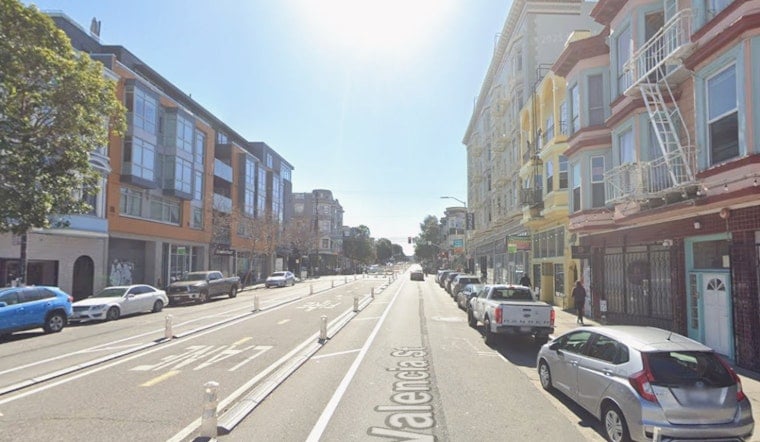
Debbie Brown spent 20 years working at San Francisco General Hospital and decades more calling the city home, but this past spring, she became homeless for the first time in her life. The 72-year-old was evicted from her longtime SRO apartment on Valencia Street on May 13, and by mid-August, she was boarding a red-eye flight out of San Francisco International Airport, her belongings mostly given away, headed toward family she hadn't lived near in years.
Brown's eviction and the months-long scramble that followed were detailed in a report from The San Francisco Standard. Her landlord cited nuisance due to hoarding, and San Francisco's civil court granted her two stays before refusing a third, clearing the way for the San Francisco Sheriff's Office to lock her out of the apartment she'd lived in for years. Under San Francisco Administrative Code Section 37.9(a)(3), landlords pursuing nuisance-based evictions must show that a tenant's conduct causes interference that is severe, continuing or recurring — a legal threshold Brown's case ultimately met in court.
What followed for Brown was two months of moving between cheap hotels and a friend's car. She stayed briefly at her former son-in-law's studio apartment in SoMa and later began sleeping at her brother's house in the Bayview, where she lost her dog, Noah. She has two chihuahua mixes, Noah and Jeremiah, and she visited San Francisco Animal Care and Control on August 12 as she worked to locate the missing dog before her flight. Brown told the Standard her months of homelessness were physically exhausting, and she admitted she often bought things she did not need — a habit tangled up in the hoarding complaint that led to her eviction.
A Hotel Room Cleared Out While She Was Away
Brown's housing situation grew more precarious in early August. According to Brown, the Amit Hotel kicked her out on August 3, and the following day the hotel manager cleared her room and discarded her belongings. The hotel manager told the Standard that Brown could not stay because she was filling the room and the hotel had received complaints — a version of events Brown disputes in describing how her possessions were disposed of. Her granddaughter, Ashley Bell, who lives in Berkeley and has a 2-year-old daughter, paid $97 for an additional night at the Oak Hotel to keep Brown off the street while the family arranged a longer-term plan.
Bell had targeted early August for her grandmother's move to Louisiana, working alongside Brown's daughter, Tiffany McCoy, who lives in Harahan and had posted a GoFundMe fundraiser to help cover moving expenses. McCoy was told that GLIDE would pay for Brown's plane ticket through the city's Journey Home program, though McCoy was hospitalized before those travel plans were finalized, adding another complication to an already chaotic timeline. Bell said her grandmother needs medical help, mental help and daily check-ins that she could not reliably get while living on San Francisco's streets.
How Journey Home Moved Her Out of the City
GLIDE's Journey Home program pays for transportation of homeless San Francisco residents to locations outside the city where they have stable housing to go to, and the organization purchased Brown's plane tickets for the trip to Louisiana. GLIDE picked Brown up from the Oak Hotel on August 11, and she spent that night at a shelter on the Embarcadero near the Ferry Building before departing San Francisco the next evening on an 11:30 PM red-eye flight from SFO. GLIDE reserved a wheelchair for her transfer during a layover in Chicago and, per the program's requirements, Brown had to sign paperwork affirming she was leaving San Francisco voluntarily.
The version of Journey Home that moved Brown is a substantially retooled one. San Francisco consolidated its relocation offerings — including the original Homeward Bound program and Problem Solving Relocation Assistance — into the single, 24/7 Journey Home operation under Mayoral Executive Directive 25-02, with GLIDE taking over administration in January 2026, according to SF.gov. The program has existed in various forms since 2005 and has funded more than 10,000 relocations altogether, with 250 of those completed since GLIDE assumed control. Brown had not used Journey Home's remote services before her own trip. The updated guidelines also call for up to 90 days of post-relocation support, and GLIDE has committed to helping Brown find mental and physical health services in Louisiana during that window.
San Francisco's original Homeward Bound effort, launched in 2005 under then-Mayor Gavin Newsom, bused more than 9,500 unhoused residents out of the city in its first decade at an average cost of $186 per person, a history Hoodline chronicled in 2016. Two decades later, the mechanics look different, but the underlying question — whether relocation programs help people reconnect with support networks or simply export the city's displacement problem elsewhere — remains largely the same.
Reuniting With Family After 15 Years
When Brown arrived in Louisiana, she reconnected with her mother and extended family for the first time in 15 years, according to her mother. Tiffany McCoy planned to meet her at Louis Armstrong New Orleans International Airport, and Brown is now staying with her 91-year-old mother in Harahan. Brown said she was happy to leave with her family back together, even as she acknowledged missing her dog Noah and San Francisco's Muni lines. She also noted that getting around suburban New Orleans requires a car, a stark contrast to the transit-dependent life she left behind. Brown's three daughters live in different states, a fact that shaped the family's scramble to find her a landing spot once eviction made staying in San Francisco impossible.
A City Grappling With Record Evictions
Brown's case unfolded against a backdrop of evictions reaching a 10-year high in San Francisco. Physical eviction lockouts carried out by the Sheriff's Office climbed to 924 in 2025, up from 819 in 2024 and 804 in 2023, with 352 more recorded in just the first five months of 2026, according to The Frisc. Rent Board data cited by Mission Local shows nonpayment eviction notices more than tripled, averaging 49 per month in 2025 compared with 14 per month the year before.
Legal Assistance to the Elderly, the organization that represents low-income seniors facing eviction in San Francisco, provided free legal defense to more than 1,900 senior and disabled residents in 2025. The nonprofit's executive director, Laura Chiera, said seniors are the fastest-growing demographic of people at risk of becoming homeless statewide. That warning is backed by a May 2024 report from the UCSF Benioff Homelessness and Housing Initiative, which found that 48% of single unhoused adults in California are 50 or older, and 41% of older homeless adults experienced homelessness for the first time only after turning 50.
The stakes of late-life homelessness are severe. UCSF research published in 2022 found that people who first become homeless at 50 or older face a 60% higher mortality rate than those who lose housing earlier in life, with a median age of death of 64.6 years compared with 76.1 years for the general local population. For Brown, family intervention and a reconfigured city relocation program combined to pull her off the streets before that risk could compound — though for many other seniors caught in San Francisco's eviction surge, no such path out has yet appeared.





