

























































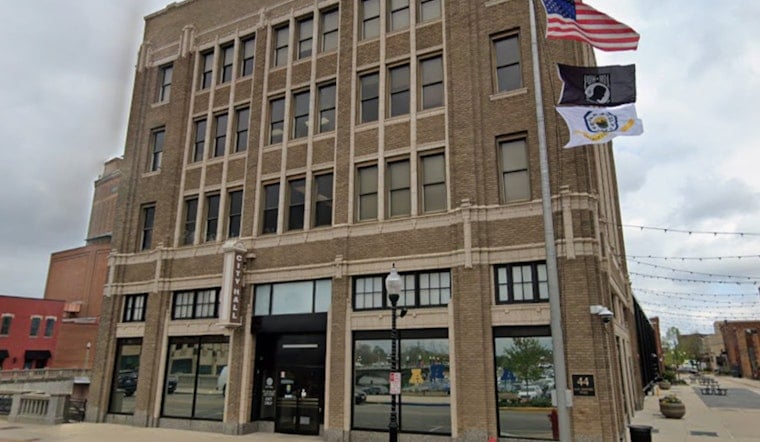
Downtown Aurora business owners could soon see a new 1% property tax after the city council held a public hearing Tuesday on a proposal to establish a fresh Special Service Area 1, the funding mechanism that pays for promotion, maintenance and development in the downtown district. The current SSA 1 expires at the end of this year, and city officials say the vote to replace it is scheduled for November 10.
Mayor John Laesch confirmed the proposed levy would amount to 1 percent, according to WSPY News. The tax would be collected by the city and would levy property taxes on business owners within the downtown Aurora boundaries, funding local development, promotion and maintenance efforts in the area. City officials sent a letter to all local downtown businesses ahead of the hearing to explain the proposal and the process.
Danielle Tufano, Aurora's downtown economic development manager, said some businesses questioned how much their taxes would increase under the new district, per the same report. She added that officials provided answers to all business questions raised during the outreach process, though the exact dollar impact on individual property owners was not detailed.
A Three-Decade-Old Funding Tool Facing Renewal
The push to re-establish SSA 1 isn't new territory for Aurora. The city's downtown special service area was created by ordinance on September 6, 1994, and has been periodically extended since then to support downtown redevelopment efforts, according to city records reviewed by the City of Aurora. The council formally adopted Ordinance 26-0389 in June to propose the new district and scheduled Tuesday's public hearing, noting the existing area's scheduled expiration.
Revenue collected through the tax flows to the Aurora Downtown District, a 501(c)(4) non-profit that local stakeholders established in April to oversee self-governance, branding and marketing within the SSA 1 boundary, per city council committee records. The council already approved up to $300,000 in SSA tax funds for 2026 to that organization through Resolution 26-0313 in May, and the council would periodically vote to disperse future tax revenue to the Aurora Downtown District as the designated successor entity.
Merchants Have A Legal Window To Object
Illinois law gives property owners and registered voters inside a proposed special service area a way to stop the tax before it takes effect. Under 35 ILCS 200/27-55, those inside the district have 60 days following the public hearing to file an objection petition, and if at least 51% of electors and 51% of property owners of record sign it, the city cannot create the district for two years, according to guidance published by the Attorneys' Title Guaranty Fund.
That statutory clock is now running following Tuesday's hearing, setting up a window during which downtown merchants uneasy about the added cost could organize opposition ahead of the November 10 vote. Mayor Laesch's administration has previously sought input from the same business community: in June 2025, he hosted a “Let's Talk Downtown” town hall specifically for business owners, property owners and workers paying into SSA 1 to gather feedback on district priorities, according to Your Voice Aurora.
Tax Debate Unfolds Amid Downtown Growth
The SSA 1 hearing landed on the same August 25 council agenda that included a $1.94 million right-of-way maintenance contract with Geneva Construction and a development agreement with M/I Homes of Chicago for 185 single-family attached homes, per meeting records logged on Govly. The pairing illustrates how the downtown tax debate is unfolding alongside broader citywide capital spending decisions.
It also comes as private investment and public infrastructure spending have reshaped downtown Aurora's commercial landscape this year. The historic 1892 Hobbs Building on River Street has drawn new dining and nightlife tenants, including Kai Modern Japanese Kitchen, while the city completed a renovation of RiverEdge Park that expanded venue capacity by 2,500 and added more than $850,000 in new audio equipment and jumbotrons ahead of this summer's concert season.
The city has also moved to prepare its eight-acre Central Garage along the Fox River for demolition, a step toward clearing prime downtown riverfront land for future redevelopment. Taken together, the investments frame the SSA 1 renewal as part of a broader municipal push to sustain foot traffic and commercial momentum in the district, even as some business owners weigh the added cost of the proposed 1% levy against those anchor projects.





