

























































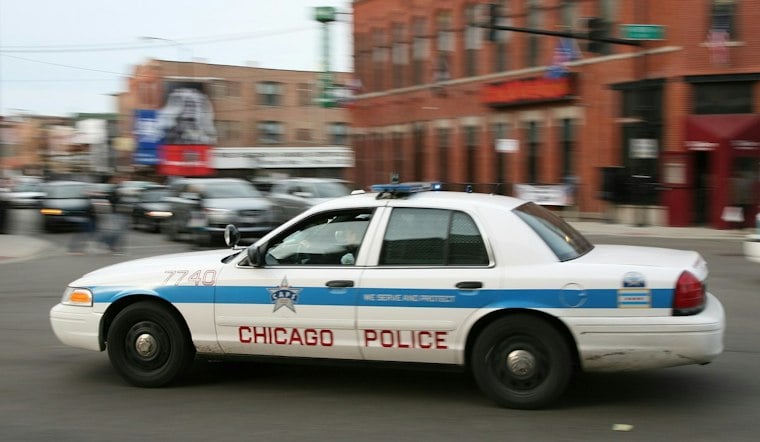
The Chicago Police Department has identified former officer Thomas Francis McInerney as the suspected killer of 8-year-old Gloria Kowalewicz, whose 1960 murder remained unsolved for nearly 66 years. Gloria disappeared on November 12 while walking about 3.5 blocks from her West Englewood home toward St. Mary of Mount Carmel Church; her body was later found in Palos Park, about 15 miles southwest, according to the Chicago Tribune.
McInerney was a 24-year-old Chicago police officer when Gloria was killed. Police said DNA, fingerprint comparisons and ballistics testing linked him to the case, the Chicago Tribune reported. He died in Las Vegas in 2006 and worked for the department until 1987.
A laundry company driver found Gloria's body shortly before noon on the day she disappeared, and investigators at the scene recovered a single spent bullet casing. Chicago police went on to interview more than 1,300 people in the initial investigation, as reported by the Chicago Tribune, a scope that reflected how seriously the case was taken from the start. Days after the killing, Chicago police questioned 28-year-old Leon Clifford Webber Jr., a suspect in multiple regional child abductions, but he was never charged in Gloria's death, according to historical context reported by Medium.
The Case Goes Cold
Despite the extensive early investigation, Gloria's killing remained unsolved for decades.
Years later, investigators incorporated DNA evidence into the case. Gloria's killing remained unsolved as forensic tools improved.
Genetic Genealogy Provides the Breakthrough
In 2024, the Chicago Police Department submitted Gloria's coat to the FBI for investigative genetic genealogy, a method that uses DNA to develop family-tree leads. The technique was first used by law enforcement in 2018, according to the Chicago Tribune.
The genealogy work helped direct investigators toward McInerney, and the case regained momentum in 2026.
A Fingerprint From 1959 Adds Evidence
McInerney's 1959 Chicago Police Department application fingerprints matched a fingerprint lifted from the strap of Gloria's purse, the Chicago Tribune reported.
Cold case investigators said McInerney had no known prior contact with Gloria before her death and was not suspected in other crimes.
Identification Comes After Decades
The identification came nearly 66 years after Gloria's death.
McInerney died in 2006, decades before Chicago police identified him as the suspected killer.
How Other Cold Cases Compare
Forensic genealogy has also featured in other cold-case investigations, with different legal outcomes. FOX 32 Chicago reported that prosecutors charged Albert L. “Buddy” Zigler in the separate 1993 Granite City murder of Randy Gail Sperino after a breakthrough involving forensic genealogy and older DNA evidence; a charge is not a finding of guilt. In the separate 1979 San Diego murder of Barbara Becker, ABC News reported that police used genetic genealogy to identify suspected killer Paul Jean Chartrand, who had died in 1995 and could not go to trial.
The federal policy also sets limits on how genealogy leads may be used in covered investigations: the U.S. Department of Justice’s interim policy says a genetic association from a genealogy service alone should not lead to an arrest and calls for a direct STR DNA comparison. That general requirement is distinct from the specific evidence Chicago police reported in the Kowalewicz case.





