

























































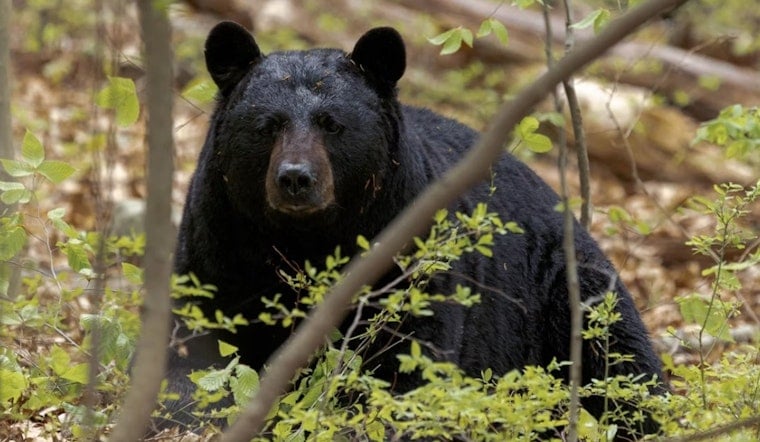
A black bear forced its way into a Lake Tahoe cabin, and newly released video of the break-in is putting fresh attention on a problem South Lake Tahoe police say is getting dramatically worse. The footage, first reported by NBC Los Angeles, shows the animal pushing into the residence as homeowners increasingly find bears going after more than just the trash cans.
The video comes as South Lake Tahoe Police Department records show officers logged 174 bear-related calls in 2026 through July, an 80% jump compared to the 97 calls fielded over the same stretch in 2025, according to ABC7 News. Local law enforcement has noted that the calls increasingly describe bears entering occupied living spaces rather than simply raiding outdoor bins, a shift that mirrors the scene captured in the newly surfaced video reported by NBC Los Angeles.
It is the latest in a string of Tahoe-area bear incidents Hoodline has tracked this summer, including a cabin hit three times for steak through an open bedroom window earlier this month, and a Sacramento father who used bear spray to fend off a charging bear outside a Tahoma rental in July. A separate August incident in Colorado, where a bear broke into a Mount Crested Butte home and sparked a kitchen fire, also referenced an earlier South Lake Tahoe case in which a bear wandered into an empty home and accidentally switched on a gas stove while searching for food, forcing firefighters to shut off the gas line.
Why Bears Keep Coming Back
Wildlife biologists at the California Department of Fish and Wildlife say bears enter a physiological state called hyperphagia in late summer and fall, driving them to forage up to 20 hours a day and consume around 20,000 calories daily as they prepare for hibernation. That intense caloric drive, detailed by the state agency, pushes hyperphagic bears to travel well beyond their usual range in search of food, often leading them straight to residential kitchens stocked with easy calories.
The payoff for bears that succeed is significant. While wild adult black bears in California typically weigh between 100 and 300 pounds, food-conditioned bears around Tahoe regularly reach 500 pounds or more thanks to constant access to human food and waste, per state wildlife data. That extra bulk makes it easier for habituated bears to muscle through windows, doors and screens that would stop a leaner wild animal.
The scale of the problem is also bigger than once believed. In April 2025, the California Department of Fish and Wildlife published an updated Black Bear Conservation and Management Plan estimating the state's total black bear population at roughly 60,000, about double the long-standing estimates of 30,000 to 40,000 that had guided policy for decades.
A Small Number of Bears Cause Most Break-Ins
State wildlife officials have told the South Lake Tahoe City Council that the Lake Tahoe Basin holds California's second-highest black bear density, at roughly 87 bears per 100 square kilometers, and that a core group making up just 9% of habituated bears is responsible for 61% of all residential break-ins in the basin, according to the Tahoe Daily Tribune. High tourist turnover and easily accessible garbage are cited as the conditions that concentrate attractants and habituate specific bears to human structures.
The most famous example remains Bear 64F, nicknamed “Hank the Tank,” a 500-pound female captured by state wildlife officials in South Lake Tahoe in August 2023 after DNA evidence linked her to 21 home break-ins. She was relocated to a Colorado sanctuary, and the investigation revealed that at least four separate bears, not one, had been responsible for the broader wave of home invasions attributed to her at the time.
That case also illustrates how difficult it is for the state to act against problem bears. Under the California Department of Fish and Wildlife's statewide black bear policy updated in 2022, biologists must obtain mandatory DNA verification linking a specific bear to property damage before issuing a lethal removal permit in the Lake Tahoe Basin, a rule adopted specifically to prevent mistaken identity after public opposition to bear euthanasia. Relocation, like the exception made for Hank the Tank, remains rare and is reserved for extraordinary cases.
Rules Aim to Keep Bears Out of Trash and Homes
Local and federal authorities have leaned on regulation to try to break the cycle of habituation. Under El Dorado County and City of South Lake Tahoe municipal codes, property owners and vacation rental operators are required to store garbage in approved bear-resistant metal enclosures, with progressive fines reaching $400 or more for repeat violations.
On public lands, the USDA Forest Service's Lake Tahoe Basin Management Unit enacted a mandatory Food and Refuse Storage Order effective January 1, 2024, requiring all unattended food and waste across National Forest System lands in the basin to be locked in certified bear-proof containers or hard-sided canisters, including for backcountry campers in the Desolation Wilderness. Even with those mandates in place, the rising call volume logged by South Lake Tahoe police suggests bears are still finding their way past the barriers meant to keep them out, one open window or unsecured latch at a time.





