

























































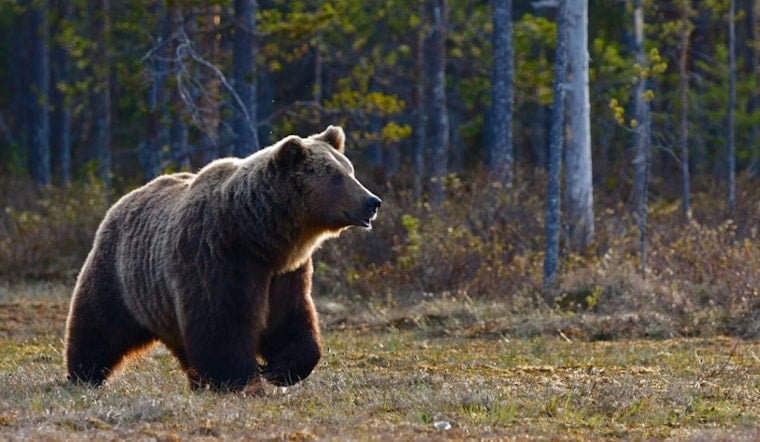
A man walking out of a laundry room at an apartment complex in EagleVail was attacked late Monday afternoon by a female black bear, which swiped at his arm before he tripped and injured his foot while trying to escape. A family member drove him to a medical facility, where he was treated and released.
The attack happened in EagleVail, an unincorporated community west of Vail in Eagle County, according to The Denver Post. Colorado Parks and Wildlife officials reported the incident and said state wildlife officers stayed in the area overnight Monday, setting a bear trap in the neighborhood. Officers planned to capture the sow and her cubs, and they noted that a larger male bear kept the sow and cubs away from the area overnight.
Mandatory Euthanasia and DNA Testing Loom
Under Colorado Parks and Wildlife policy, any bear that attacks a human resulting in injury must be euthanized. Wildlife officers plan to send DNA samples to the University of Wyoming Forensics Lab to verify whether a captured bear matches the animal involved in the attack, according to the Denver Gazette.
Parks and Wildlife officials said residents should never feed or approach bears, should secure food, recycling and garbage, should remove bear feeders when bears are active, should clean and store grills, and should never leave pet food outside. State officials said they have also received recent reports of a sow and cubs foraging in neighborhood dumpsters, underscoring how quickly habituated bears can become a repeat problem.
Sightings Nearly Double Statewide
The EagleVail attack lands amid an unprecedented surge in bear activity across Colorado. Parks and Wildlife logged 6,129 bear sightings and conflict reports statewide between January 1 and August 13, nearly double the 3,115 reports during the same period in 2025 and already surpassing the full 2025 annual total, per The Colorado Sun. Officials attribute the spike to severe drought, low mountain snowpack, and wildfires that have depleted natural backcountry food supplies, pushing more bears into communities in search of calories.
The pattern has produced a string of strange encounters around the state this month. Coloradans reported a bear poking around a backyard in Centennial, a bear strolling into a Breckenridge hotel lobby and eating chocolate, and a bear wandering the Colorado State University campus in Fort Collins. Hoodline has also covered a 250-pound bear that died trapped in a car during record heat and a residential intrusion that brought a South Centennial street to a halt.
Why August Is Peak Bear Season
During late summer and fall, black bears enter hyperphagia, a biological phase in which they forage up to 20 hours a day and consume as many as 20,000 calories daily to build fat reserves for winter hibernation, the Denver Gazette reports. Bears try to load up on calories for winter hibernation, and severe drought has limited the natural food sources that would normally sustain that effort, pushing more bears into communities. Colorado Parks and Wildlife estimates the statewide black bear population at between 17,000 and 20,000 animals, the state's only surviving bear species since grizzly bears were extirpated from Colorado in 1979, according to bear advocacy group Bear Smart Durango.
New Law Targets Unsecured Trash
A new Colorado law, HB26-1342, took effect August 12, making it a misdemeanor to knowingly leave trash or edible waste accessible to wild bears and eliminating first-offense warnings, with maximum fines for repeat offenders raised to $5,000, according to 9News. Governor Jared Polis signed the bill in May after state officials noted that garbage accounted for the vast majority of bear conflict reports. In 2025 alone, trash was involved in 57% of all reported incidents statewide, and Colorado Parks and Wildlife relocated 52 bears and euthanized 78, per Newsweek, which notes that relocated bears frequently return to human food sources.
In EagleVail specifically, Eagle County Ordinance 07-001 requires residents and businesses in unincorporated areas to use approved wildlife-resistant trash containers and bars placing garbage outside for collection between 7 p.m. and 6 a.m. On Tuesday, the Eagle County Open Space and Natural Resources department issued a public advisory urging residents and local businesses to strictly secure waste and eliminate attractants, citing escalating drought conditions pushing bears into populated areas. County officials emphasized that securing trash remains the single most effective way to prevent human-wildlife conflicts.
The EagleVail attack follows Colorado's first reported bear attack of 2026, which happened June 18 when a woman sustained minor injuries from a young black bear while hiking in Apex Park in Jefferson County; that incident prompted a temporary closure of the Golden park. Colorado had already allocated nearly $1 million in grant funding across 22 local projects last year to expand bear-resistant trash infrastructure, an effort Hoodline covered in a piece on the state's push to combat human-bear conflicts in high-conflict mountain communities.





