

























































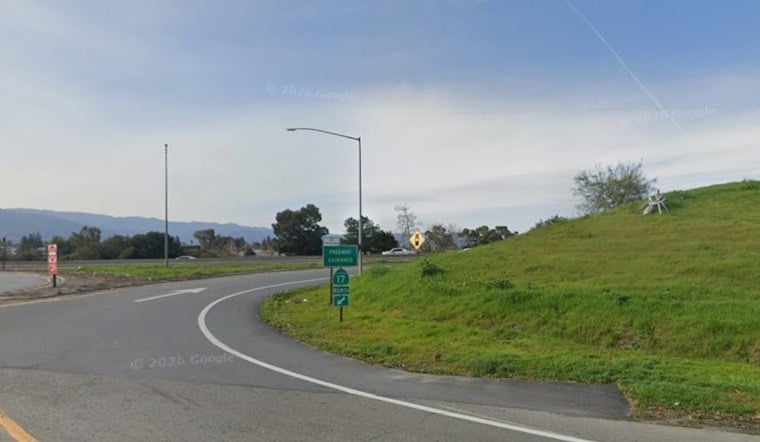
A giant silver ant sculpture that had perched on a hillside along northbound Highway 17 near the Camden Avenue exit in Campbell for nearly a year has been smashed into a mangled heap, leaving commuters who treated it as an unofficial neighborhood mascot without an explanation for who destroyed it or why.
The five-foot-long metallic artwork mysteriously appeared after Burning Man last year, according to Pete Flores, a San Jose resident who works across the street from the sculpture's site, as reported by NBC Bay Area. Community forum discussions on Reddit place its first sightings around September or October 2024, with local commuters spending months speculating that it was leftover art from the Nevada desert festival.
Justus Williams, another San Jose resident who had previously posed for photos with the sculpture, told the outlet he was upset and sad that someone destroyed something someone took the time to create. The ant had become enough of a fixture that people decorated it with a hat and lights around its neck at Christmastime, and commuters regularly pulled over and climbed the hill just to snap pictures with it, the station's report notes.
A Recurring Pattern on the Hillside
This was not the first unauthorized creature to occupy that particular embankment. Before the ant arrived, a giant bear statue reportedly sat on the same Highway 17 hillside about a year earlier, according to local residents who documented the site's history on Reddit. Campbell has seen other unsanctioned animal installations pop up elsewhere in town, too — in March, Campbell police publicly addressed a realistic alligator sculpture discovered near the creek bridge at Campbell Park, posting about it on social media as they investigated its origin and drawing amused reactions from residents.
Why No Agency Watched Over It
Part of what makes this case tricky is that the ant was never sanctioned. Under the City of Campbell's Council Policy 1.30, any public artwork installed on public property must first go through formal review by the Civic Improvement Commission and receive City Council approval. The sculpture never went through that process, meaning it was never an official city landmark. Because it wasn't authorized, city guidelines make clear that Campbell only assumes legal responsibility and maintenance for approved art in public right-of-ways — leaving a piece like the ant with no agency obligated to protect or repair it.
State law adds another layer. California Streets and Highways Code Section 670 prohibits placing any unauthorized structure or display within a state highway right-of-way without an encroachment permit from Caltrans, which holds the legal authority to remove unpermitted highway encroachments as public nuisances. That framework helps explain why the ant sat unregulated on the hillside for as long as it did — nobody had granted it permission to be there in the first place, and nobody was obligated to keep it standing.
Police Involvement and Possible Charges
Campbell police have received reports about the sculpture's destruction and drove by the site to inspect what remained of it, though the identity of the vandal is still unknown. If someone is eventually identified, California Penal Code Section 594 governs malicious destruction of property, treating it as a misdemeanor when damage is under $400 but allowing felony charges — with up to three years in prison and fines as high as $10,000 — when the damage reaches or exceeds that threshold.
A Corridor With a History of Roadside Icons
Highway 17 has long attracted unofficial animal landmarks. The most famous example predates the ant by more than a century: “The Cats,” two 8-foot concrete lion statues named Leo and Leona, were built in 1922 to guard an artists' retreat estate along the highway in nearby Los Gatos and remain among the corridor's most recognizable sights. Campbell does offer a sanctioned outlet for public art through its “Art Outside the Box” program, which lets artists paint city-owned traffic utility boxes around town under the oversight of the Civic Improvement Commission, partly as a way to deter unauthorized work like graffiti.
Metallic animal sculptures have made local headlines in Campbell before. In an earlier stolen rooster case, police recovered a six-foot metallic rooster sculpture that had been taken from a local store and later abandoned in a San Jose park, with community members helping authorities track it down. For now, the silver ant's fate is different — there is no sculpture left to recover, only the empty patch of hillside where commuters used to stop for photos.





