

























































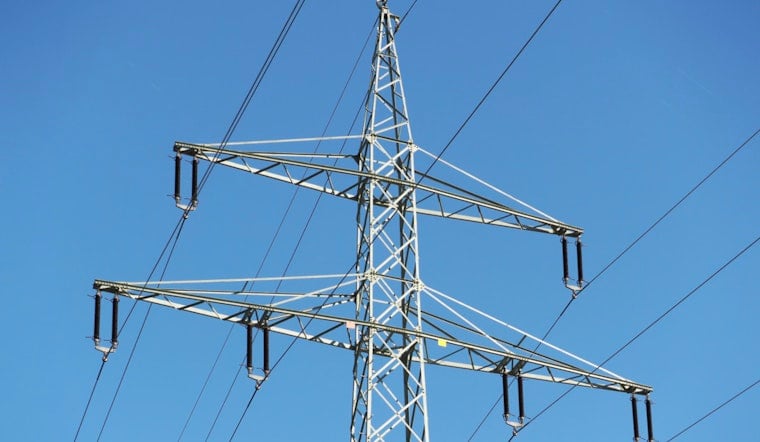
More than 2,700 Public Service Company of Oklahoma customers in Blanchard were without power Tuesday, and the utility has not said what caused the outage or when service will be restored, according to the PSO outage map. The blackout hit as dangerous heat continues to grip Oklahoma, with air conditioning knocked out for thousands of households during some of the hottest days of the summer.
The outage was first reported Tuesday afternoon, and as of the story's publication, it remained a developing situation, according to News 9. The station reported that it had requested a statement from PSO regarding both the cause of the outage and an expected restoration time, but officials had not released those details as of Tuesday evening. PSO is a subsidiary of American Electric Power headquartered in Tulsa that serves roughly 540,000 customers across 232 cities and towns spanning 30,000 square miles of eastern and southwestern Oklahoma, according to Global Energy Monitor.
A Blackout Arrives During Peak Heat Danger
Blanchard, located primarily in McClain County with parts extending into Grady County about 30 miles south of Oklahoma City, had an estimated population of 9,663 residents in 2023, per Wikipedia. It's part of the fast-growing Tri-City area alongside Newcastle and Tuttle. The timing of the outage is what makes it dangerous: National Weather Service advisories across central Oklahoma in mid-August warned of afternoon temperatures reaching 102°F to 104°F, with heat index values spiking as high as 108°F to 109°F, as Hoodline reported this week.
Health officials have warned that indoor temperatures climbing above 85°F without air circulation can significantly increase cardiovascular strain, heat exhaustion, and the risk of potentially fatal heat stroke, according to reporting from KGOU. Senior citizens and children face the highest risk during power failures that knock out cooling systems. Adding to the strain on the region, McClain County was officially placed under a countywide burn ban on August 15 following consecutive weeks of triple-digit temperatures and zero measurable rainfall, according to the Purcell Register.
What Happens Next for Affected Customers
PSO's official customer guidelines state that the utility does not compensate customers for property or food losses caused by weather-related or natural power outages, and instead recommends homeowners file insurance claims for those losses. The company's policy notes that crews prioritize clearing safety hazards, such as downed lines, before individual damage assessments begin.
The Blanchard outage also lands amid broader statewide tension over grid capacity. State Sen. Kendal Sacchieri introduced Senate Bill 1488 this year proposing a three-year moratorium on new data centers so regulators can study their long-term impact on utility grids and local infrastructure. Separately, PSO announced on August 11 its commitment to a Ratepayer Protection Pledge, an initiative meant to ensure large commercial and industrial developments cover their own power infrastructure costs rather than passing those expenses to residential customers.
Regulatory filings with the Oklahoma Corporation Commission note that emergency utility disruptions during severe weather can trigger rapid supply reallocations and grid curtailments affecting tens of thousands of customers across multiple counties, according to The Frontier. PSO generates over 56% of its power from natural gas facilities and charges residential customers an average of 12.70 cents per kilowatt-hour, below the national average of 16.22 cents, according to federal energy data reported by FindEnergy. For now, Blanchard residents are left waiting on both cooler weather and word from PSO on when the lights, and the air conditioning, will come back on.





