

























































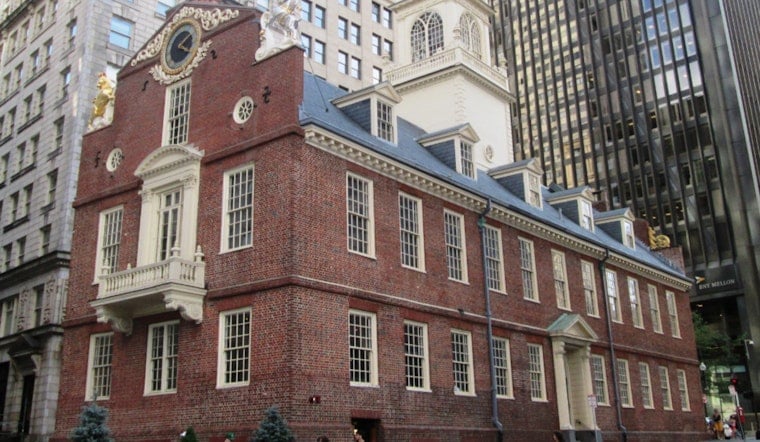
Walk past the Old State House on Boston's Freedom Trail this summer, pull out your phone, and you can now hear a three-minute musical piece composed by a Native artist about a 1755 proclamation that once put a cash price on Penobscot scalps. The free augmented reality experience, called Indigenous Stories, launched at six downtown Boston sites and runs through the end of the year, threading uncomfortable history directly into a trail best known for celebrating the American Revolution.
An App-Based Layer On Top Of A Familiar Route
Indigenous Stories is a 1.2-mile self-guided walking tour accessible through the free Hoverlay app, according to OperaWire. It launched June 29 and runs through December 31, with each of its six stops pairing a written history with an original musical composition created by local Native artists for America's 250th anniversary. As WCVB first reported, visitors can stream those performances on their phones while exploring the trail, with stops including the Old State House, Faneuil Hall, and Boston Common.
The tour was commissioned and produced by White Snake Projects, a Brookline-based activist performance company, in partnership with the North American Indian Center of Boston, with funding from the Massachusetts Office of Travel and Tourism and the Boston Mayor's Office of Arts and Culture, per OperaWire's reporting. Founder Cerise Lim Jacobs, a Singaporean-born former Harvard Law trial lawyer whose libretto Madame White Snake won the 2011 Pulitzer Prize for Music, told WCVB the company uses art as resistance and aims to uplift the voices of people who have not been heard before.
Why The Old State House
Jacobs told WCVB the Old State House was chosen for the tour because it was there, on November 3, 1755, that Lt. Gov. Spencer Phips signed a proclamation placing a bounty on every Indigenous scalp delivered to him, with different prices set for children, women, and young men. Historical accounts cited by the Saturday Evening Post put those bounties at 50 pounds for an adult Penobscot man's scalp, roughly $12,000 in today's currency, 25 pounds for a woman's, and 20 pounds for a child's. The proclamation was one of 69 government-issued scalp edicts across New England between 1675 and 1760, according to the same account.
The tour's stops extend to Boston Harbor, where the Indigenous Stories project highlights Deer Island's history as an internment camp during King Philip's War. Between 500 and 1,100 Christianized Native Americans, mostly Nipmuc and Massachusett tribal members, were imprisoned there over the winter of 1675 to 1676, and roughly half died from exposure and starvation, according to the National Park Service. It is a chapter largely absent from traditional Freedom Trail itineraries, which have long centered colonial and revolutionary narratives.
The Artists Behind The Music
Featured artist Mwalim Daphunkee Professor, born Morgan James Peters, created two pieces for the tour and told WCVB the project tells stories that include harsh truths. Mwalim, who has ancestry from the Mashpee Wampanoag and is trained in traditional oral storytelling, is a tenured associate professor of English and Black Studies at UMass Dartmouth and keyboardist for the multi-Grammy-nominated band The GroovaLottos, according to the American Academy of Arts and Sciences, where he also serves as a commissioner on its Arts Commission. He told WCVB his own grandfather was born and raised in Barbados and worked as a pianist, a family thread that runs through his approach to the tour's compositions.
More Native Programming Ahead For White Snake Projects
White Snake Projects plans to keep building on the theme this fall. The company will present the U.S. premiere of Mohican/Munsee-Lenape composer Brent Michael Davids's Requiem for America: Singing for the Invisible People at New England Conservatory's Jordan Hall in November 2026, following its world premiere with the BBC Symphony Orchestra in London earlier this year. The 19-movement work directly addresses state-by-state genocidal acts in American history during the nation's semiquincentennial, per OperaWire's coverage of the company's season.
The Indigenous Stories tour arrives as Boston's 2.5-mile Freedom Trail, which connects 16 official historic sites and draws more than 4 million visitors a year according to the Freedom Trail Foundation, sees a broader push to layer in perspectives long left out of its 1951 origins. Institutional stewards are moving in parallel: Revolutionary Spaces permanently installed a 9-minute documentary called Bounty, featuring Penobscot families reading the 1755 edict, inside the Old State House Council Chamber where it was signed. The same nonprofit debuted a high-tech AV show at the Old South Meeting House this summer, part of a wider trend of Freedom Trail operators reaching for immersive technology during America's 250th anniversary year.



