

























































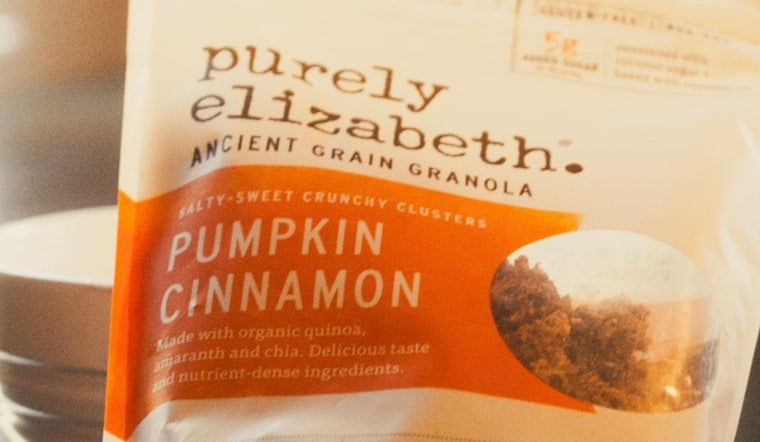
Elizabeth Stein started selling muffin mix online in 2009 to promote her nutrition coaching practice, baking batches for her ten clients to eat after races out of her Upper West Side apartment. Seventeen years later, her company, Purely Elizabeth, has been acquired by Italian confectionery giant Ferrero for $850 million, a deal that ranks among the largest natural foods transactions in recent memory.
Stein, now 45, launched the brand's website with $5,000 in personal savings and generated $10,000 in online orders within three hours of a feature in the digital newsletter DailyCandy, according to Forbes. As Entrepreneur reports, the triathlete and nutrition coach originally sold muffin mixes to clients before pivoting the business into the ancient-grain granola line that would define the brand. Ferrero, which also owns Nutella, Tic Tacs, and Kellogg's cereal, is buying a company whose sale value runs to more than four times its estimated $250 million revenue, per Entrepreneur's reporting.
From a Hallway Operation to a National Shelf Staple
Stein pivoted the business in 2011, moving from baking mixes to an ancient grain granola recipe she says she has never changed since, according to Forbes. That shift is credited as the turning point that transformed a boutique baking operation into a grocery shelf leader, notably since Stein has said she had never eaten granola before formulating her first batch. The company's product lineup has since grown to roughly 40 granolas, oatmeals, and cereals built around ingredients like quinoa, amaranth, and chia, per Entrepreneur.
Purely Elizabeth's retail footprint expanded from about 300 Whole Foods stores in 2014 to more than 10,000 retailers by 2024, and the brand now reaches over 30,000 retail locations nationwide, including Walmart, Target, and Kroger, according to Food Manufacture. Forbes reports the company now sells a bag of granola every 0.7 seconds across its national footprint, a velocity figure that underscores its unusually strong turn rate on supermarket shelves.
A Boulder Company Built on Institutional Capital
Stein relocated the company's headquarters from New York City to Boulder, Colorado, in 2014, tapping into the region's natural food manufacturing infrastructure and executive talent pool, according to BizWest. Boulder has become home to dozens of prominent better-for-you consumer packaged goods companies, the outlet notes. Over 17 years, Purely Elizabeth raised $53 million in outside venture capital, including a $3 million Series A in 2017 led by General Mills' venture arm 301 INC and a $50 million Series B in 2022 led by SEMCAP Food & Nutrition alongside Fresh Del Monte Produce, per Forbes.
That capital funded the supply-chain and marketing scale that helped the company reach profitability in 2023. Sales more than doubled over two years, growing from roughly $150 million in 2024 to a projected $300 million in 2026, with momentum accelerating after the brand launched its cookie granola line in 2024, Forbes reports. The Food Stack notes the deal arrives as the U.S. granola category reaches $1.3 billion, expanding even as traditional cold cereal sales decline nationwide, with consumers increasingly seeking higher protein and lower sugar options.
An Unusual Equity Retention for a Founder
Stein retained an estimated two-thirds ownership stake in Purely Elizabeth through the exit, setting her up for a post-tax payout of approximately $400 million, according to Forbes. That level of equity retention is rare for a consumer startup founder, since female founders seldom retain majority control and operational command through mega-scale acquisitions. Stein will remain CEO of Purely Elizabeth following the sale, and per Entrepreneur, she said she hopes her example shows women they do not have to choose between being a visionary founder and becoming a scaled CEO.
The acquisition extends Ferrero's aggressive push into the American breakfast aisle, building on its $3.1 billion takeover of cereal maker WK Kellogg Co in 2025, according to Inc. The company previously focused primarily on confections like Nutella and Tic Tac before entering the cereal business, marking a broader strategic pivot toward morning meal categories. For Stein, whose company was built on ancient grains and functional ingredients aimed at health-conscious shoppers, the deal caps a run that began with a few boxes of muffin mix shipped out of a Manhattan apartment.





