

























































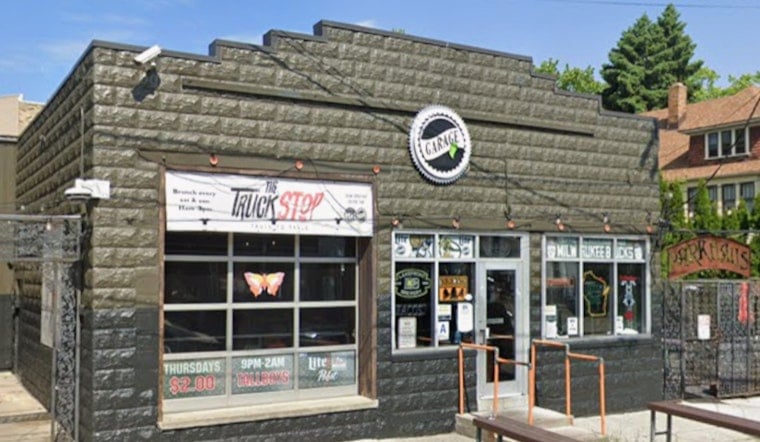
A leaked memo banning dozens of prominent Black rap artists from the DJ booth at The Garage, a popular Brady Street bar in Milwaukee, has ignited a firestorm after screenshots spread across social media this week. The list, which instructed DJs to avoid playing 40 mostly Black hip-hop acts including Lil Wayne, Future, 21 Savage, GloRilla, Lil Baby, Gucci Mane, Rick Ross and Migos, also carried a blanket instruction: no Milwaukee rap at all.
According to the Milwaukee Journal Sentinel, The Garage received hundreds of comments on its Instagram account and Google review page after the list began circulating online. Co-owner Leslie Montemurro told the paper an employee issued the list and that ownership never approved it, adding that a list of artists was “the wrong approach.” The bar, located at 1709 N. Arlington Place, said it intended to eliminate music with lyrics referencing violence or guns and to create what it described as a more relaxed atmosphere.
But that explanation collided with an internal message obtained by Milwaukee Record, which shows DJs were told the restrictions were effective immediately, applied even to remixes, and were “coming from ownership” — with noncompliance threatening their gigs. The same outlet reported that the circulated no-play list went further than initially known, also barring Travis Scott, Pusha T, Playboi Carti, Don Toliver and 2 Chainz alongside the blanket Milwaukee rap ban.
Conflicting Accounts of Who Gave the Order
Montemurro said the employee who sent the directive had previously been instructed that such messages should state they were coming from the owners, but said that instruction did not apply to this particular list. The Journal Sentinel reported Montemurro said the employee was told the list was unacceptable. The internal DJ message obtained by Milwaukee Record, however, explicitly invoked ownership's authority, leaving a direct conflict between what staff were told and what management now says it approved.
Montemurro said The Garage regretted that the incident presented the bar in another light, and stated the venue is proud of its diverse patron mix and staff and will continue to support the diversity of Brady Street. The bar describes itself as a lively nightlife spot known for music, crowds and a laid-back atmosphere, with an open patio and happy hour specials, open Tuesday through Friday from 3 p.m. to 2 a.m. and weekends from 11 a.m. to 2 a.m.
Local Artists Say the Ban Targeted Milwaukee's Rising Rap Scene
The backlash has been sharpest among Milwaukee musicians who considered The Garage a preferred gathering place. Rodney Bonds Jr. said in a Facebook video, per Milwaukee Record, that Milwaukee artists were offended and noted that local musicians regularly networked at the bar. Rapper Big Frank, who had previously had his music played at the venue, expressed disappointment with The Garage. Artist thereal.ra11 said the restriction limits artistic expression, while critics more broadly accused the bar of discriminating against Black patrons.
The controversy lands at a moment when Milwaukee's hip-hop scene is drawing national attention. The city has become known for a homegrown subgenre called lowend, marked by fast uptempo beats, heavy 808 bass and offbeat clapping rhythms, according to the Milwaukee Journal Sentinel's earlier reporting on the sound's rise. Local rapper Certified Trapper signed with Columbia Records imprint Signal Records in 2022, a deal often cited as proof of the scene's growing commercial momentum. For a bar that sits near the center of that scene to bar Milwaukee rap outright struck many local artists as a direct snub of a genre they see as a point of civic pride.
Legal Questions Under Wisconsin's Public Accommodation Law
Because the list disproportionately targeted Black hip-hop artists, critics have raised the specter of discrimination law. Wisconsin Statute § 106.52 prohibits taverns and other places of public accommodation from denying full and equal enjoyment of their goods, services and facilities based on race or color, a standard that could come into play if the ban is framed as a proxy for excluding Black patrons rather than a genuine noise or lyrical-content policy. No complaint under that statute has been reported in connection with The Garage.
The dispute also arrives amid heightened scrutiny of nightlife behavior on Brady Street. In June, the Brady Street Business Improvement District launched a six-week Summer Safety Pilot Program with Milwaukee police and local officials aimed at curbing late-night loitering, loud music, open intoxicants and other disruptive behavior along the corridor, according to Urban Milwaukee. The Garage's ownership group, Mojofuco Inc., also closed its nearby Balzac Wine Bar in November 2023 after 18 years, citing post-pandemic labor and financial pressures, a sign of how thin margins have been for the corridor's longtime operators.
Similar fights over venue rules have surfaced elsewhere in the Midwest. Minneapolis officials this month advanced an ordinance that would require bars to publicly post any dress codes after complaints that unposted rules were being used to discriminate against patrons, as Hoodline previously reported. Whether Brady Street's business district or Milwaukee officials pursue any similar review of music and entry policies remains an open question, as does whether the employee at the center of The Garage's list faces any further consequence.





