

























































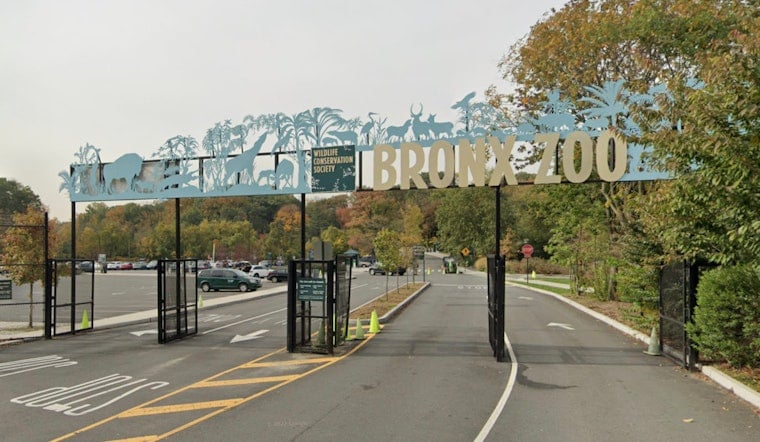
The Bronx Zoo is rewiring its signature winter light show this year, folding nighttime access to some of its most popular animal exhibits into the annual Holiday Lights festival. The 2026–2027 event runs on select dates from November 21 through January 3, and for the first time it pairs the park's glowing lantern trails with evening visits to the World of Darkness, the World of Reptiles, and an extended-hours Children's Zoo Farmyard.
According to News12 New York, the enhancements give ticket holders a chance to see live animals as part of the same visit that includes the illuminated displays. The Bronx Zoo says the Children's Zoo Farmyard will stay open into the evening specifically for Holiday Lights guests, offering hands-on feeding sessions with goats, sheep, alpacas, and donkeys from 3 p.m. to 8:30 p.m., according to the WCS Newsroom. That exhibit is normally seasonal and closes to the public in winter, making its extended run one of the more notable operational shifts this year.
Ticket buyers also get what the zoo is calling a “2-in-1” experience. Admission grants early park access starting at 1 p.m., letting visitors tour daytime exhibits featuring tigers, snow leopards, and bears before the lights switch on for the evening, per the same WCS release. That's a meaningful change given that standard zoo exhibits generally begin closing around 4 p.m. during the winter schedule.
World of Darkness Returns After a 16-Year Absence
The nighttime lineup's biggest draw may be the World of Darkness, which reopened in July 2025 after sitting shuttered for 16 years. The closure dated back to a $15 million municipal budget shortfall following the 2008 financial crisis, which forced the zoo to shutter four exhibits and relocate hundreds of animals to other accredited facilities, as detailed by 6sqft.
The rebuilt exhibit spans 13,000 square feet across 21 habitats and uses programmable LED lighting to simulate natural sunrise and sunset cycles, housing 25 nocturnal species including sand cats, vampire bats, and sloths, Secret NYC reports. When the original World of Darkness first opened on June 12, 1969, it was recognized as the first major zoo exhibit in the world to use a reverse day-and-night light cycle so nocturnal animals would be active while human visitors were present, according to the WCS Newsroom. In December, the exhibit recorded its first primate birth since reopening: a pygmy slow loris, a species native to Southeast Asian forests and classified as endangered due to habitat loss and the illegal pet trade, per A-Z Animals.
Why Indoor Exhibits Matter for Winter Nights
Bringing animal exhibits into an evening event isn't simply a matter of leaving the lights on later. Climate-controlled indoor spaces like World of Darkness and the World of Reptiles double as warm-up spots for guests braving the cold, which makes them structurally important to the festival's after-dark programming, according to the WCS research behind this year's expansion.
The broader Holiday Lights walk-through remains built around nearly 400 custom illuminated lanterns depicting 100 plant and animal species across six geographical trails spanning regions from Africa to Asia to the ocean. This year's festival is presented by Con Edison, with Stonyfield Organic as supporting sponsor — a partnership between Con Edison and the Wildlife Conservation Society that stretches back several decades of community holiday programming.
A Growing Footprint in Bronx Park
The Bronx Zoo sits on 265 acres in Bronx Park and serves as headquarters for the Wildlife Conservation Society, home to more than 11,000 animals representing over 600 species. The zoo's push to fold its recent capital investments — including the rebuilt nocturnal house — into its highest-attendance seasonal event comes as WCS continues expanding programming across its NYC facilities, which together draw more than 2 million visitors a year.
Hoodline covered last year's edition of the festival in a savannah-to-seas light trail, and the zoo has stayed in the news throughout 2026 for its animal welfare and conservation work, including the rehabilitation of trafficked toucans and a treated stowaway fox. This year's Holiday Lights expansion marks a shift toward using those same conservation facilities to deepen the festival experience rather than simply adding more lanterns to the trail.





