

























































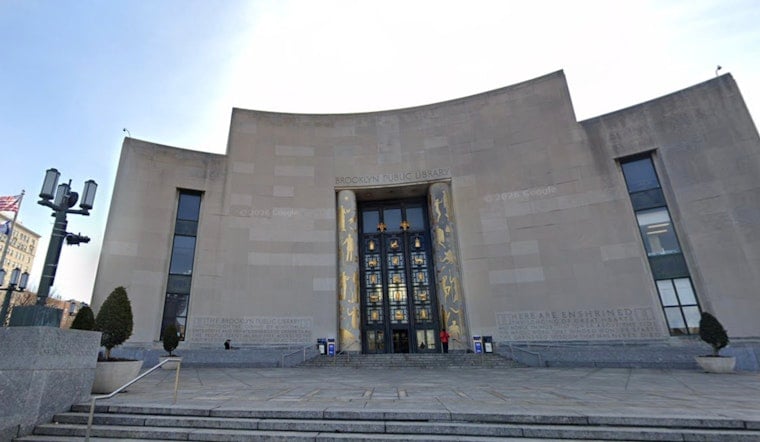
A new documentary tracing how thousands of everyday New Yorkers reshaped the rebuilding of Ground Zero will make its New York premiere at the Brooklyn Public Library's Central Library, with the screening scheduled for the evening before the 25th anniversary of the September 11, 2001 terror attacks. The film, 9/11: Reclaiming Ground Zero, centers on a 2002 public forum where more than 5,000 representative New Yorkers voted on early proposals for rebuilding the World Trade Center site, and challenged the city's original vision for what would rise from the wreckage.
According to the Brooklyn Eagle, the film focuses on the listening process and participatory democracy involved in rebuilding the disaster site, and its New York debut coincides with both the nation's 250th birthday and the 25th anniversary of 9/11. Directed by Josh Sabey and co-produced by Robbie Shinder and Carolyn Lukensmeyer, the 68-minute documentary combines archival footage of the 2002 town hall with an eight-minute opening sequence on the 2001 attacks, according to Eventbrite.
How a Rejected Blueprint Became a Public Referendum
The forum at the heart of the film, known as Listening to the City, grew out of a very public planning failure. In July 2002, New Yorkers overwhelmingly rejected six preliminary redevelopment concepts drawn up by architectural firm Beyer Blinder Belle, which the Port Authority and Lower Manhattan Development Corporation had commissioned to squeeze 11 million square feet of commercial office space onto the 16-acre site, as detailed by PBS Frontline. Critics at the time argued the designs treated Ground Zero primarily as real estate rather than hallowed ground.
The July 20, 2002 gathering at the Jacob Javits Convention Center organized 4,500 attendees into 10-person roundtables, using networked laptops and keypad polling to generate and synthesize more than 19,000 public feedback ideas in real time, per research documented in the Deliberative Democracy Digital Journal. It stands as one of the largest deliberative democracy experiments in U.S. history. The event was organized by the Civic Alliance to Rebuild Downtown New York, a coalition of more than 85 civic, business, and labor groups convened by the Regional Plan Association and supported by $2 million in private and public funding, according to the Regional Plan Association's own account of the effort.
From Public Pushback to Libeskind's Master Plan
The rejection at Listening to the City had immediate consequences. The Lower Manhattan Development Corporation scrapped the original designs later in 2002 and launched an international design competition that ultimately selected Daniel Libeskind's master plan in February 2003, drawing from hundreds of global submissions. Libeskind's winning plan, titled Memory Foundations, preserved Ground Zero's exposed 70-foot slurry wall along the western perimeter while centering the site around a 1,776-foot One World Trade Center spire, according to Studio Libeskind. The different vision that emerged from the public forum was incorporated into the final design of the site, shaping features that remain central to the World Trade Center campus and its museum today.
The town hall model used at Listening to the City was pioneered by AmericaSpeaks, a nonprofit founded in 1995 by Carolyn Lukensmeyer to develop the “21st Century Town Meeting” format. Before closing in 2014, the organization facilitated deliberative forums for more than 180,000 participants nationwide across 150 projects, including major public deliberations in New Orleans following Hurricane Katrina.
A Panel Linking 2002 to Today's Civic Tools
The Brooklyn screening will include a panel discussion moderated by Michael Kimmelman, who is a New York Times architecture critic. Kimmelman was appointed the paper's chief architecture critic in July 2011 after serving as its longtime chief art critic, and he has twice been named a finalist for the Pulitzer Prize, according to the Pulitzer Prize organization.
Joining the panel is Dr. Sarah Sayeed, who is chair and executive director of the NYC Civic Engagement Commission. Sayeed was appointed in 2015 as a senior advisor in the Mayor's Community Affairs Unit to expand outreach to Muslim communities across New York City, after spending seven years at the Interfaith Center of New York, according to the commission's own biography of her. The Civic Engagement Commission itself was created in 2018 following a voter-approved city charter amendment, and it now manages The People's Money, New York City's citywide participatory budgeting process, a direct institutional descendant of the deliberative approach the documentary chronicles.
The pairing of Sayeed and Kimmelman on the panel underscores the throughline the film is trying to draw: a single contentious public meeting in 2002 helped set a template that city government still leans on today. For Brooklyn residents who remember the debates over what should replace the twin towers, the screening offers a chance to revisit how loudly a rejected blueprint spoke, and how much of what stands at Ground Zero now exists because New Yorkers said no first.




