

























































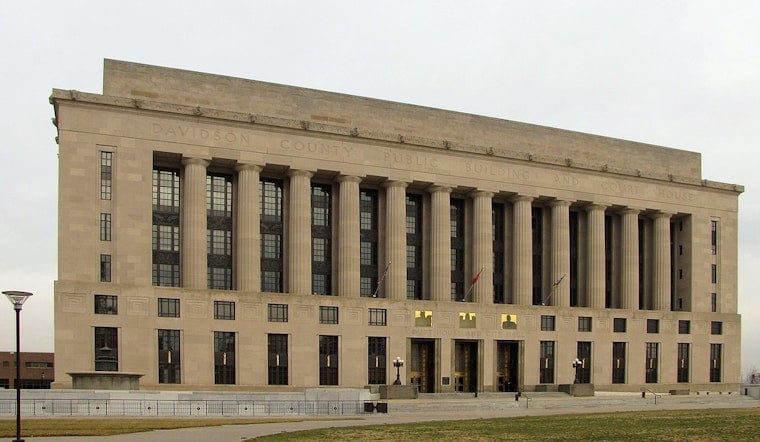
Anheuser-Busch InBev, the Belgium-based brewing giant behind Budweiser, has filed a lawsuit against Tennessee demanding a refund of more than $1.8 million in state franchise taxes plus interest. The company, operating under the entity AB InBev Worldwide, filed the suit Friday in Davidson County Chancery Court against Tennessee Department of Revenue Commissioner David Gerregano, arguing the state miscalculated its net worth and interstate business apportionment factors for the 2022 and 2023 tax years.
According to WKRN News 2, the Delaware-based company alleges that the tax Tennessee collected from it violates both federal and state statutes, and that the state wrongfully denied its refund requests. AB InBev says it paid approximately $2 million in Tennessee taxes across 2022 and 2023, despite owning no property in the state, according to the lawsuit complaint described in the report. The company is asking a judge to order the Department of Revenue to properly recalculate its taxes, issue the refund, and award attorney's fees and other monetary damages.
AB InBev filed its original tax refund claim in August 2025, but the Department of Revenue never issued a formal decision within the required six-month window. Under Tennessee Code § 67-1-1802, a refund claim left unresolved that long is automatically classified as a “deemed denial,” a status that Justia Law notes then starts a strict one-year clock for the taxpayer to file suit in chancery court to preserve its legal remedy. That statutory mechanism is what forced AB InBev's hand this week, roughly a year after its claim first went in.
Why Tennessee Owes Anyone a Refund at All
The dispute traces back to a constitutional fight that predates AB InBev's lawsuit by more than two years. In late 2023, multi-state taxpayers challenged Tennessee's franchise tax formula in court, arguing that taxing out-of-state companies based on property used in the state violated the dormant Commerce Clause's internal consistency test, as explained by Holland & Knight. Tennessee had historically required companies to pay franchise taxes based on whichever was higher: their net worth or the value of property owned or used in the state.
To head off prolonged litigation, the Tennessee General Assembly passed Public Chapter 950 in May 2024, eliminating that property-based calculation and authorizing retroactive refunds for recent tax years. The reform was estimated to cost the state nearly $1.6 billion in retroactive refunds while cutting roughly $400 million a year in future corporate tax collections, per Law360 Tax Authority. State reports show more than $1.5 billion was ultimately distributed to tens of thousands of eligible businesses, and by mid-2025 the state had disclosed that over 58,000 businesses had received refunds under the program, according to the Washington Examiner.
Why AB InBev Went to Court Instead of Taking the Standard Refund
Most companies that wanted a piece of that $1.5 billion had to accept a tradeoff. Businesses claiming retroactive refunds between May 15 and November 30, 2024 were required to sign a waiver forfeiting any future legal claims that the tax was unconstitutional, and companies accepting refunds under that program also had to agree to public disclosure of their name and refund tier, according to PwC. Tennessee law further required the Department of Revenue to publish, from May 31 to June 30, 2025, a public list grouping refund recipients into broad ranges of $750 or less, $751 to $10,000, or over $10,000, as detailed by Grant Thornton.
By pursuing a separate chancery court claim rather than the standard refund window, AB InBev avoids signing away its right to challenge the tax's constitutionality later. The company is also entitled to seek accrued interest on any delayed refund, since Tennessee regulations require the state to pay interest at the federal short-term rate plus 0.5 percentage points if a valid claim isn't processed within 90 days of filing, per PwC.
A Bigger Shift in How Tennessee Taxes Out-of-State Companies
AB InBev's case also sits inside a broader overhaul of how Tennessee taxes businesses with sales but no physical footprint in the state. Under the Tennessee Works Tax Act of 2023, the state began a three-year phase-in moving its corporate tax apportionment formula from a multi-factor system to a mandatory single sales factor by tax year 2025, a shift that hits out-of-state entities with substantial sales but little or no in-state property, according to the Tennessee Department of Revenue.
Tennessee's franchise tax itself is relatively modest on paper: 0.25 percent, or $0.25 per $100, of a business's apportioned net worth, with a $100 minimum annual tax, alongside a 6.5 percent excise tax on net earnings from state operations. The state has no personal income tax and no general corporate income tax, leaning instead on these business privilege taxes for revenue. Disputes like AB InBev's must be filed exclusively in Davidson County Chancery Court, which holds sole statutory jurisdiction over state tax liability cases, a rule reinforced by prior litigation such as Zimmer US v. Gerregano.
What Happens Next
Neither AB InBev nor the Tennessee Department of Revenue responded immediately to requests for comment, per WKRN News 2's reporting. The lawsuit's allegations remain unproven in court. The Department of Revenue oversees roughly 87 percent of total state revenues, having collected nearly $22.2 billion in state taxes and fees along with $4.7 billion for local governments in fiscal year 2024, underscoring the scale of the agency now facing AB InBev's claim in chancery court.
Hoodline previously covered the GOP fight over franchise tax breaks that preceded the 2024 reform, when lawmakers were divided over how to respond to the looming constitutional threat. AB InBev's lawsuit now shows how that fight continues to play out case by case, more than two years after the legislature first moved to head it off.





