

























































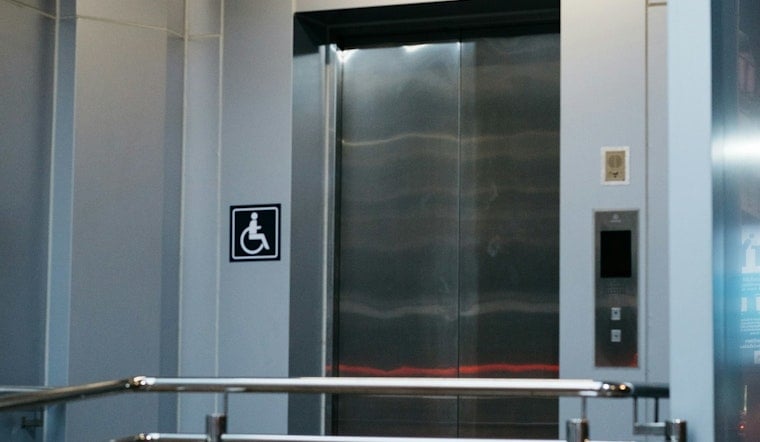
An 80-year-old Buffalo Grove man named Hank hasn't left his third-floor condo since April 20, when the building's only elevator was shut down for a modernization project that was supposed to take six to eight weeks. More than 18 weeks later, Hank is still stuck upstairs. He has primary lateral sclerosis, a progressive neurodegenerative disease that affects his mobility and speech and requires him to use a walker, making the stairs impossible for him to navigate on his own.
Hank, who asked that only his first name be used, told CBS News that the extended outage has already cost him two missed medical appointments. The only way he's been able to leave the building at all during the shutdown has been by hiring a private mobility service, which charges $300 per visit — a cost his condo association's legal representative has formally refused to reimburse. His wife told the station the ordeal has taken a severe emotional toll on him.
Construction Finished, But the Elevator Still Can't Legally Run
The physical work on the elevator modernization was completed by late August, according to CBS News, which reported that multiple companies were involved in the project. But state regulations require the elevator to pass an official state inspection before it can be put back into service, leaving Hank and his neighbors waiting on a bureaucratic step even after the mechanical work is done.
That inspection bottleneck may be tied to a broader slowdown. The Office of the Illinois State Fire Marshal, which handles elevator registrations and safety inspections outside Chicago, reported this year that processing times and inspection scheduling have faced longer-than-normal delays after the state migrated its licensing database to a new system, GL Solutions, in late 2025.
A Fair Housing Complaint and an Unclear Path Forward
Hank has filed a housing discrimination complaint with the Illinois Department of Human Rights, which has noted that an ongoing refusal to repair an elevator or provide reasonable accommodations can constitute housing discrimination, per CBS News. Guidelines from the Illinois Department of Human Rights state that under the Fair Housing Act, multi-family housing providers must engage in an interactive process with disabled residents and grant reasonable accommodations to ensure access to common areas.
Illinois law also spells out who is responsible for keeping an elevator running in the first place. Under the Illinois Condominium Property Act, condo associations are legally obligated to maintain, repair, and replace shared building elements — including elevators — according to FirstService Residential. Separately, the Illinois Elevator Safety and Regulation Act requires all multi-family residential buildings, including condominiums, to register their elevators and undergo safety inspections, a mandate that doesn't apply to single-family homes.
A Diagnosis That Takes Years, and a Disease That Doesn't Let Up
Primary lateral sclerosis causes progressive stiffness and weakness by affecting the upper motor neurons, and because its early symptoms resemble ALS and other motor neuron disorders, reaching a diagnosis can take three to four years, according to the Mayo Clinic. The disease doesn't typically shorten life expectancy, but it steadily erodes a person's ability to move and speak — which is exactly what has left Hank unable to manage the stairs while his building's elevator sits idle awaiting state sign-off.
Elevator outages have stranded other elderly and disabled condo residents elsewhere this year, including cases Hoodline has covered in Florida involving prolonged breakdowns in multi-story buildings. Whether the Buffalo Grove case gets resolved through the state's discrimination complaint process, a faster state inspection, or the condo board reversing course on reimbursement remains to be seen.




