

























































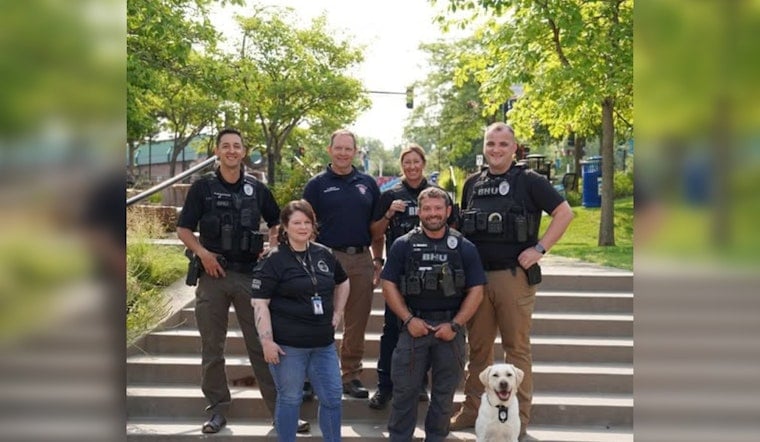
Burnsville's Behavioral Health Unit — the police and fire team best known for its cortisol-sniffing K9 partner, Duke — has struck a new partnership with the University of Minnesota Department of Psychiatry & Behavioral Sciences, giving officers direct access to academic psychiatrists twice a month for guidance on the toughest calls they handle. The unit says the arrangement is believed to be the first of its kind in Minnesota linking a law-enforcement-based behavioral health team with a large research-based academic psychiatry department.
According to a City of Burnsville announcement, the confidential consultations will give Behavioral Health Unit members timely education and resources, helping them better understand symptoms observed in the field and receive guidance on engaging people with complex behavioral health needs. Sergeant Max Yakovlev, who created the unit in 2021, said the partnership gives the team access to specialized mental health expertise that can directly improve service to people in crisis. The city describes the collaboration as positioning Burnsville's unit as a leader in community-centered coordination among law enforcement, fire and medical response, social work, and clinical mental health care.
A Small Team With a Big Caseload
The Behavioral Health Unit was created in 2021 to address community mental and behavioral health needs, connect individuals and families with appropriate resources, increase diversion from the criminal justice system, and reduce repeat calls for service, per the city's announcement. It's a compact operation — three police officers, one police sergeant, one Burnsville Fire Department firefighter/paramedic, an embedded social worker, and Duke, the team's crisis-trained K9. Despite its small size, the unit logged 872 total client contacts and more than 400 follow-ups last year, and city officials say many individuals need fewer contacts over time once they receive initial support or a referral.
Duke, a British Labrador retriever, joined the unit in 2023 after Yakovlev attended a national co-responder conference in Kansas City, according to Police1. He's specially trained by K9s for Freedom and Independence to detect elevated cortisol levels in people experiencing crisis, making him one of Minnesota's first police dogs trained specifically to pick up on physiological stress markers. Per the city's own account, Duke had contact with more than 1,000 community members in the first half of 2026 alone, working with people showing elevated stress and helping create calm during mental health calls and traumatic situations. He's also become a fixture well beyond emergency calls, supporting school visits, senior facility visits, peer support efforts, and community events.
Protective Gear and a Harm-Reduction Push
Duke's operational profile got a safety upgrade earlier this year when he received a custom bullet- and stab-protective vest through a charitable donation from Vested Interest in K9s, Inc., embroidered in memory of Roseville K9 Major, the City of Burnsville said in February. Yakovlev has also pushed the unit's work beyond direct crisis response: he spearheaded a municipal harm-reduction initiative that installed a free public health vending machine inside the Burnhaven Library in April, distributing Narcan, drug testing strips, and basic care kits, according to KARE 11. The machine was funded through municipal opioid settlement dollars.
The unit does more than respond to in-progress crisis calls — it also coordinates care, conducts aftercare follow-ups, and works with families and providers to keep people connected to services, the city's announcement notes. That mission traces back to a painful chapter in Burnsville's history: in March 2016, officers including Yakovlev responded to a parking lot incident involving Map Kong, a man experiencing an acute psychological crisis, which ended in a fatal police shooting and a subsequent federal civil rights lawsuit, as reported by Courthouse News Service. That lawsuit alleged officers failed to properly handle a non-violent psychiatric emergency, and the case has served as historic context for why Burnsville later built a specialized unit focused on de-escalation rather than force.
Part of a Wider Dakota County Shift
Burnsville's model reflects a broader regional trend. Dakota County operates its own Crisis Response Unit, which provides 24/7 mobile crisis assessments, face-to-face emergency interventions, and urgent psychiatric referrals countywide, according to Dakota County. Nearby, the Lakeville Police Department created a full-time mental health support liaison role in June 2024 and has since provided outreach on more than 600 crisis incidents, per the City of Lakeville, collaborating with Dakota County social workers and victim advocates along the way.
The University of Minnesota's involvement brings substantial academic weight to the partnership. Its Department of Psychiatry & Behavioral Sciences includes 73 core faculty members and ranked 20th nationally in National Institutes of Health psychiatric research funding in 2024, per the university's medical school. The department isn't new to bridging clinical psychiatry and law enforcement — in 2023, the university highlighted a statewide initiative integrating psychiatric nurse practitioner students into police ride-alongs and community crisis responses, funded through a Minnesota Department of Health grant.
The new twice-monthly consult structure builds on state-level momentum toward embedding clinical expertise in public safety work. Minnesota launched a specialized training program in January 2024 to prepare licensed mental health therapists to work directly with law enforcement officers and first responders facing occupational trauma, as Hoodline previously reported. Burnsville's Behavioral Health Unit and Duke have also worked to build public trust directly, showcasing their work at a 2025 open house designed to familiarize residents with the unit's non-punitive approach to public safety. City officials say the University of Minnesota partnership will strengthen the team's ability to respond with compassion, reduce unnecessary justice-system involvement, and connect Burnsville residents with appropriate care faster.





