

























































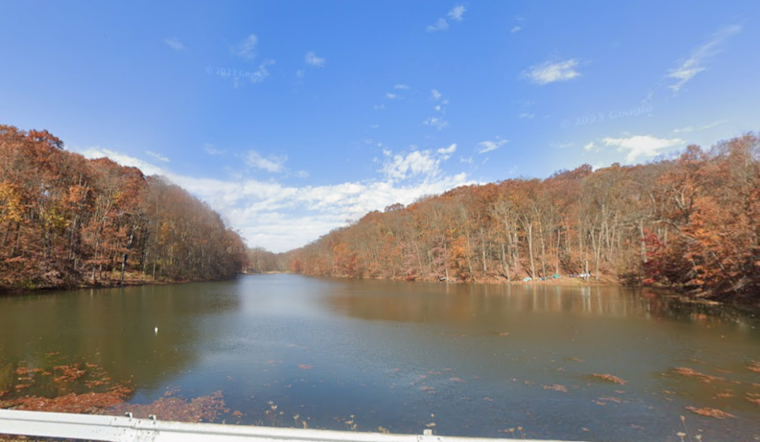
A 12-acre lake that has anchored a Center Township neighborhood for more than 80 years could soon disappear after the Commonwealth of Pennsylvania sued the community association responsible for maintaining its dam. State officials say the earthen structure holding back Hull Plan Lake has gone unrepaired since being formally declared unsafe in 2021, and now the homeowners' association could be forced to drain the lake entirely to eliminate the danger.
According to WPXI, the Pennsylvania Department of Environmental Protection said the Hull Plan Residents Association had not taken action to fix the dam's problems, and the agency has stated the structure could not survive a 100-year flood. Association official Brad Cavaliero was served with the lawsuit, and the Butler Eagle reported the notice was delivered to the association's president on August 24. Cavaliero told WPXI the association has actually been working to fix the dam for a decade.
The dam itself dates back to the 1940s, when both the earthen structure and the lake it created were formed, per WPXI's reporting. Federal dam safety records compiled in the U.S. Army Corps of Engineers' National Inventory of Dams describe it as a 25-foot-high, 400-foot-long earthen dam on TR Connoquenessing Creek, impounding roughly 12 acres of water with a maximum storage capacity of 220 acre-feet, according to Snoflo. That same federal data assessed the dam as having a high hazard potential and a poor structural condition rating following an inspection back in June 2020.
A Bridge Under Strain, and Fears of Collapse
The stakes go beyond the lake itself. State officials have said a breach at the dam would affect 32 people living downstream, impacting four homes and one business, the station's report notes. A bridge tied to the dam has also been sagging, and Cavaliero told WPXI he's concerned it could collapse while someone is driving over it — a real worry given that school buses cross it every day, per the same account. The sagging reportedly worsened after spillway damage in January.
This isn't the first time local leaders have tried to address the problem. Public minutes from a May 2017 Center Township Board of Supervisors meeting show that township officials and the Hull Plan Residents Association drafted a cost-sharing agreement to repair the Hull Lake spillway at the time, with local fire crews even attempting to locate the dam's water release valve. That agreement between the association and the township ultimately dissolved without resolving the underlying issues, according to WPXI.
Draining the Lake, Removing the Fish
Under the state's order, the association must obtain a permit from the Pennsylvania Fish and Boat Commission and drain the lake, with the DEP directing the association to remove the water altogether. Cavaliero told WPXI he hopes the draining process can be completed within a month. Under Title 58, Section 51.85 of the Pennsylvania Code, a drawdown permit waives normal fishing size and creel limits during drainage, according to the Legal Information Institute, though salvaged fish cannot be restocked into other public waters without explicit state permission — a rule the association will need to navigate as it removes fish from the lake.
Once the lake is drained, engineers will need to either improve the spillway or remove the dam entirely, per WPXI's reporting. Dam repairs are expected to cost at least $500,000, a price tag Cavaliero has called financially daunting for the small association. He estimated there is a 50% to 80% chance the lake simply won't exist afterward, and volunteers have already been cleaning debris out of the spillway in an effort to stave off further damage. The DEP did not return WPXI's email requesting comment.
Part of a Larger Statewide Crackdown
Hull Plan Lake Dam is one of 21 high-hazard dams among the 79 state-regulated dams identified in Butler County's 2021 All-Hazard Mitigation Plan, according to Butler County government records, which note that high-hazard classifications require formal Emergency Action Plans. Statewide, Pennsylvania regulates more than 3,400 dams, with roughly 740 to 760 classified as high-hazard structures where failure could cause loss of life and severe property damage, per legal analysis from Barley Snyder. That same analysis found the state's Department of Environmental Protection has ramped up enforcement against private homeowners' associations, increasingly relying on unilateral orders and lawsuits to force repairs or full drawdowns, even though many small associations lack the funding for major engineering overhauls.
Pennsylvania's tougher stance traces back to the Dam Safety and Encroachments Act, passed in 1978 after the 1977 Johnstown flood killed 85 people when local dams failed catastrophically, according to the Schuylkill County Emergency Management Agency. State agencies report no dam-failure flood deaths since that law took effect. For the roughly dozen acres of water that make up Hull Plan Lake — long promoted in local real estate listings as a defining feature of the subdivision — the outcome of the state's lawsuit will determine whether that legacy survives or whether the community is left, quite literally, high and dry.



