

























































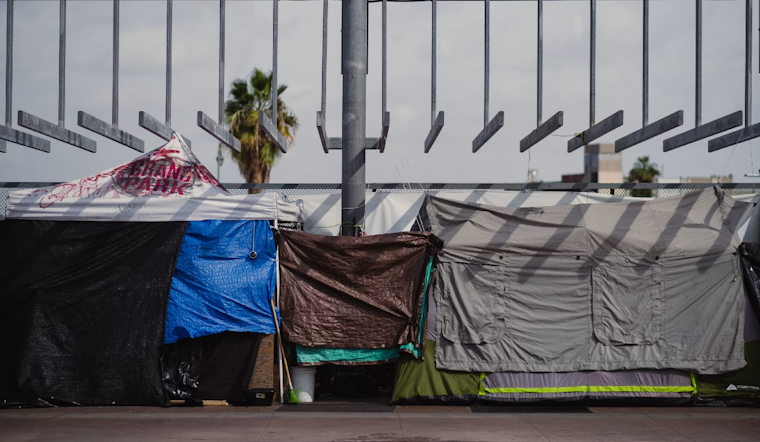
Unhoused Californians are 38% more likely to end up in the emergency room because of extreme heat than the general population, according to a new statewide analysis that finally puts numbers behind what doctors and outreach workers on the ground have been describing for years. The finding lands as California, and Los Angeles County in particular, faces yet another summer of punishing heat waves that hit hardest among people with nowhere air-conditioned to go.
The analysis comes from Tracking California, which found that unhoused residents accounted for nearly 1 in 10 heat-related emergency department visits statewide in 2019 and 2020, even though they make up less than half a percentage point of California's total population, as reported by LAist. That works out to an emergency visit rate roughly 22 times higher than their share of the state population, per the same organization's research. The report also found that unhoused people were 11% more likely than others to visit the hospital for heart and respiratory illness on high heat days, since extreme temperatures can worsen preexisting conditions and coincide with spikes in smog and other air pollution.
Why This Data Only Exists Now
For years, none of this could be measured. Unhoused patients without permanent addresses were often categorized as missing data and dropped entirely from county-level environmental health tracking, a gap that persisted until California enacted Senate Bill 1152 in 2018. That law, which took effect in 2019, required hospitals to record housing status at discharge and improve discharge planning for unhoused patients, effectively creating the first real window into a health burden that had long gone uncounted.
Shubhayu Saha said unhoused individuals were at much higher risk on extreme heat days and that empirical evidence now supports that risk, according to the LAist report. Dr. David Eisenman developed zip-code-level data of excess emergency-room visits, which officials say can help prioritize public health resources to the neighborhoods where they are needed most, per the same account.
Doctors Describe What Extreme Heat Does to the Body
On the ground, the numbers match what clinicians are already seeing. Dr. Mary Marfisee has treated unhoused patients on Los Angeles's Skid Row for severe dehydration, heat rashes and heat exhaustion, the outlet reports, while Dr. Rodney Borger has treated unhoused patients for burns and severe dehydration in the San Bernardino Valley. Heat exhaustion or stroke can bring on headaches, dizziness, nausea, excessive sweating and muscle cramps, and prevention largely comes down to staying hydrated and out of direct sun.
The risks compound for people managing mental illness or addiction, since heat can interact with both conditions in dangerous ways; certain mental illness medications can affect the hypothalamus, the part of the brain responsible for regulating body temperature. Yolanda Breland has said that tents and shelters can themselves retain heat, turning the very structures meant to offer shelter into ovens during a heat wave. Riverside County's heat-illness data most affects men between 18 and 44, while the Coachella Valley's large farm worker population faces its own outdoor heat exposure.
Where People Are Supposed to Go for Relief
Some relief does exist. The Los Angeles Mission provides air conditioning, cold water, showers, misters and shade in its lobby and courtyard, and cooling places more broadly include libraries, community centers and dedicated cooling centers. During Southern California's July heat waves, local emergency authorities urged vulnerable residents without home air conditioning to call 211 to locate those cooling centers, as previously reported by Hoodline.
Dr. Nichole Quick, chief science officer at the Los Angeles County Public Health Department, has noted that emergency room visits have been steadily rising with heat in July and August across much of Southern California. Most L.A. County heat-related ER cases involve adults over 65 and people living in the hottest areas of the county, per LAist's reporting, even as the county's public health data excludes community health centers and other clinics that primarily serve low-income households, leaving another piece of the picture uncounted.
Policy Fights Over Sweeps During Heat Waves
The data lands amid ongoing friction over how the city handles encampments during extreme heat. Earlier this month, the Los Angeles City Council voted 10-3 to roll back 12 anti-camping zones in Hollywood after housing advocates pressed the city to halt tent sweeps during summer heat waves, arguing that removing tents strips unhoused residents of basic shade and shelter, as Hoodline previously reported.
The heat crisis for unhoused Californians also sits inside a larger, worsening climate pattern. Statewide heat-related emergency department visits and hospitalizations rose roughly 30% between the 2005-2014 decade and the 2015-2024 decade, driven by human-caused climate change pushing average temperatures higher and intensifying heat waves. A 2024 multi-university study found that daily heat exposure contributed to 5.2% of unhoused mortality in Los Angeles County, with heat mortality risk for unhoused people estimated at 10 to 100 times higher than for the general population, according to Boston University's School of Public Health.
LAist's reporting on this story was produced amid its own funding pressures: the outlet says public media defunding eliminated $1.7 million from its annual budget after Congress voted to defund public media in 2025, and LAist notes it is now 100% community funded.





