

























































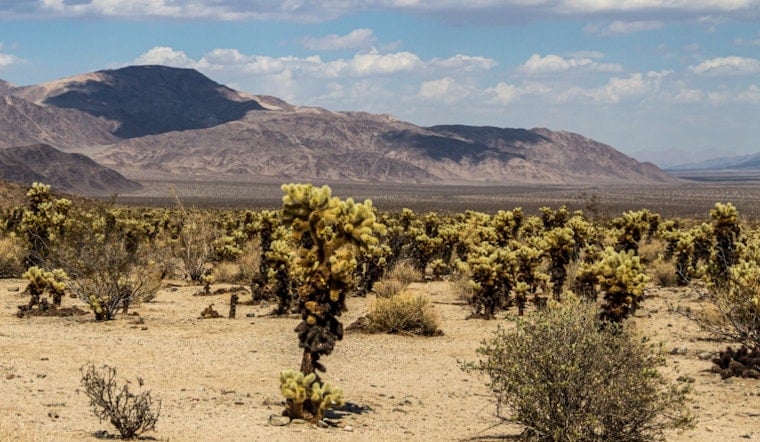
California lawmakers have adopted a resolution demanding that Washington restore funding and staffing to the National Park Service, a response to federal cuts that have hit gateway communities near Joshua Tree National Park especially hard. Assembly Joint Resolution 9 passed without opposition and does not require the governor's signature, but it carries a pointed message: federal partners are falling short of the support national parks need.
Assemblymember Greg Wallis, a Republican who represents a district including Joshua Tree National Park, announced that AJR 9 was officially adopted, according to Uken Report. Wallis said the resolution received strong bipartisan support and framed the issue as one of stewardship rather than just budgets and line items. “Public lands belong in public hands,” Wallis said, adding that Californians consider national parks worth defending and that Washington needs to reinvest in the people and programs that sustain them.
The resolution urges the president and Congress to restore full and consistent National Park Service funding and staffing. The measure will be transmitted to federal leaders and members of California's congressional delegation.
A Grassroots Push From the Morongo Basin
The resolution drew support from Morongo Basin community members and advocates, according to a Facebook post from Uken Report. The measure received bipartisan support before its adoption.
Chance Wilcox, a resident of the Morongo Basin, said recent federal actions have reduced national park funding and staffing, according to Uken Report's reporting. Wilcox said national parks protect wildlife, preserve history, and provide enjoyment to millions of Americans. Krystian LaHage echoed that federal actions have undermined national park stability through staffing and funding reductions, adding that parks serve as refuges for wildlife, history, recreation, and enjoyment of nature.
The Numbers Behind the Frustration
The concerns tracing back to the desert are grounded in a much larger national trend. The National Park Service lost roughly 25% of its permanent workforce, more than 4,000 positions, between January 2025 and this past May, due to mass terminations, early retirements, and deferred resignations, according to the National Parks Conservation Association. A separate Interior Department policy set in late 2025 restricts federal park management to hiring no more than one new employee for every four workers who depart, with narrow exceptions mostly reserved for public safety roles, the conservation group has also reported.
Those restrictions have collided with surging demand. National Park System sites logged a record-high 331.9 million visits nationwide in 2024, with California and Washington, D.C. recording the highest numbers of recreation visits in the country, according to a LendingTree analysis of federal data. The Golden Gate National Recreation Area alone was the most-visited National Park Service unit in the entire country in 2024, drawing 17.2 million visits, more than the Blue Ridge Parkway or Great Smoky Mountains. According to the National Park Service, national parks recorded 325.5 million recreation visits in 2023, up 4% from 2022, while visitors spent an estimated $26.4 billion in local gateway regions.
Economic Stakes for Gateway Communities
Joshua Tree National Park provides a foundation for robust gateway economies and significant economic benefits to the Morongo Basin, per Uken Report's account of the resolution's findings. Death Valley National Park, also internationally popular like Joshua Tree, provides a similar economic foundation for the communities around it. National Park Service lands in California generated an estimated $3.2 billion in visitor spending in nearby communities in 2023 and supported nearly 40,000 jobs, according to the same reporting.
Those local figures sit within a much larger statewide footprint. National Park Service economic reporting shows 36.2 million visitors across California's 28 federal park sites in 2023 generated a cumulative economic benefit of $5.1 billion for the state, with lodging and restaurant sectors recording the largest direct local spending impacts, per the National Park Service. California has nine national parks in all.
Staffing Squeeze Hits the Ground
The staffing crunch has shown up in concrete ways for park employees. KQED reported on federal maintenance workers at Yosemite National Park. Seasonal hiring has also drawn attention ahead of summer peak season, according to Government Executive.
A National Park Service FY2019 FOIA log records a request concerning damage at Joshua Tree National Park during the government shutdown between December 22, 2018, and January 25, 2019. According to April 2020 U.S. Department of the Interior QFRs, national parks such as Joshua Tree were vandalized and severely damaged during the shutdown, including cases in which Joshua trees were cut down to make way for cars illegally driving in the desert.
Wallis represents Assembly District 47, an area covering parts of Riverside and San Bernardino counties, including Yucca Valley and Palm Springs. The district's gateway communities depend directly on Joshua Tree tourism. Related topics include wildlife crossing efforts near the park, declining namesake trees, and bear spray restrictions.
AJR 9 was adopted with bipartisan support and will be transmitted to Washington for consideration by the state's congressional delegation.





