

























































A woman hiking Camelback Mountain was left fighting for her life Sunday after firefighters found her roughly halfway up the trail, unable to keep walking, with a core body temperature that had climbed past 104 degrees Fahrenheit. She told rescuers she was severely overheated and was in an altered mental state by the time crews reached her, both signs of serious heat stroke. She was ultimately hoisted off the mountain by helicopter and rushed to a hospital in critical condition.
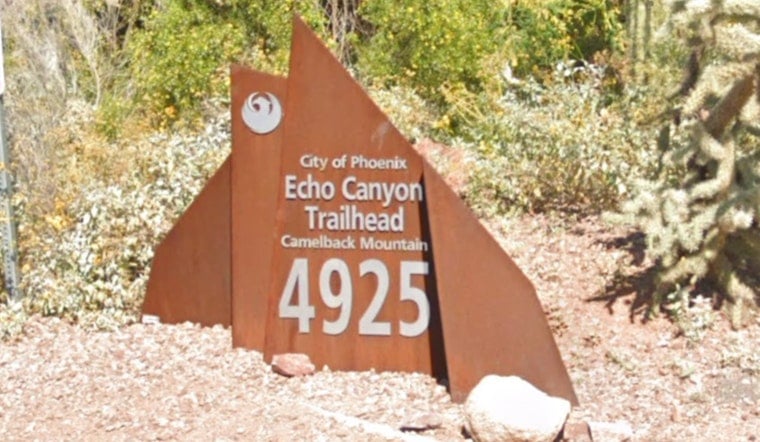
Firefighters were dispatched to the Echo Canyon trailhead on Camelback Mountain on Sunday, according to Arizona's Family. The Phoenix Fire Department reported that the woman was unable to continue descending on her own, and first responders hoisted her off the mountain using the Maricopa County Sheriff's Office helicopter Fox 1. Phoenix fire officials said she was fighting for her life after becoming dangerously overheated while hiking the popular peak.
Once fire crews reached the trailhead, they began cold water immersion therapy, a rapid-cooling technique the station's report highlighted as critical to the response. The approach traces back to 2024, when Phoenix Fire became one of the first urban emergency medical agencies in the country to equip every emergency vehicle with specialized ice bags for pre-hospital cold water immersion, a method that can cool heatstroke patients three to five times faster than traditional techniques, according to CBS News.
A Protocol Built on Years of Research
The cooling method is not improvised. A study published in Prehospital Emergency Care in April examined 183 heatstroke patients treated with pre-hospital cold water immersion by Phoenix Fire and found significant drops in core body temperature, improved neurological scores, and favorable survival outcomes, per the University of Arizona College of Medicine – Phoenix. The research was led by emergency medicine physicians from the university and Banner Health, whose toxicologists and doctors were honored with Phoenix Fire's inaugural Partner of the Year award in April for their three-year collaboration developing and training paramedics on the ice bag immersion protocol, according to Banner Health. Banner toxicologist Dr. Jerry Snow led the clinical study of ice water immersion for acute hyperthermia.
The technique was designed specifically to stabilize critical patients before they even reach an ambulance, a detail that underscores why crews moved to cool the hiker at the trailhead rather than waiting for hospital transport. Sunday's rescue happened even as brutal conditions were building across the Valley: the National Weather Service issued an extreme heat warning, with First Alert Weather days set from Monday through Friday and a strong ridge of high pressure expected to push temperatures above 110 degrees each day, Arizona's Family reported.
Trail Closures Set to Begin Monday
In response, the City of Phoenix will close Camelback Mountain's Echo Canyon and Cholla trails from 8 a.m. to 5 p.m. starting Monday, with closures expected to last through Thursday, along with several other popular hiking routes. The restrictions fall under the city's Trail Heat Safety Program, which automatically shuts down Echo Canyon, Cholla, the Piestewa Peak Summit Trail, and select South Mountain trails during Extreme Heat Warnings, according to the City of Phoenix. Officials updated the program in March 2025 to begin restrictions an hour earlier, at 8 a.m., specifically to protect both hikers and the first responders who have to climb after them.
Even with those closures, Phoenix firefighters remain busy on the mountain. The city reports that emergency crews perform more than 200 mountain and desert preserve rescues annually, and firefighters responded to 74 mountain rescues across Camelback Mountain, Piestewa Peak, and South Mountain in just the first five months of 2026. Hoodline has reported on repeated heat rescues throughout the summer, including a 10-year-old boy pulled from Echo Canyon Trail earlier this month and back-to-back Camelback callouts in July.
Heat Deaths Rising Again This Summer
The regional stakes remain high. Maricopa County recorded 430 heat-related deaths in 2025, a second consecutive annual decrease from a record 645 deaths in 2023, according to the Maricopa County Department of Public Health. But by late July of this year, county health officials had already confirmed 40 heat-related deaths, a pace exceeding the same period in 2025, with an additional 388 suspected heat deaths still under investigation, according to Phoenix Patch. Nearly half of all heat deaths recorded in the county's 2025 annual report occurred on days when the National Weather Service rated the official heat risk as only moderate, not extreme, a reminder that dangerous exposure isn't limited to warning days alone.
Phoenix's punishing summers have also grown measurably longer. Climate Central reported this year that Phoenix now sees 39 more days of hot summer weather annually than it did in 1970, with multi-day heat waves growing longer and more intense; the city logged 121 days at or above 105°F in 2024 alone. As the mountain draws hikers into increasingly dangerous conditions, the city has also begun planning ahead: design work is underway on a multi-million dollar renovation of North Mountain Park, expected to finish in late 2027, that will add dedicated ice machines and first-responder supply infrastructure so crews no longer have to haul ice and heavy rescue gear up steep terrain by hand.




