

























































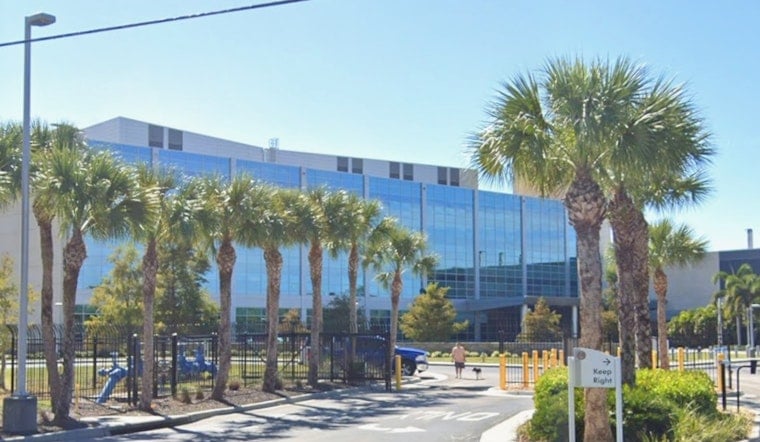
A veterans' advocacy group in Lee County has put a price tag and a blueprint on a long-sought idea: a full-service VA hospital in Cape Coral. The newly finished feasibility study proposes a seven-to-nine-story tower with 150 to 200 beds, a 24/7 emergency room, an intensive care unit and operating rooms, all connected to the existing outpatient center by an enclosed skybridge. Backers say it would finally give Southwest Florida veterans a place to go for surgery or a hospital stay without driving more than 100 miles.
That distance is not exaggerated. Veterans across the region currently travel over 100 miles north to the Bay Pines VA Healthcare System near St. Petersburg or east to Miami for VA hospital admissions, a trip the study says can take at least 90 minutes to two hours or longer each way, according to The News-Press. The Cape Coral outpatient complex, which sits on 30 acres at 2489 Diplomat Parkway, currently has no inpatient medical beds at all, leaving local veterans reliant on civilian hospitals that in most cases are not connected to VA electronic health records in real time.
The report was written by Alan White, a U.S. Air Force veteran who chairs the hospital committee and previously served as director of investigations for the Defense Criminal Investigative Services. Steve Epkins serves as the committee's vice chairman. White said the group is weighing multiple options for how the project could move forward, and he told the paper that VA headquarters has committed to a market assessment of the idea, which is slated to begin in January.
The Numbers Behind the Push
Southwest Florida counted 114,075 veterans in 2020, with Lee County alone home to 61,323, Charlotte County 22,227, Collier County 27,807, Hendry County 1,729 and Glades County 989, per the feasibility data cited in the report. Florida overall had 1.5 million veterans in 2020 and ranks third nationally in total veteran population. Cape Coral, the city hosting the proposed site, has grown to roughly 245,000 residents.
The study estimates construction would cost between $700 million and $1.1 billion, with the hospital tower requiring 10 to 15 acres and the full complex reaching up to 550,000 gross square feet, plus a new parking garage with at least 800 spaces. The report frames those costs against what the VA already spends: by 2028 to 2030, the agency is projected to spend $50 million to $75 million annually on local-hospital inpatient services for the region, and the study argues a dedicated facility could avoid roughly $60 million a year in outside community-hospital costs over 15 years.
For comparison, Cape Coral's existing civilian option, Lee Health's Cape Coral Hospital, runs 303 acute care beds and treats more than 100,000 patients annually, but it is not a VA facility. The proposed VA tower would specialize instead in the kinds of care advocates say post-9/11 veterans increasingly need, including traumatic brain injury, PTSD, polytrauma, musculoskeletal injuries and substance use disorders, alongside specialty clinics for cardiology, oncology, orthopedics, neurology, urology, ophthalmology and gastroenterology, along with mental health inpatient beds.
A Long Federal Road Ahead
Even with a completed study, the process from strategic planning to a hospital opening its doors typically spans eight to 12 years, the report notes. The hospital committee plans to brief county commissioners across all five Southwest Florida counties, and the Lee County Commission has already been presented with data showing the need. The Lee County Board sent a letter to VA Secretary Douglas Collins requesting formal consideration of the project, and U.S. Rep. Byron Donalds has separately asked the VA for a market analysis.
J.B. Holmes, who has pledged to support the hospital group's efforts, acknowledged the scale of the task ahead, saying the group has a tremendous amount of work to do. Among the options under consideration: private developers building the hospital under an expanded-use lease and collecting payments from the VA, or the VA entering a formal agreement with a local hospital to boost inpatient-bed access rather than building new. The study itself concludes the proposed tower is physically feasible, programmatically justified, financially appropriate and strategically aligned with the VA's mission, though final direction remains up to federal officials, who are recommended in the report to submit formal project justification and engage Florida's congressional delegation.
Regional Investment Already Underway
Cape Coral's push isn't happening in isolation. Federal officials approved $74 million in VA grant funding for a 120-bed Collier County veterans' nursing home built on a 23.5-acre site the county donated at the former Golden Gate Golf Course near Naples, with Collier County contributing $30 million in required state matching funds. That project broke ground in July, part of a broader wave of veteran healthcare investment across the region that includes a 2025-2026 state budget line funding ketamine therapy trials for veterans with traumatic brain injury and PTSD, per the Florida Department of Veterans' Affairs.
Behind the numbers is a healthcare system already stretched thin. Bay Pines VA Healthcare System, whose C.W. Bill Young VA Medical Center in Pinellas County has 397 operating beds serving a 10-county region down to Collier County, appointed David J. VanMeter as executive director in March, overseeing a system that treats about 111,000 veterans a year on a budget exceeding $1.5 billion, according to the U.S. Department of Veterans Affairs. The VA Sunshine Healthcare Network, VISN 8, is the nation's largest regional VA health system, serving more than 1.4 million veterans across 79 counties in Florida, South Georgia, Puerto Rico and the U.S. Virgin Islands. Its Clinical Contact Center processed its 10 millionth call in mid-2024 after phone volume surged 84 percent between 2021 and 2023, underscoring how much veterans already rely on remote triage in place of nearby physical beds.
The Honoring our PACT Act, signed into law in 2022, expanded VA healthcare eligibility for post-9/11 and combat veterans exposed to toxic burn pits, a shift advocates say has driven the growing post-9/11 veteran cohort now seeking care in Southwest Florida. Hoodline previously reported on how billions in VA home loans go unused across the Cape Coral-Fort Myers and Naples markets, a separate sign of how federal veterans' benefits often lag behind the population that qualifies for them. For now, the Cape Coral hospital proposal remains a study and a request letter, with the VA's own market analysis still months from even beginning.





