

























































A car ended up flipped upside down in a retention pond near an on-ramp on the First Coast Expressway close to Interstate 10 on Monday, leaving one lane of the ramp closed as first responders worked the scene. Tire tracks stretched from the pavement of the on-ramp down toward the water, and the crash left at least one person injured.
The wreck was captured on a Florida Department of Transportation traffic camera, which showed the vehicle resting upside down in the pond just off the ramp, according to News4JAX. First responders were on scene investigating the crash Monday morning, and the outlet reported that injuries were involved, though further details on the severity of those injuries were not immediately available.
The on-ramp itself had one lane shut down as crews worked to clear the scene near the interchange with I-10, per the same report. It's not yet clear what caused the driver to leave the roadway and end up in the water, one of several open questions in the incident.
A Corridor Built For Growth, and Full of Water Hazards
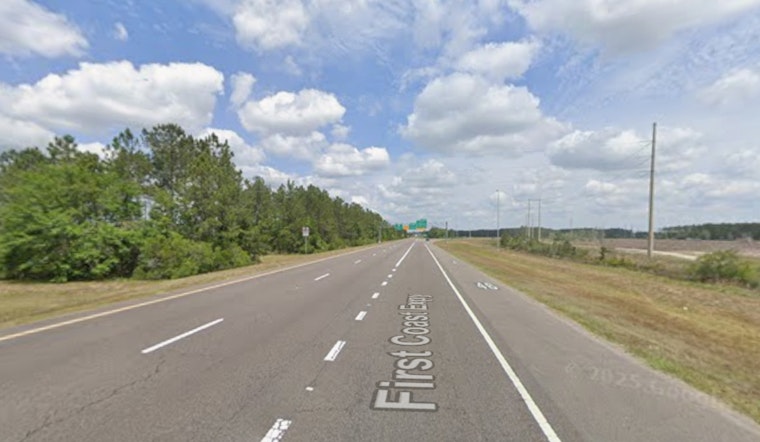
The stretch of roadway where the crash happened is part of the First Coast Expressway, officially State Road 23, a 46-mile limited-access toll facility designed to connect Duval, Clay and St. Johns counties and to double as a major hurricane evacuation route for Northeast Florida, according to the Florida Department of Transportation. The corridor's northernmost 15-mile segment, linking I-10 in Duval County to State Road 21 in Clay County, first opened to toll traffic back in July 2018.
The expressway has kept growing since then. Just two months ago, in June, FDOT opened a new 20-mile stretch between U.S. 17 and Leonard C. Taylor Parkway, expanding multi-lane toll capacity across Clay County, as reported by News4JAX. That kind of rapid buildout has reshaped traffic patterns across the region, even as stormwater retention ponds remain a fixture along the right-of-way at interchanges like this one.
Florida Leads the Nation in Vehicle Drownings
Monday's crash fits into a broader and troubling pattern for the state. Florida leads the country in vehicle submersion fatalities, recording 185 drowning deaths between 2013 and 2017 — roughly one out of every six such deaths nationwide, according to National Highway Traffic Safety Administration data reported by WKMG News 6. Separate federal crash data reviewed by Florida legislative staff found that an average of 57 motor vehicle occupant drownings happened annually in the state between 2004 and 2007, about 2.1 percent of all traffic fatalities statewide.
Lawmakers have tried to address the problem before. In 2016, the Florida Legislature passed “Chloe's Law,” which required FDOT to install roadside barriers shielding water bodies next to state roads where fatal vehicle drownings had occurred over the preceding decade. FDOT design standards separately call for engineering evaluations of guardrail placement and barrier lengths along high-speed state routes specifically to shield motorists from steep embankments and roadside water hazards.
Retention Ponds Have Caused Trouble on This Corridor Before
This isn't the first time a vehicle has ended up in the water near the First Coast Expressway system. In a prior incident in nearby Middleburg, a Clay County Sheriff's deputy rescued a 57-year-old driver after his van ran off the roadway and plunged into a water basin, News4JAX has reported. That corridor has also seen tragedy of a different kind: in July 2021, a 20-year-old Jacksonville driver died after crashing into a coned-off emergency investigation scene on State Road 23.
First responders working crashes along the expressway also face their own risks. In a separate incident this past May, an FDOT Road Ranger safety truck was struck from behind and pushed into a Florida Highway Patrol vehicle while responding to a call on the corridor, according to News4JAX. Whether existing guardrails at Monday's crash site met current FDOT standards, and exactly how the vehicle left the ramp, remain open questions as the investigation continues.





