

























































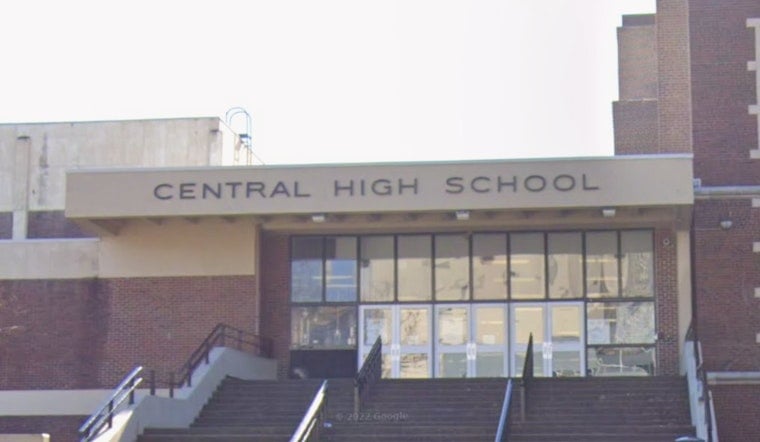
A 16-year-old Central High School student is recovering from burns to his face and left hand after a chemistry experiment involving zinc, sulfur and potassium burst into flames instead of producing the smoke effect the class expected. Tije’a Wilks, a basketball player at the Memphis school, was mixing and lighting the chemicals in a pastry bowl when the reaction turned violent, and another student captured the moment on video.
According to WREG, Wilks was wearing safety goggles during the experiment, and his chemistry teacher stood beside him as it happened. His mother, Andria Wilks, said the mixture produced a ball of fire rather than smoke, and her son told her afterward that his face was burning. The teacher took Wilks to a washing station following the flare-up, and the school resource officer called for an ambulance and told Andria Wilks that her son had been hurt during a chemistry experiment.
Wilks called his mother about 15 minutes after the accident. He was taken to Le Bonheur Children’s Hospital, where he was treated for first- and second-degree burns. The hospital operates a Level I Pediatric Trauma Center that treats more than 140 pediatric burn victims annually, according to Le Bonheur Children’s Hospital, offering specialized burn care, physical and occupational therapy, and trauma counseling to children across Tennessee, Mississippi and Arkansas.
Burns Worsening, Doctors Warn of Lasting Damage
Andria Wilks said her son’s chemical burns have been getting worse, not better, and that he has been avoiding going outside since the accident. He has already missed several days of school. Doctors told the family Wilks may need occupational therapy for his hand, and he may be left with permanent scars, the station’s report notes. Wilks is left-handed, and the burns to his left hand raise added concern about his recovery.
The chemical reaction itself follows a well-documented hazard pattern. Mixing powdered zinc with sulfur and strong oxidizers such as potassium compounds creates an exothermic mixture that can ignite and flash violently while releasing toxic zinc oxide fumes, according to NOAA’s CAMEO Chemicals database, which catalogs chemical hazard data. The dossier also lists citrate among the substances in the pastry bowl.
Mother Says School Never Called Her Directly
Andria Wilks said school officials did not contact her about the incident themselves; she learned what happened only through the resource officer and later her son’s own phone call. She has asked for clearer communication going forward about both the experiment itself and her son’s injuries, and she believes additional safety protocols are needed in the classroom.
That complaint runs up against Memphis-Shelby County Schools’ own written procedures. District risk management policy requires school personnel to complete a student accident report within 24 hours, notify parents immediately, and provide secondary accident insurance documentation for injuries that happen on school property, according to Memphis-Shelby County Schools. WREG reported that it contacted the district for comment on the incident, but the district had not responded by the time of publication.
Families pursuing compensation after a school injury in Tennessee also face a steep legal hurdle. Memphis-Shelby County Schools is covered under the Tennessee Governmental Tort Liability Act, which grants public districts immunity from liability lawsuits unless specific legal exceptions apply and bars staff from promising to cover medical expenses, per the district’s own risk management records.
National Safety Standards Call for More Than Goggles
Chemistry lab injuries like Wilks’s are not isolated nationally. The U.S. Chemical Safety Board recorded 66 chemical safety incidents in elementary and secondary school laboratories between 2001 and 2018, resulting in 170 student injuries. The agency, along with the American Chemical Society, has issued safety alerts urging schools to eliminate or strictly limit open-bench chemical flame demonstrations, pointing to open-container combustion as a leading cause of severe classroom burns.
Guidelines from the National Science Teaching Association specify that students and instructors handling reactive or burning chemical combinations should wear indirectly vented chemical splash goggles meeting ANSI Z87.1 standards along with full face shields, not standard safety goggles alone. The organization’s standards also describe a formal duty of care for educators, requiring them to explicitly warn students of hazards, model safety protocols, and maintain active supervision throughout every phase of an experiment.
Central High School, established in 1909 at 306 S. Bellevue Blvd, is a college-preparatory optional school within Memphis-Shelby County Schools serving roughly 1,300 students in grades 9 through 12. Similar incidents have drawn scrutiny elsewhere: a May 2022 chemistry experiment fire at North Central High School in Indiana injured four students, including one airlifted for skin graft surgery, and triggered a state fire marshal investigation, according to WFYI. It remains unclear whether Memphis-Shelby County Schools has launched any similar review of its own lab safety protocols following the incident involving Wilks.




