

























































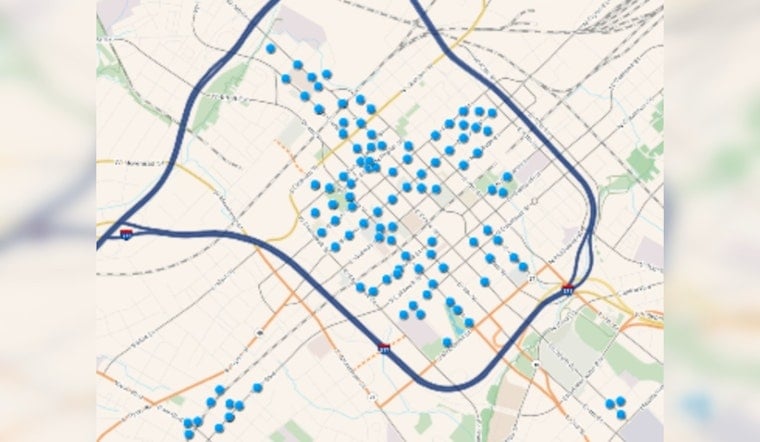
Charlotte drivers who park in their driveways in a way that swallows up the sidewalk have long had a built-in excuse to avoid a ticket. That loophole is about to close. Charlotte City Council is set to vote Monday on an ordinance change that would make clear vehicles cannot obstruct sidewalks, even when they are technically parked in a driveway.
A Narrow Fix With Citywide Reach
The measure targets Section 14-130 of Chapter 14 of the Charlotte Code of Ordinances, striking an existing exception that has allowed vehicles to stop, stand, or park on sidewalks at permanent or temporary driveways, according to city records reviewed as part of the proposal. City staff have said drivers blocking walkways frequently cited that same driveway exception clause to avoid citations, according to the City of Charlotte. As WSOC-TV reports, the proposed ordinance change would give officials a clearer way to enforce sidewalk obstruction rules, including against cars parked in driveways that extend into pedestrian paths.
The city says blocked sidewalks can create ADA violations and can prevent people with disabilities from safely using sidewalks, per the same report. Charlotte Community Relations Director Terry Bradshaw and an Assistant City Attorney presented the amendment to City Council during its business meeting on August 10 as a time-sensitive item, according to CivicSearch, setting up Monday's formal vote.
Part Of A Multi-Year Push On Parking Rules
This is not Charlotte's first swing at tightening parking enforcement. The council executed a broader overhaul of Chapter 14 in November 2023 under the SAFE Charlotte initiative, which focused on commercial truck parking and illegal right-of-way parking across residential neighborhoods, the city notes. The Quality-of-Life Team created under that initiative identified illegal vehicle parking as a top complaint from residents, the city says.
The push for clear sidewalks also comes as Charlotte continues spending $50 million from a voter-approved 2022 transportation bond to build 10 to 12 miles of new sidewalks and 15 pedestrian crossings annually for its more than 870,000 residents. The city's Strategic Mobility Plan aims to fill missing sidewalk links along collector and arterial roads, meaning newly built walkways are increasingly at risk of being blocked by parked cars if the driveway exception stays in place.
Shrinking Driveways Meet A New State Law
The timing lines up with a bigger shift happening statewide. North Carolina lawmakers passed legislation in July that eliminates mandatory off-street parking minimums for new developments starting January 1, 2027, according to Walker Consultants, a change Hoodline covered when the bill first moved through Raleigh. That leaves parking supply decisions to developers, and Walker Consultants notes eliminating the minimums could reduce the number of parking spots built with new homes, potentially increasing driveway overflow onto public sidewalks.
Charlotte already bans parking on residential front lawns, enforcing violations with a $25 ticket through Code Enforcement and granting exemptions only for weekly family gatherings or special neighborhood events, according to WCNC. That leaves property owners with short driveways squeezed between three imperfect options: block the sidewalk, risk the lawn fine, or park on narrow neighborhood streets that can obstruct emergency vehicles.
North Carolina General Statute § 20-162 already prohibits parking or standing a vehicle on a public highway in front of a private driveway or blocking right-of-way passages, while NCGS § 160A-301 gives municipalities authority to regulate local parking, according to the Town of Surf City's published guidance on the interaction between state and local rules. Local governments generally must align city codes with those state statutes to ensure civil parking citations hold up in court.
A Broader Pattern Of Sidewalk Enforcement
Charlotte has taken a firmer stance on sidewalk obstructions throughout the year. The city shut down the NoDa Street Market pilot program in February after six months, citing narrow sidewalks and unpermitted vendors blocking pedestrian flow, as Hoodline reported at the time. In July, high-density growth in the Cherry neighborhood prompted officials to install emergency corner parking restrictions after construction crews and overflowing driveways blocked residential sightlines and emergency access, a situation Hoodline detailed in its coverage of Cherry's midtown parking overflow.
On-street parking enforcement across Charlotte's urban cores runs through the city's Park It program, a Charlotte Department of Transportation operation outsourced to vendor SP Plus Corporation, which manages more than 1,800 metered spaces and enforcement zones across Uptown, South End, and surrounding neighborhoods, according to the city. If Monday's amendment passes, that same enforcement apparatus would gain clearer legal footing to cite drivers whose driveway parking spills over onto the sidewalk, closing a gap that residents and city staff have flagged as an obstacle to enforcement.





