

























































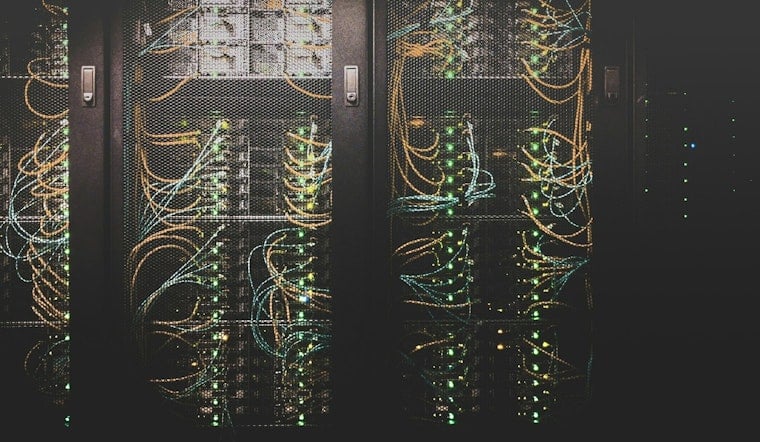
Chicago's data centers have operated for years with a regulatory advantage most other large buildings don't get: the ability to keep their energy and water consumption secret from the public. A city working group now says that should end, recommending that the roughly 39 data centers operating across Chicago be required to disclose how much water and power they actually use.
The recommendations come from Chicago's Data Center Working Group, detailed in a new report and first reported by Block Club Chicago. The report recommends the city overturn its current restriction on publicly releasing energy and water data for buildings housing data centers, and calls on Chicago to create a data-center-specific permitting program that would include environmental-impact studies for surrounding communities, air and sound monitoring, and fines for permit violations. Ald. Maria Hadden has already introduced an ordinance, on August 4, that would allow public release of that energy and water data for buildings with data centers.
Under Chicago's zoning ordinance, data centers are currently classified simply as offices, and they're permitted by-right in manufacturing, commercial and non-residential downtown districts, along with most business districts. That classification means most data centers only go through zoning review requiring City Council approval, need a building permit, and require a limited business license from the Department of Business Affairs and Consumer Protection — but face none of the disclosure obligations that would come with a dedicated permitting category.
Why The Secrecy Rule Exists — And Why It's Under Fire
The gap traces back to Chicago's Building Energy Use Benchmarking Ordinance, which already requires annual energy reporting by June 1 for commercial, institutional, and residential buildings over 50,000 square feet, according to the City of Chicago. But current rules maintain exemptions that restrict building-specific public disclosure for certain property classifications, which is the loophole that Hadden's ordinance and the working group's report both target.
The working group's report frames its recommendations as a response to the fact that data centers behave differently from other large buildings, not as a reaction to any single project. Kathleen O'Shea said the recommendations respond to modern data-center realities in Chicago rather than one specific project, and added that the recommended policies are intended to apply universally to data centers regardless of size. The report itself states that modern data centers have unique impacts beyond comparably sized office, commercial, or industrial uses.
Water Use Is A Central Concern
Water is a major piece of the puzzle. A hyperscale data center can use around 5 million gallons of water per day, while a typical data center uses around 300,000 gallons per day, per the report's figures. Chicago's data centers currently draw on the city's drinking-water supply for cooling.
The report recommends officials continue addressing community resistance and facility water use, and it says Chicago should support the Metropolitan Water Reclamation District in exploring treated wastewater reuse to cool data centers. John Murray said wastewater reuse would benefit the environment because less water would be pulled from Lake Michigan. Illinois passed a law in 2025 allowing treated wastewater for certain industrial purposes, though treated wastewater reuse would still require very costly infrastructure to actually bring that water to data centers.
Looking To Other Cities For A Model
The working group pointed to Lancaster, Pennsylvania, as an example of what tougher local terms can look like. A community benefits agreement there secured $20 million for city-run economic development programs, required a data-center developer to use 100 percent clean energy, and limited daily water use. The proposed statewide POWER Act would similarly require data center developers to sign community benefits agreements, though it did not pass the Illinois Assembly in spring 2026 and could be reconsidered during the fall veto session.
The working group's report says Chicago should adopt protective measures like the proposed POWER Act to advance transparency, safeguard public health and wellbeing, and protect natural resources. It also notes that Chicago is unlikely to see the largest hyperscale AI training campuses because of land and infrastructure constraints — a dynamic distinct from suburban fights over sprawling campuses that Hoodline has tracked in Grayslake and elsewhere.
The Quantum Shore Question Mark
About 75 people attended a Data Center Working Group community conversation on data centers in May at the Arturo Velasquez Westside Training Center in Little Village, underscoring the public interest driving these recommendations. Much of that interest centers on the Quantum Shore megadevelopment on the South Side, approved by City Council in 2024, where zoning bans data centers west of DuSable Lake Shore Drive between 83rd and 87th streets but allows one in most other areas of the site.
Related Digital, the data center arm of parent company Related Companies, announced its intent in March 2025 to build a hyperscale data center for AI and cloud computing on the South Side. That facility would carry one gigawatt of power capacity and would be built at the north end of Quantum Shore. But Quantum Shore developers will not include a data center in the development's first phase, the Illinois Quantum and Microelectronics Park, and have not clarified whether the hyperscale facility will be built in future phases — nor have they expressed any intention to move forward with it. The Chicago Department of Buildings did not confirm whether building permit applications for a Quantum Shore data center had been submitted or approved, and the Department of Business Affairs and Consumer Protection has no pending license application for the site.
Part Of A Bigger Statewide Reckoning
The city-level push arrives as state officials are also rethinking how Illinois handles data centers. Governor JB Pritzker paused processing new applications under the state's Data Center Investment Program on July 1, directing economic development officials to halt new agreements pending potential regulatory reform, according to Capitol News Illinois. That program, created in 2019, offers qualified facilities investing over $250 million up to 20 years of sales tax exemptions; between 2019 and late 2024, the state approved 27 projects representing $983 million in foregone tax revenue while generating $1.85 billion in state and local taxes in 2023 alone, per ArentFox Schiff.
The stakes are high because the market has grown so fast. Metro Chicago is now the fourth-largest U.S. colocation data center market, reaching 910.6 megawatts of wholesale inventory in the first quarter of 2026 — a 37.7% year-over-year increase — while overall vacancy dropped to just 2.2%, according to CBRE. ComEd now projects that power delivery timelines for major Chicago-area data center projects can extend to 2032 or later, and the utility requires 10-year letters of credit from developers to back transmission costs on developments exceeding 50 megawatts.
Suburbs across the region have already been moving to tighten their own rules, as Hoodline has reported in Sugar Grove's zoning reclassification following Aurora's new development standards, and in pushback in Hoffman Estates, Lisle and Yorkville over noise, diesel generators, and sprawling campus footprints. Constellation Energy has separately launched an $800 million modernization program at its Byron and Braidwood nuclear plants to add 158 megawatts of carbon-free capacity by 2029, aimed specifically at meeting data center power demand. Whether Chicago's own disclosure and permitting overhaul moves forward may now depend on how Hadden's ordinance fares at City Council, and how state lawmakers handle the POWER Act when they reconvene for the fall veto session.





