

























































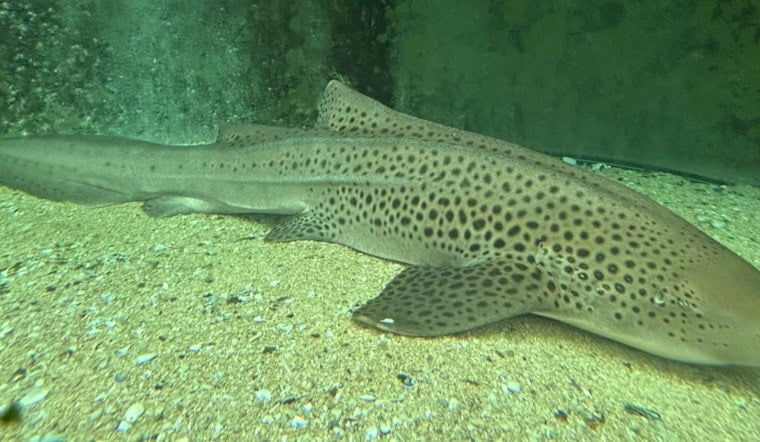
Four zebra shark eggs from Chicago's Shedd Aquarium have traveled 9,000 miles to Indonesia, part of a global effort to rebuild a wild population that surveys over two decades found had dwindled to just three adult sharks in the protected waters of Raja Ampat. The eggs were laid by Cleo, a 30-year-old zebra shark that has lived at the aquarium next to Lake Michigan, and they are expected to hatch at the Raja Ampat Research and Conservation Centre on Kri Island in West Papua.
The shipment marks the first time Shedd has contributed eggs to the rewilding effort, even though the aquarium was a founding partner when the ReShark coalition launched in 2020, according to Chicago Tribune. Aquarium experts waited five years before sending eggs overseas so they could confirm, through genetic research, that Shedd's zebra sharks matched the genetic requirements of wild Papuan populations, as reported by Inside Climate News. Ensuring that genetic compatibility helps prevent inbreeding or the loss of local adaptations once the sharks reach native waters.
Steven Kessel, Shedd's director of marine research, described the effort as groundbreaking for shark research and conservation, per the Tribune's reporting. Kessel said marine reintroduction remains far less common than terrestrial reintroduction or freshwater restocking, and he said zebra sharks have effectively been fished to what scientists call functional extinction in parts of their range — meaning the species no longer plays a functional role in its ecosystem there. Populations have declined because of targeted fishing for the fin trade and incidental capture in other fisheries, the Tribune reports.
Why Raja Ampat Became Ground Zero
Raja Ampat, an Indonesian archipelago of more than 1,000 islands, forms part of the Coral Triangle, which holds the richest concentration of marine biodiversity on Earth. The region was estimated to contain fewer than 20 zebra sharks before the reintroduction effort began, and some surveys conducted over two decades found only three adult zebra sharks remaining in its protected waters, according to the Tribune. West Papua's Raja Ampat regency formally established Southeast Asia's first dedicated shark and ray sanctuary in February 2013, creating a roughly 17,760-square-mile protected marine area where shark fishing is banned, as reported by Asian Scientist Magazine.
That sanctuary followed years of advocacy from local communities and eco-tourism operators, the outlet notes. The broader Raja Ampat Marine Park network now comprises nine Marine Protected Areas covering more than 2 million hectares, integrating government enforcement with traditional indigenous conservation closures known as sasi, according to The SEA People. Those protected areas shelter 75 percent of the world's known coral species.
From Candling to Sea Pens: How the Eggs Become Wild Sharks
Before any egg makes the journey, aquarists use a process called candling — a modern echo of the old practice of holding up a burning candle — to assess shark eggs for health, viability and genetic diversity, per the Tribune. Anna Byczynski, an aquarist and supervisor of Shedd Aquarium's tropical marine habitats, described checking an egg's progress by saying, “See it wiggling around in there?” Zebra sharks are considered well suited to this kind of egg-based reintroduction, and Shedd has hatched more than 80 zebra shark eggs since 2004, placing baby sharks at more than a dozen zoos and aquariums across the United States that same year, the outlet reports.
Once the eggs hatch in Indonesia, local caretakers known as shark nannies hand-rear the juveniles in land-based nurseries before the pups transition to coastal sea pens, according to the Tribune's reporting and corroborated by Georgia Aquarium. The sea pens help the pups adjust to the natural marine environment and develop foraging skills before they are tagged and released, once they reach an appropriate size, if they are in good health. Post-release monitoring combines telemetry data from acoustic or satellite tags with citizen science reports from local divers, per Georgia Aquarium.
A Ten-Year Push to Rebuild a Species
The initiative behind Shedd's shipment is known as StAR, the Stegostoma tigrinum Augmentation and Recovery project, which launched in 2020 and is described as the world's first shark reintroduction effort. It operates under the ReShark coalition, which released 75 zebra sharks into Raja Ampat by 2023 and aims to release 50 pups annually over a 10-year period, targeting a total of at least 500 reintroduced sharks to rebuild a self-sustaining wild population, per Georgia Aquarium. By 2025, the global ReShark collective had grown to include 105 partner organizations across 19 countries, spanning public aquariums, nongovernmental organizations, research institutions and government agencies, according to the University of Queensland Centre for Biodiversity and Conservation Science.
The project has since expanded beyond Indonesia. In December 2025, Thailand released four captive-bred zebra sharks into the Andaman Sea as part of a new national rewilding initiative, after officially listing the species as protected, according to the blog Return of Leopard Sharks. The zebra shark, also called the Indo-Pacific leopard shark and known scientifically as Stegostoma tigrinum, was classified as globally Endangered by the International Union for Conservation of Nature in 2016, following steep population declines from commercial overfishing for fins and habitat loss across the Indo-Pacific. Notably, Australian zebra shark populations are assessed as Least Concern rather than Endangered, thanks to well-regulated marine habitats and minimal fishery bycatch, according to the Virginia Aquarium & Marine Science Center — underscoring how dramatically the species' fortunes vary by region.
Bigger Stakes Than One Species
Zebra sharks play an outsized ecological role by regulating bottom-dwelling prey such as snails, clams, crabs, shrimp and small fish, resting on reef floors between hunts. Their disappearance from a reef, according to the Tribune's reporting, has ripple effects across the wider ecosystem the coral reefs support. Conservationists see the reintroduction as a tool to encourage stronger protections for wild sharks more broadly, and the project has already created interest among other countries beyond Indonesia and Thailand.
Reef habitats in the region face mounting pressure beyond fishing. Rising ocean temperatures caused large-scale coral bleaching and die-offs beginning in 1997, and mangrove areas — critical nursery habitat for many marine species — were lost at a rate of 44 percent across Myanmar, Malaysia and Cambodia between 1970 and 2020, per the Tribune. Adult zebra sharks carry distinctive spots that the offspring's black-and-white striped tails eventually fade into as the animals mature, a visual marker of the transformation researchers hope to see play out, generation after generation, in the waters off Raja Ampat.





